
Basic Offshore Safety Induction & Emergency Training (BOSIET) with Compressed Air Emergency Breathing System (CA-EBS) Digital Delivery
Preparing personnel for initial offshore travel by helicopter through a blended learning programme combining online theory with practical assessment covering offshore safety, helicopter escape using CA-EBS, sea survival, emergency first aid, and firefighting and self-rescue.

Introduction
The OPITO Basic Offshore Safety Induction and Emergency Training with Compressed Air Emergency Breathing System — Digital Delivery (BOSIET with CA-EBS Digital) offers a flexible, blended learning pathway to the internationally recognised BOSIET with CA-EBS certification. The programme is designed for personnel who prefer to complete the underpinning knowledge elements online before attending an OPITO-approved training centre for practical assessment and formal verification of competence.
The content of the BOSIET with CA-EBS Digital programme is equivalent to the standard BOSIET with CA-EBS programme and covers offshore safety awareness, helicopter safety and escape using Compressed Air Emergency Breathing System (CA-EBS), sea survival and emergency first aid, and firefighting and self-rescue. The theoretical elements are completed through the OPITO-approved online programme, followed by attendance at an OPITO-approved training centre where all practical exercises and assessments are completed.
This blended approach is particularly well-suited to personnel who wish to minimise time away from work, those in remote or dispersed locations who benefit from completing theory at their own pace, and organisations looking to streamline the certification process across multiple employees. Learners must complete all online elements and attend the training centre for practical assessment within 90 days of completing the online programme.
Delivered in accordance with OPITO Product Code 5752, BOSIET with CA-EBS Digital Delivery certification is valid for four years and is fully equivalent to the standard BOSIET with CA-EBS qualification.
Who Needs BOSIET with CA-EBS Digital Delivery Training?
BOSIET with CA-EBS Digital Delivery training is suitable for personnel travelling to offshore oil and gas installations, including those working on offshore platforms, FPSOs, drilling rigs, and floating production facilities. Most offshore operators require personnel to hold a valid OPITO BOSIET certificate before travelling offshore for the first time.
The Digital Delivery format is particularly suitable for learners who prefer to complete the theoretical elements of the course online prior to attending the training centre for practical assessment, reducing the amount of time required on site.
Scope
The BOSIET with CA-EBS Digital Delivery programme introduces learners to the specific safety issues and regimes relevant to offshore installations, equipping them with the basic emergency response knowledge and skills for travelling to and from offshore installations by helicopter. The programme delivers the same learning outcomes as the standard BOSIET with CA-EBS programme through a blended learning format. Learners complete all theoretical knowledge online before attending an OPITO-approved training centre where practical exercises and formal assessment are conducted.
The programme introduces learners to offshore safety, emergency response, helicopter escape procedures using Compressed Air Emergency Breathing System (CA-EBS), sea survival, emergency first aid, and firefighting and self-rescue. Particular emphasis is placed on preparation for and escape from a helicopter following ditching, including the safe deployment and use of CA-EBS equipment.
Learners must complete the online elements before attending the training centre, and must attend within 90 days of completing the online programme. The practical assessment day delivers all HUET escape exercises (including the full CA-EBS exercise sequence), sea survival, TEMPSC boarding, emergency first aid, and firefighting and self-rescue, formally assessed against all OPITO unit outcomes.
General Course Objectives
The objectives of this training are that learners will be able to:
- Identify the generic hazards specific to offshore oil and gas installations, potential risks associated with those hazards, and how controls are put in place to eliminate or reduce risks.
- Identify key offshore safety regulations and explain the basic principles of offshore safety management.
- Demonstrate, in a simulated environment, that they can use safety equipment and follow procedures in preparing for and during helicopter emergencies, with particular focus on escaping from a helicopter following ditching, including the deployment and use of Compressed Air Emergency Breathing System (CA-EBS) equipment.
- Demonstrate sea survival and emergency first aid techniques.
- Demonstrate effective use of basic firefighting equipment and practise self-rescue techniques in low-visibility environments including smoke-filled areas.
How the Programme is Delivered:
BOSIET with CA-EBS Digital Delivery follows a blended learning model in two stages:
Stage 1: Online Theory (completed at your own pace)
Learners access and complete all underpinning knowledge elements via the OPITO-approved BOSIET with CA-EBS online programme. This covers all four unit knowledge areas: offshore safety induction, helicopter safety and emergency theory (including CA-EBS principles and procedures), sea survival and first aid knowledge, and firefighting and self-rescue theory. Online learning can be completed at the learner’s own pace and from any location with internet access.
Stage 2: Practical Assessment and Verification at Training Centre (1 day)
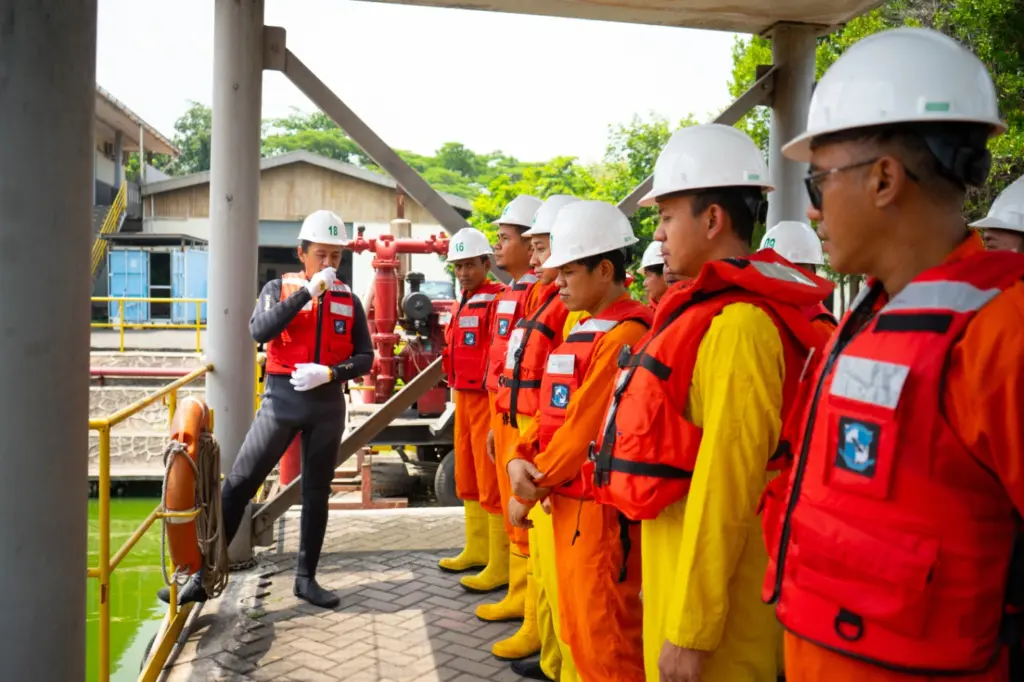
Following completion of all online elements, learners attend our Cilegon training centre to be formally assessed against all unit outcomes. The practical assessment day does not repeat theory covered online, focusing entirely on assessed practical exercises. Learners must attend within 90 days of completing the online programme.
The practical assessment covers:
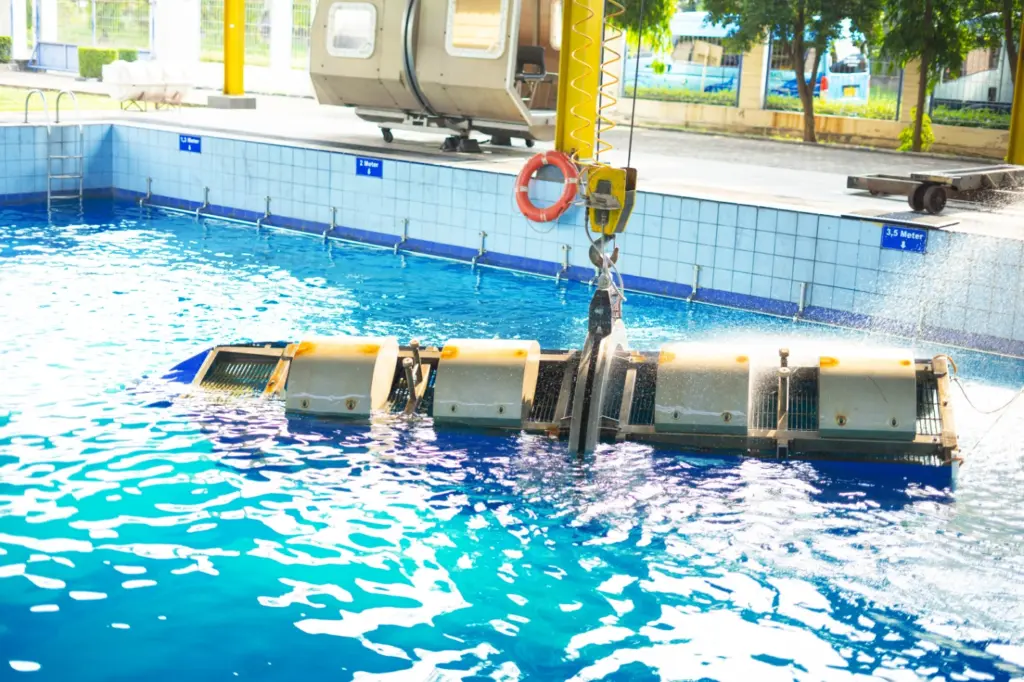
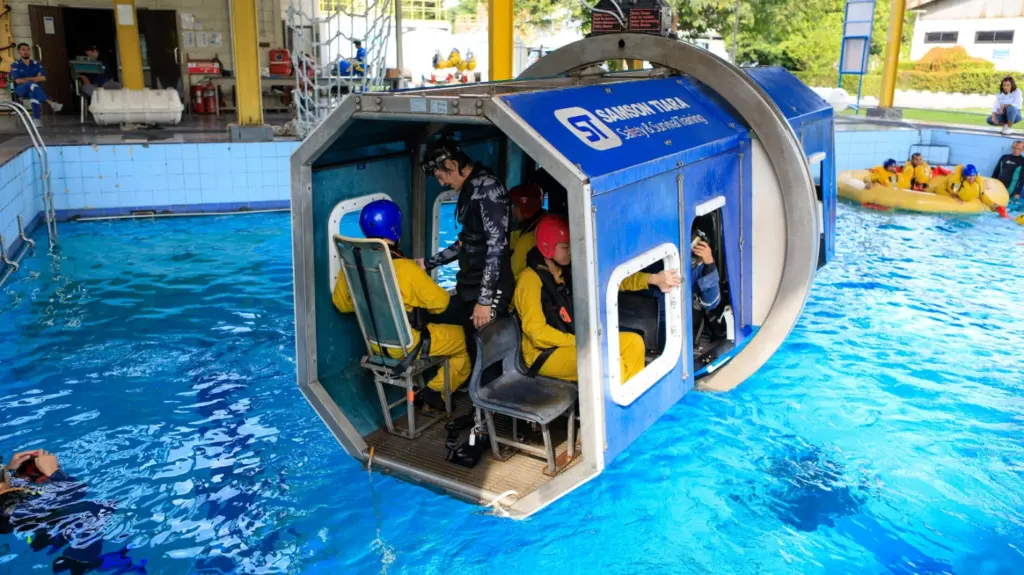
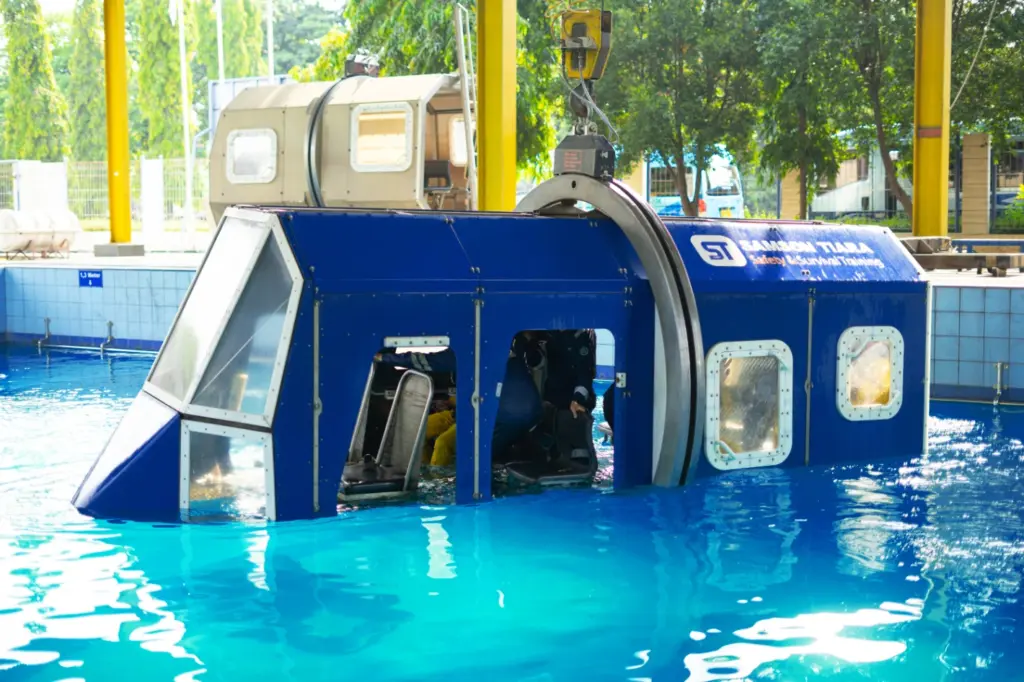
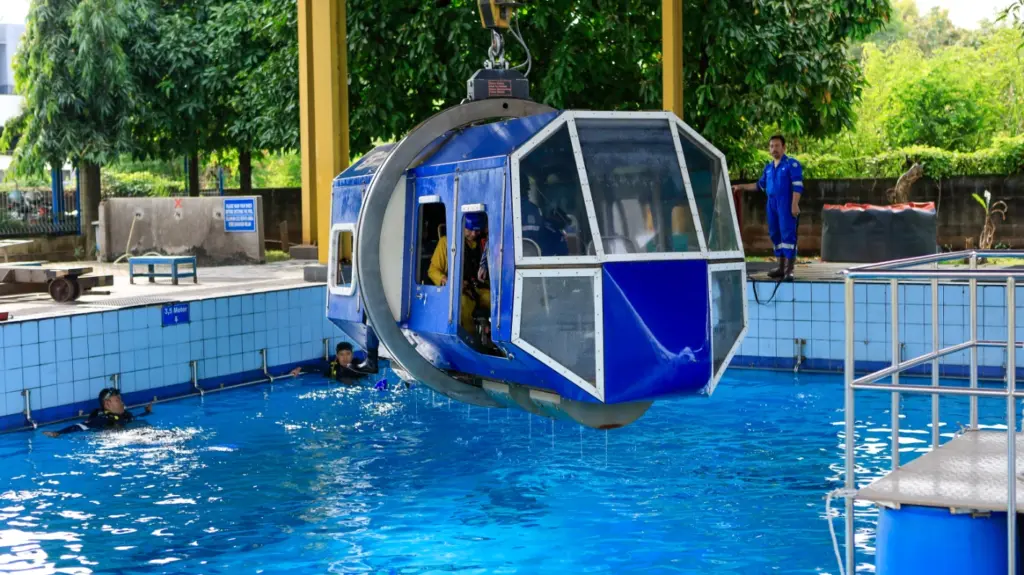
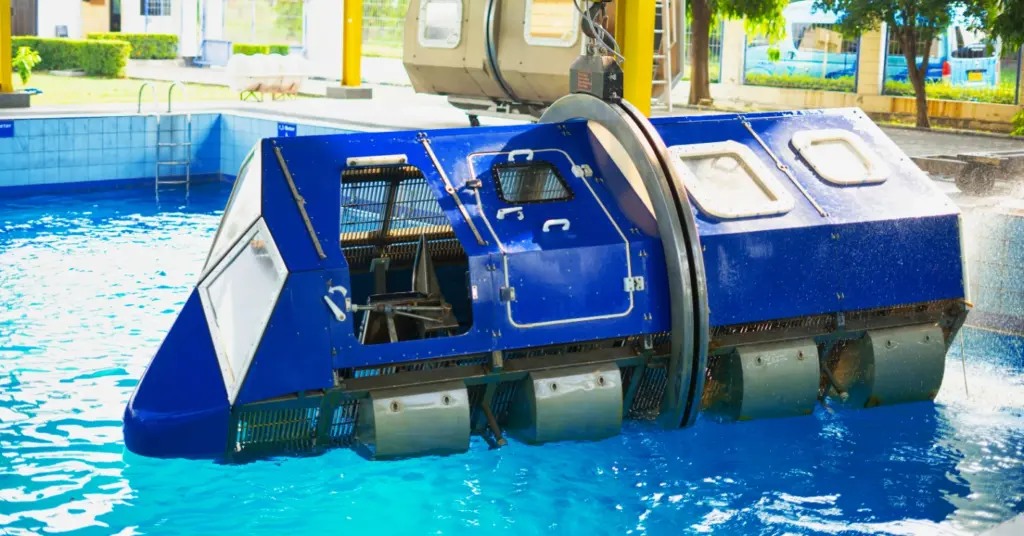
- Full HUET escape exercise sequence with CA-EBS (13 exercises) conducted in the METS™ Model 40 pool facility
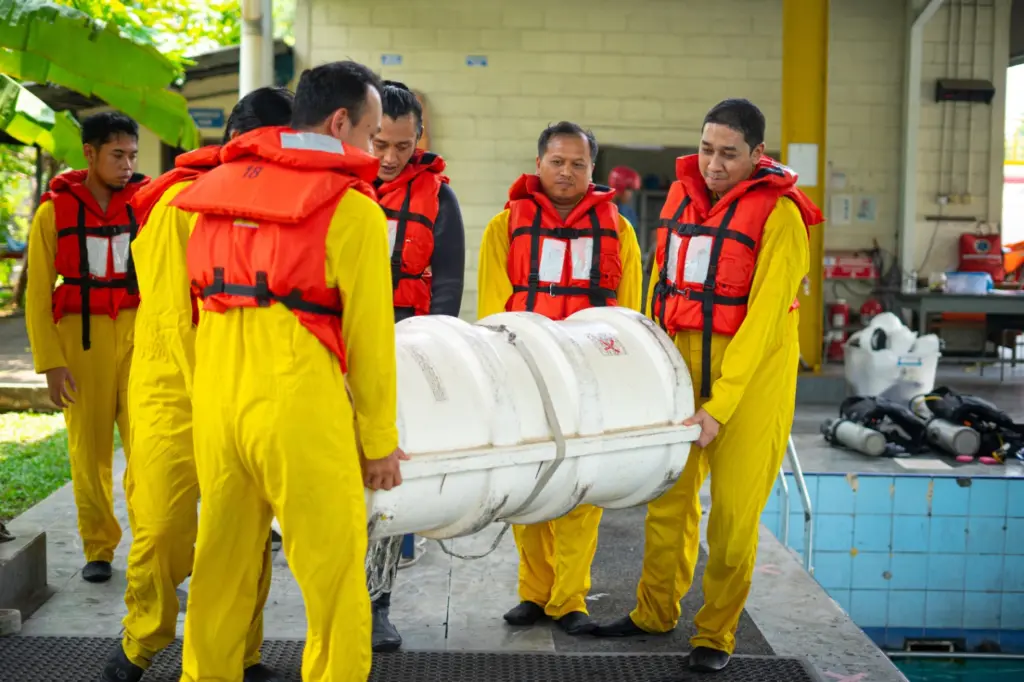
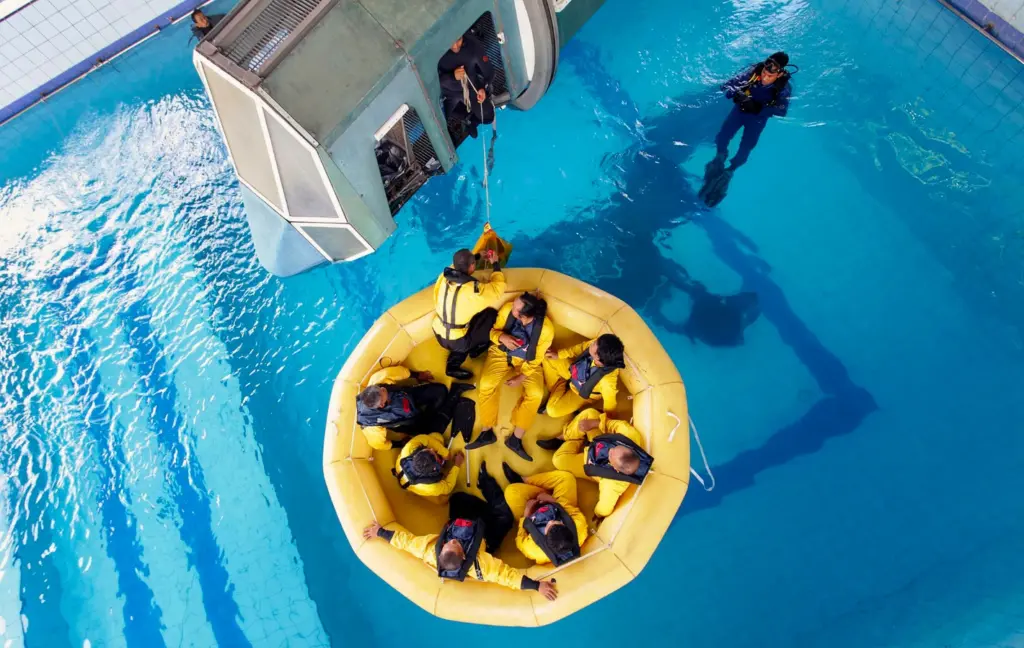
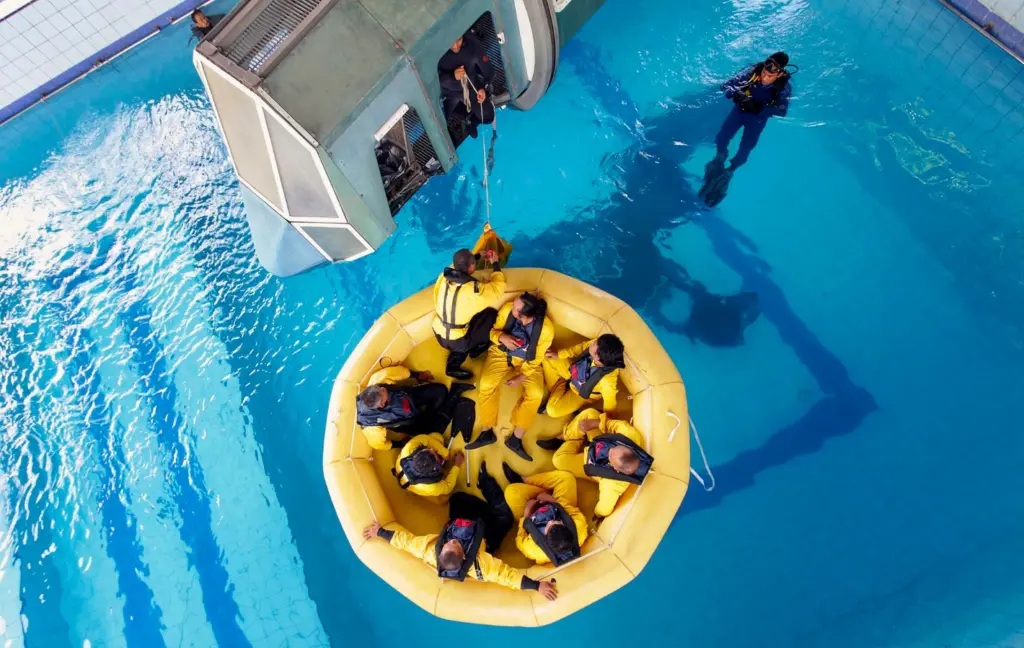
- Aviation liferaft deployment and initial actions
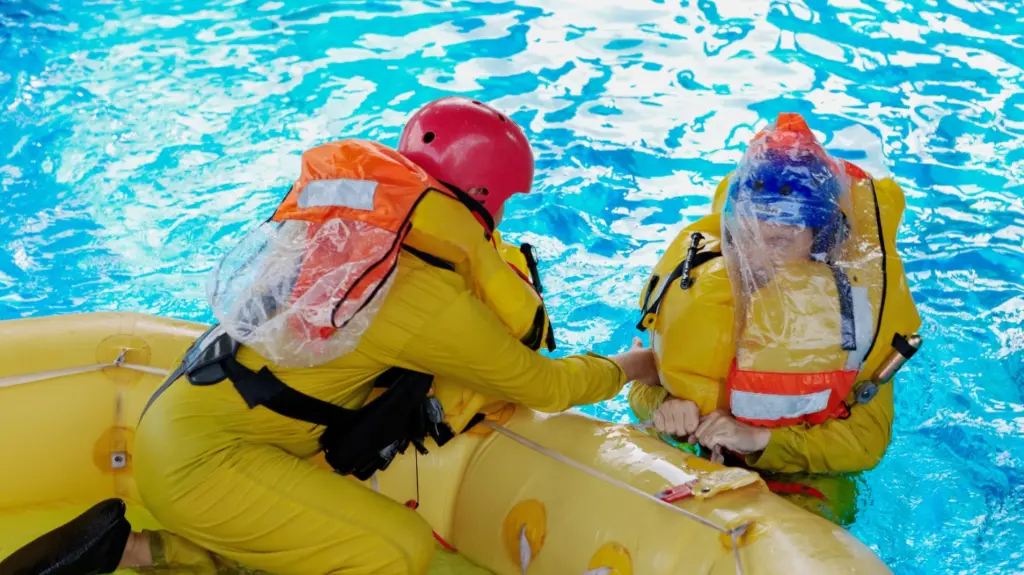
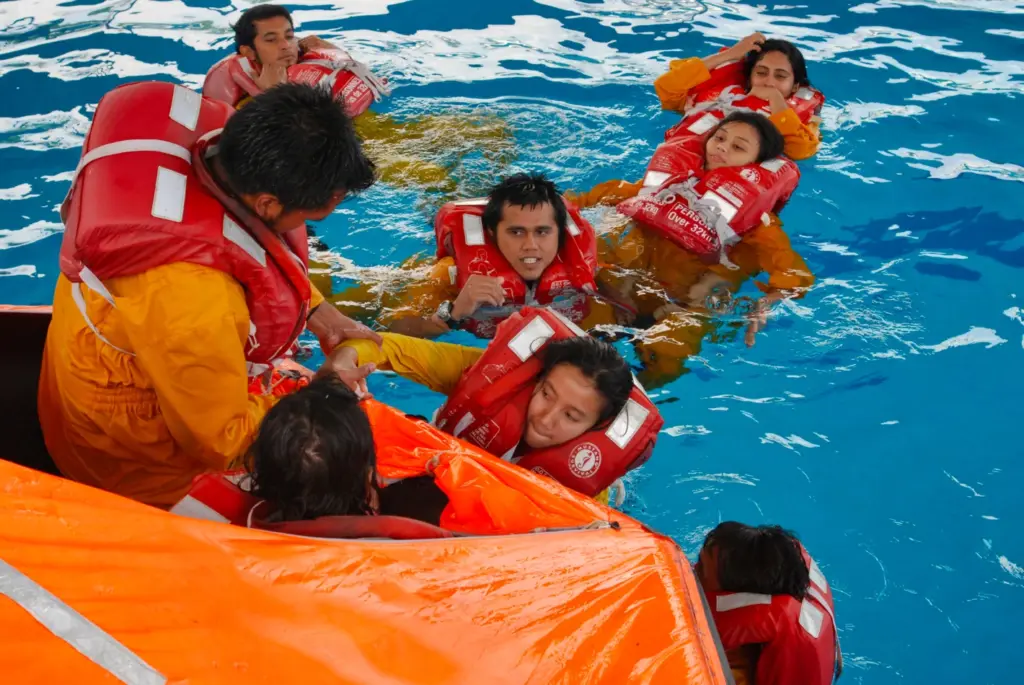
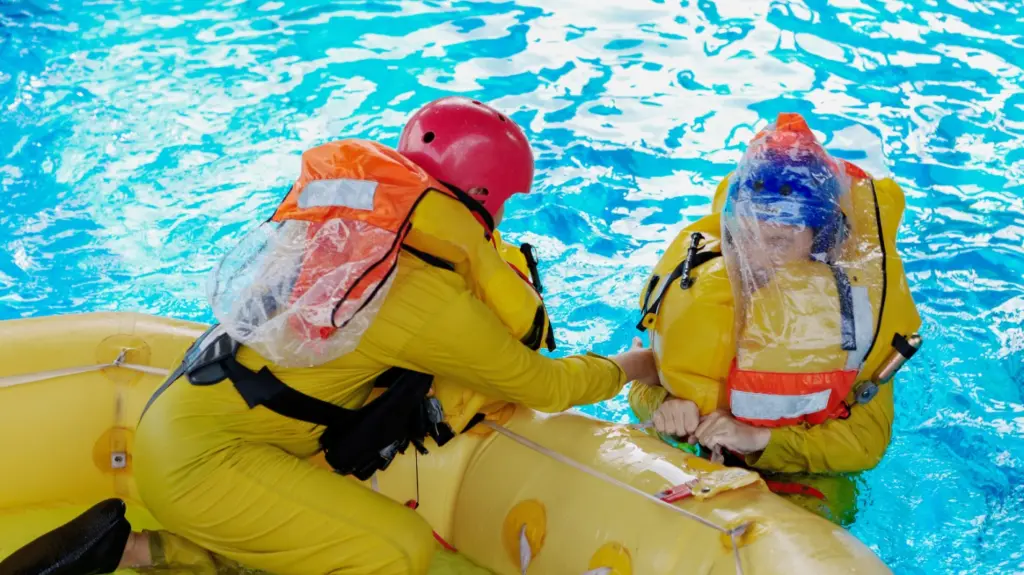
- Sea survival in-water exercises including individual and group survival techniques
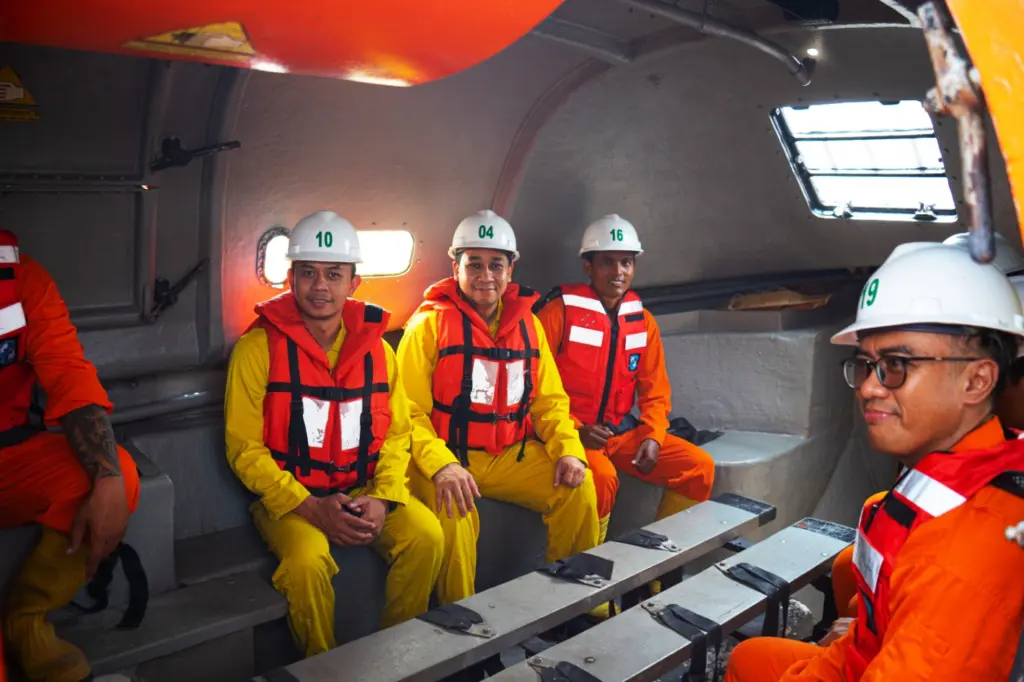
- TEMPSC (survival craft) boarding exercise
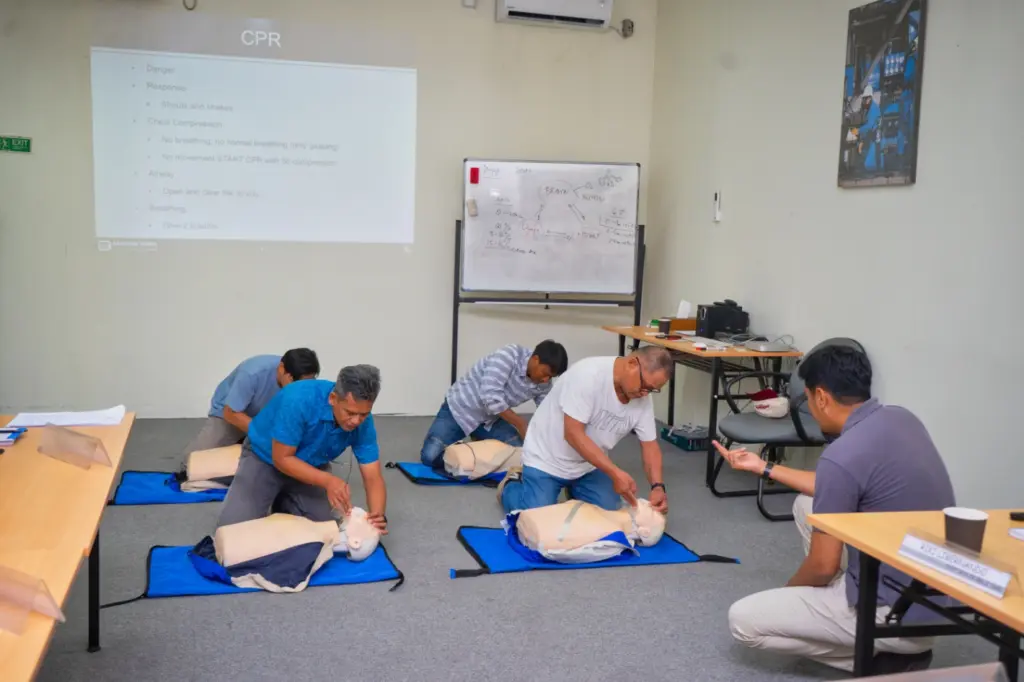
- Emergency first aid practical assessment
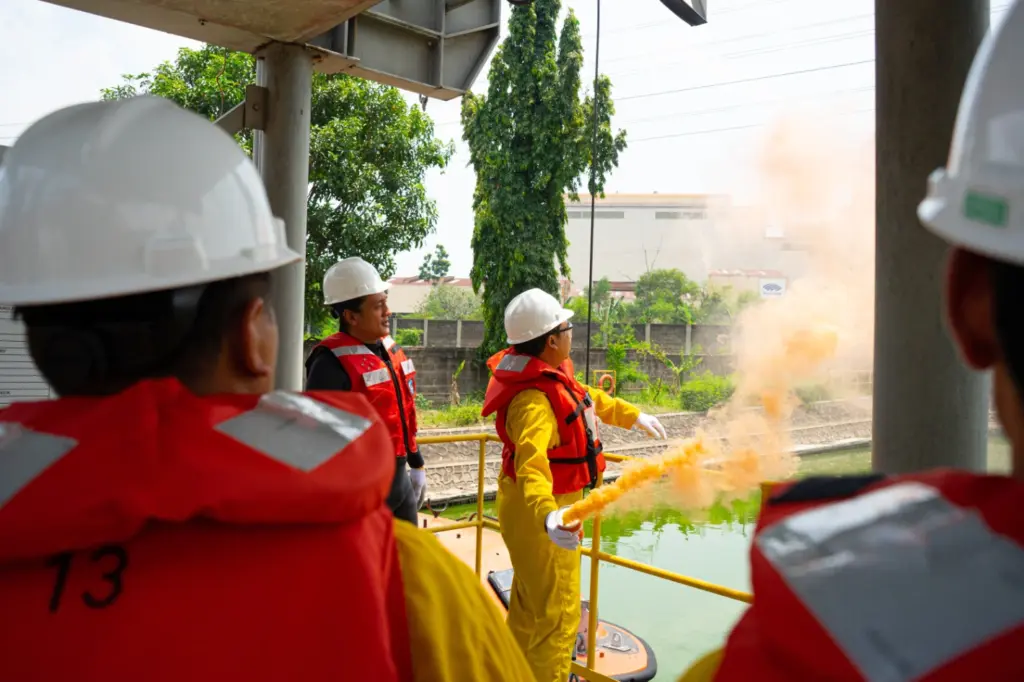
- Firefighting and self-rescue practical exercises
Course Content
The BOSIET with CA-EBS Digital Delivery programme covers the same four content areas as the standard BOSIET with CA-EBS:
Safety Induction
The Safety Induction introduces learners to the offshore operating environment, key hazards, and the regulatory and management frameworks that govern safety in the offshore oil and gas industry. Topics covered include typical offshore installation types and layouts, the key legislation applicable to offshore oil and gas operations, and the basic principles of offshore safety management systems.
Learners study the full spectrum of offshore hazards and associated risk levels, including pressure hazards, motion hazards, chemical hazards, electrical hazards, gravity hazards, noise hazards, radiation hazards, and confined space hazards. The principles of hazard identification and risk assessment are introduced, together with the hierarchy of controls and the role of permit-to-work systems in managing high-risk activities.
The induction also covers offshore emergency management arrangements, including installation alarms and communication systems, muster stations and temporary refuge procedures, emergency roles and responsibilities, and the personal actions expected of all offshore personnel before, during, and after an emergency. Learners are introduced to the concept of personal responsibility for safety and the importance of applying safety principles consistently throughout their time offshore.
Helicopter Safety and Escape with Compressed Air Emergency Breathing System (CA-EBS)
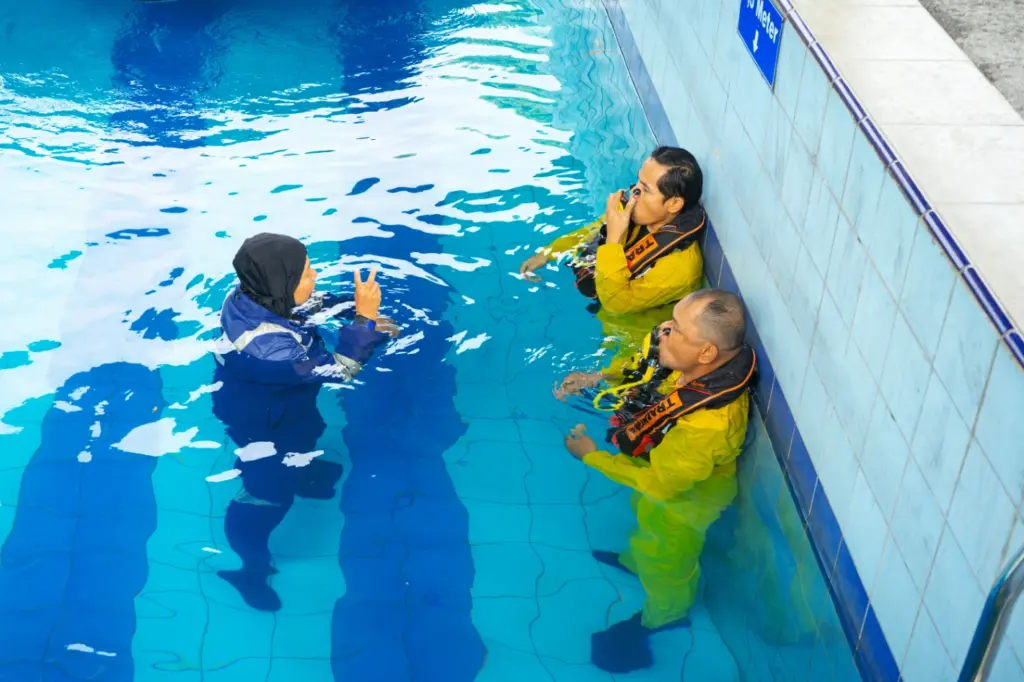
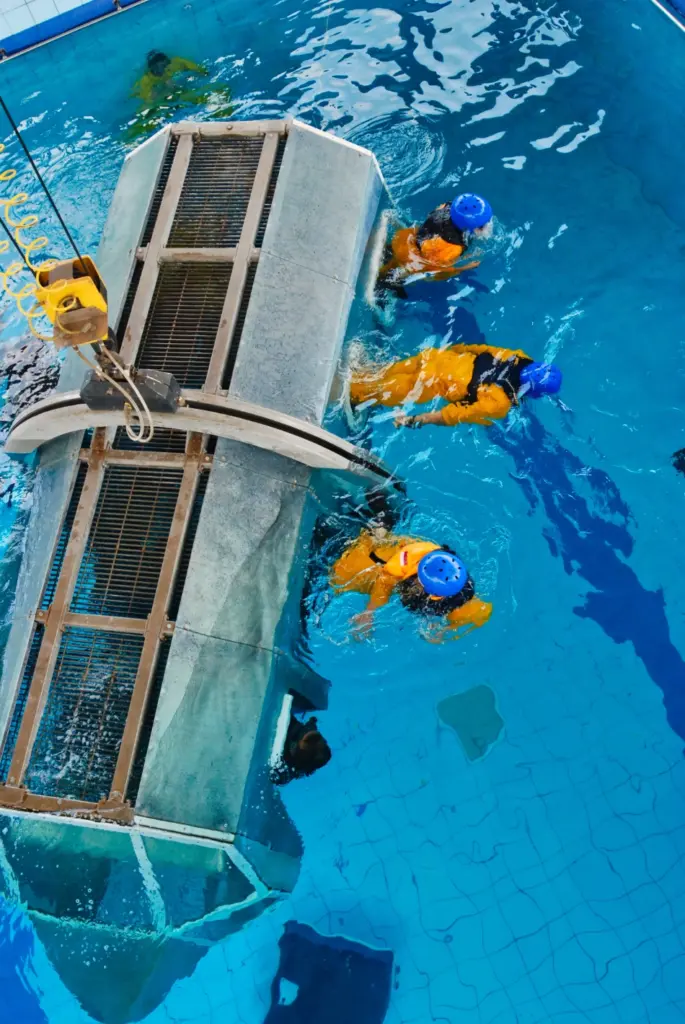
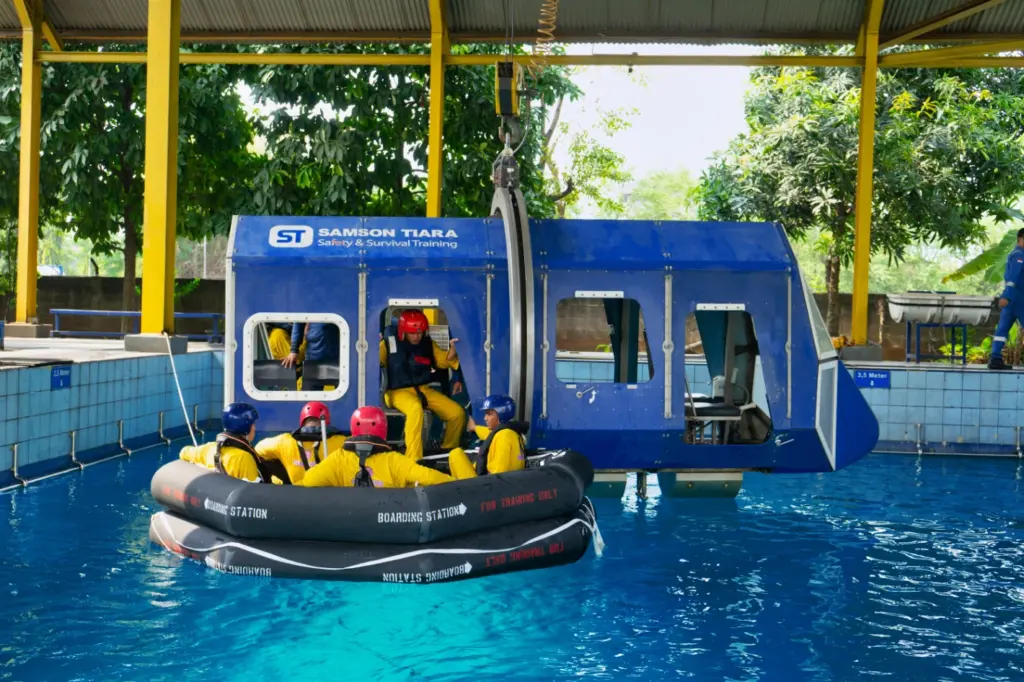
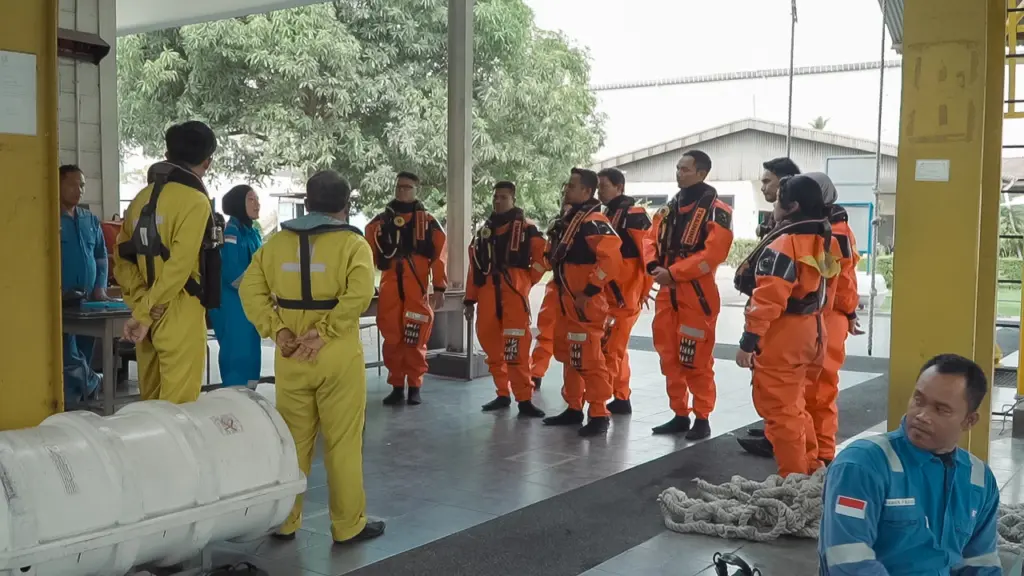
This unit prepares learners for offshore helicopter travel, covering both the theoretical knowledge required for safe travel and a progressive series of practical escape exercises conducted in our purpose-built pool using a Survival Systems METS™ (Modular Egress Training Simulator) Model 40, supervised by OPITO-qualified HUET safety divers.
Theoretical learning covers pre-flight briefing requirements, pre-boarding procedures (arrival time, correct dress, documentation, prohibited articles, and check-in), and in-flight safety requirements. Learners are made aware of the range of aviation transit suits in use across different operating regions and the importance of familiarising themselves with the specific suit they will be issued before boarding.
Helicopter emergency awareness covers how to inform the crew of observed emergencies (fire, smoke, fuel leaks, or abnormal conditions), in-flight emergency procedures (including donning the hood and ensuring the survival suit is fully zipped), aircraft flotation characteristics, emergency escape routes for ditching and emergency landing, and survival techniques following ditching or emergency landing on water or land. Learners study aviation lifejacket donning, brace positions across all seating and harness types, HUET evacuation procedures (locate, release, evacuate), and aviation liferaft deployment, initial actions, and secondary actions on boarding. The principles of Compressed Air Emergency Breathing System (CA-EBS), cylinder duration, limitations, deployment procedures, breathing techniques, and flotation considerations associated with CA-EBS use are covered together with Personal Locator Beacon (PLB) awareness where applicable.
Practical helicopter escape exercises are completed in progressive sequence in the HUET pool facility:
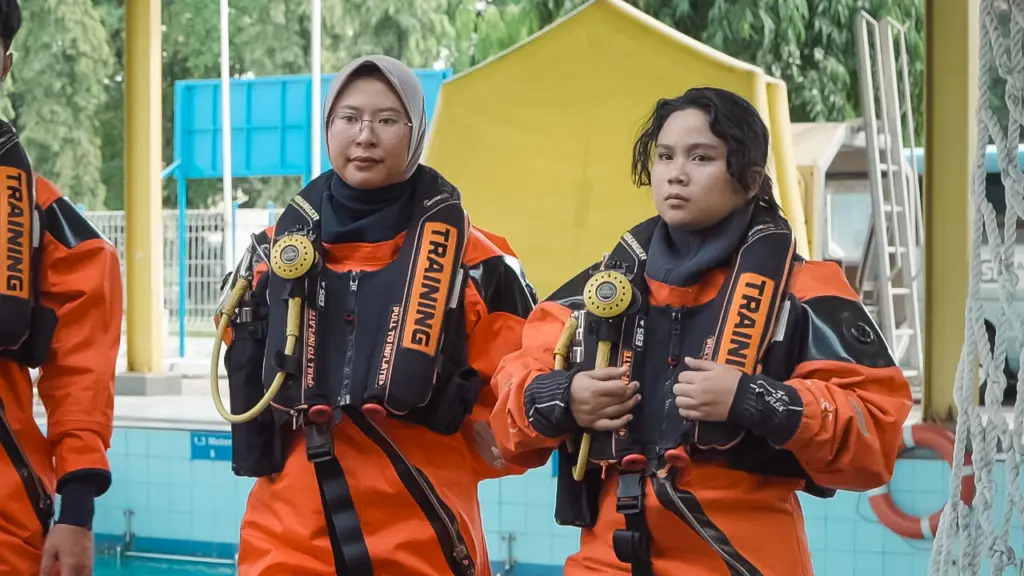
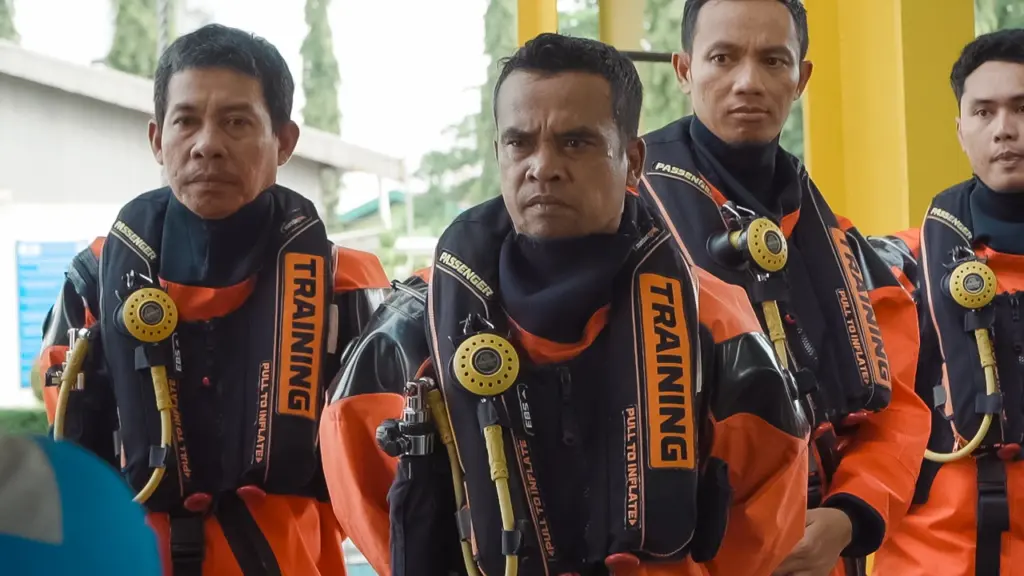
- Donning an aviation transit suit, aviation lifejacket, and CA-EBS equipment, and conducting CA-EBS integrity checks
- Deploying, operating, and breathing from CA-EBS equipment at atmospheric pressure in dry conditions
- Deploying, operating, and breathing from CA-EBS in a pool, experiencing positive and negative pressure from body orientation in water
- Actions in preparing for a helicopter ditching or emergency landing
- Evacuating from a helicopter trainer following a controlled emergency descent to a dry landing
- Dry evacuation into an aviation liferaft from a helicopter ditched on water, including CA-EBS deployment and push-out window operation, with initial liferaft actions (mooring lines, sea anchor, canopy)
- Donning an aviation transit suit, aviation lifejacket, and CA-EBS equipment
- Conducting CA-EBS integrity checks
- Deploying, operating, and breathing from CA-EBS at atmospheric pressure
- Deploying, operating, and breathing from CA-EBS in water
- Escaping from a partially submerged helicopter with CA-EBS deployed and operating
- Escaping from a capsized helicopter with CA-EBS deployed before capsize
- Inflating an aviation lifejacket, deploying a spray visor, and boarding an aviation liferaft from the water
Sea Survival and First Aid
This unit covers emergency evacuation procedures, sea survival techniques, and emergency first aid for offshore operations. Learners gain a thorough understanding of the types of offshore emergencies that may require evacuation, station bills and mustering procedures, escape routes and abandonment locations, and the various means of escape available on offshore installations including fixed platforms, FPSOs, and MODUs.
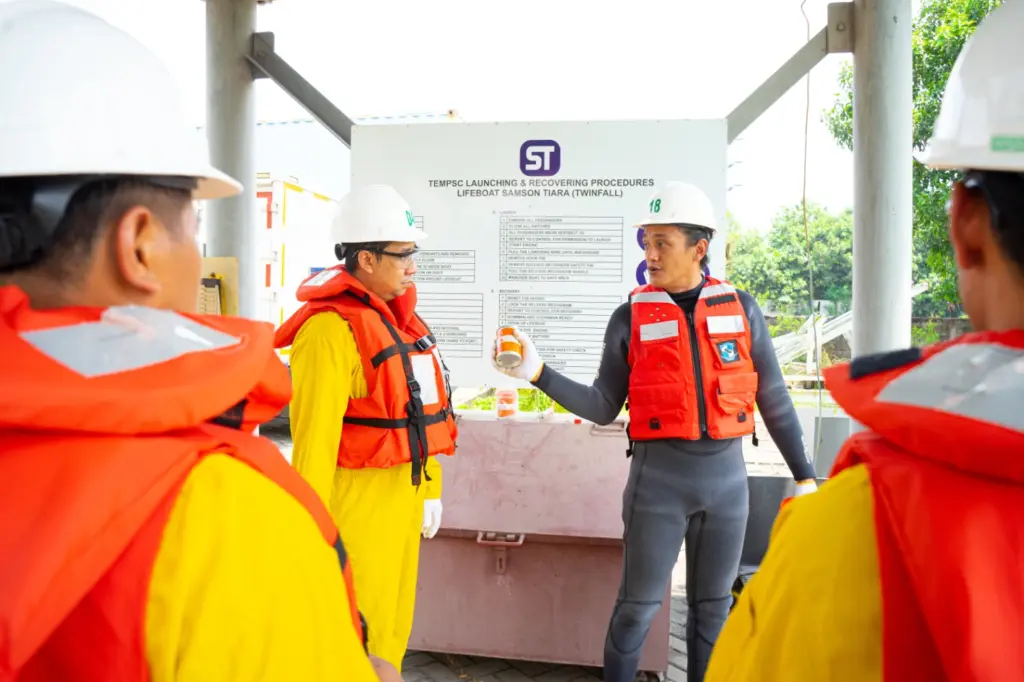
Learners study the types, functions, and capabilities of Totally Enclosed Motor-Propelled Survival Craft (TEMPSC), including mustering, boarding, and strapping-in procedures, safety precautions during lowering and release, and emergency equipment and supplies. Tertiary escape methods are covered including knotted rope, scramble net, davit-launched liferaft, ladders, and person descending escape devices. The SAR organisation, rescue methods available offshore (standby vessel, FRC, MRRD, net, basket, and ladder), and helicopter rescue procedures (single and double strop, basket) are addressed. The correct donning and use of marine survival suits (immersion suits) is also covered, including the importance of thermal protection in cold water survival situations.
Practical exercises include:
- Mustering, donning a lifejacket, and boarding and strapping in as a TEMPSC passenger
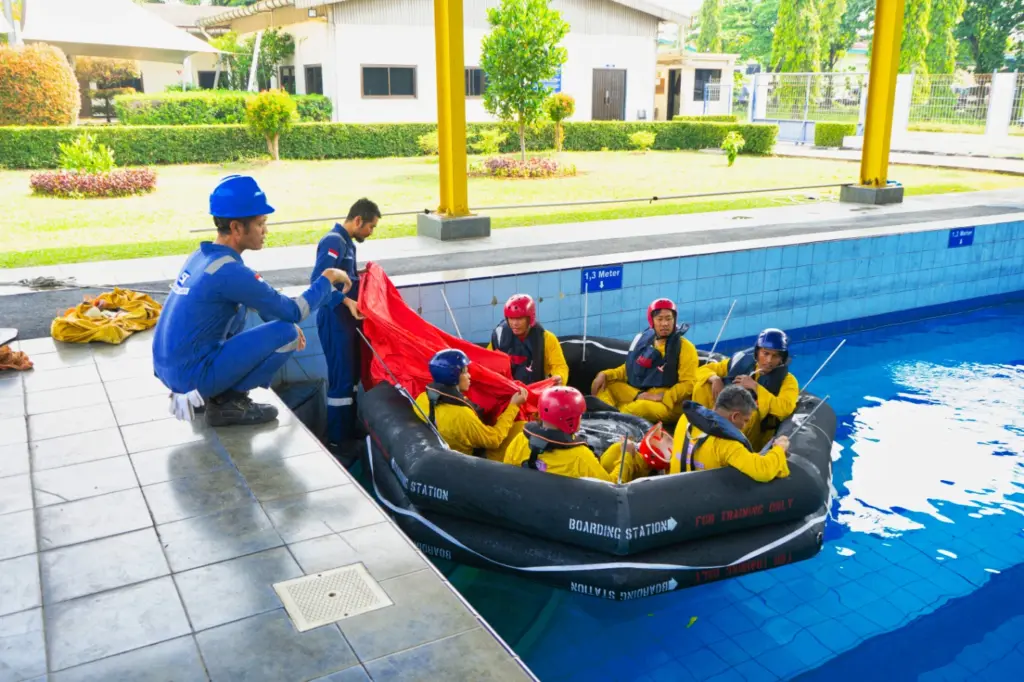
- Boarding a marine liferaft from the water, carrying out initial actions (mooring lines, sea anchor, raft maintenance) and secondary actions (lookouts, radio beacons, first aid)
- Water entry and correct precautions when entering from a height
- Fitting and using a helicopter rescue device (single or double strop or basket)
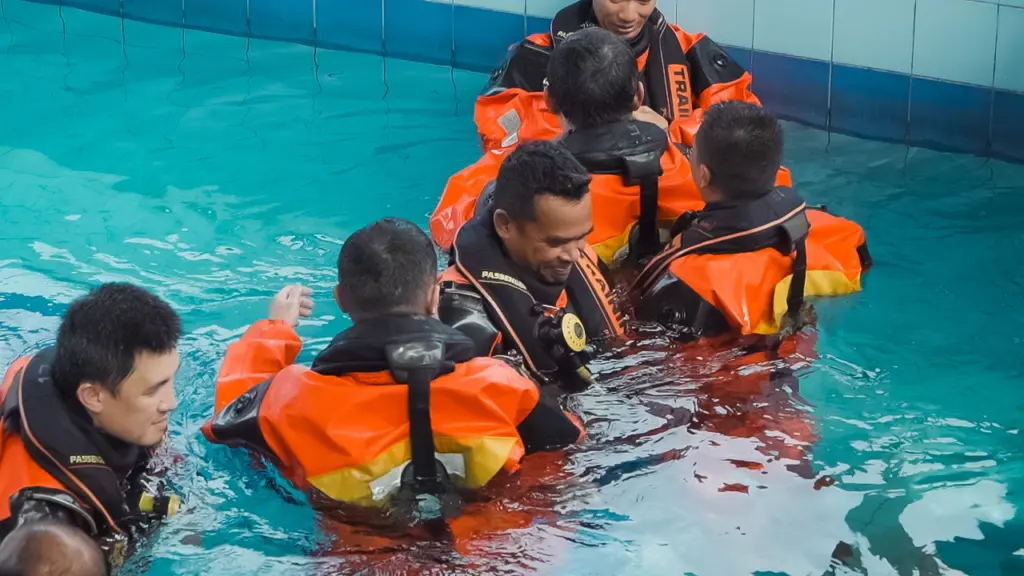
- Individual in-water survival techniques: swimming, HELP position, and wave slap protection
- Group in-water survival techniques: towing, chain, huddle, and circle formations, followed by rescue by a recognised offshore method
Emergency first aid training covers the assessment and immediate management of casualties in offshore emergency situations, including recognising and responding to life-threatening conditions, performing CPR, managing unconscious casualties, and providing basic first aid until trained medical personnel are available.
Firefighting and Self-Rescue
This unit develops learners’ competence in basic firefighting and self-rescue techniques applicable to offshore environments. Learners study fire triangle and fire classification principles, onboard fire hazards, the basic principles of fire prevention, and the correct selection and use of portable firefighting equipment for Class A and Class B fires.
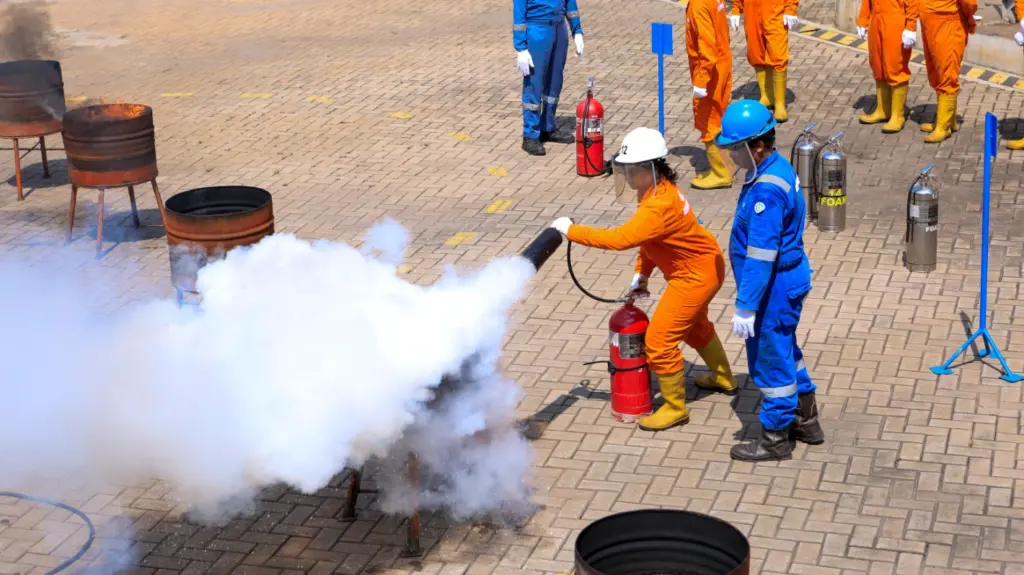
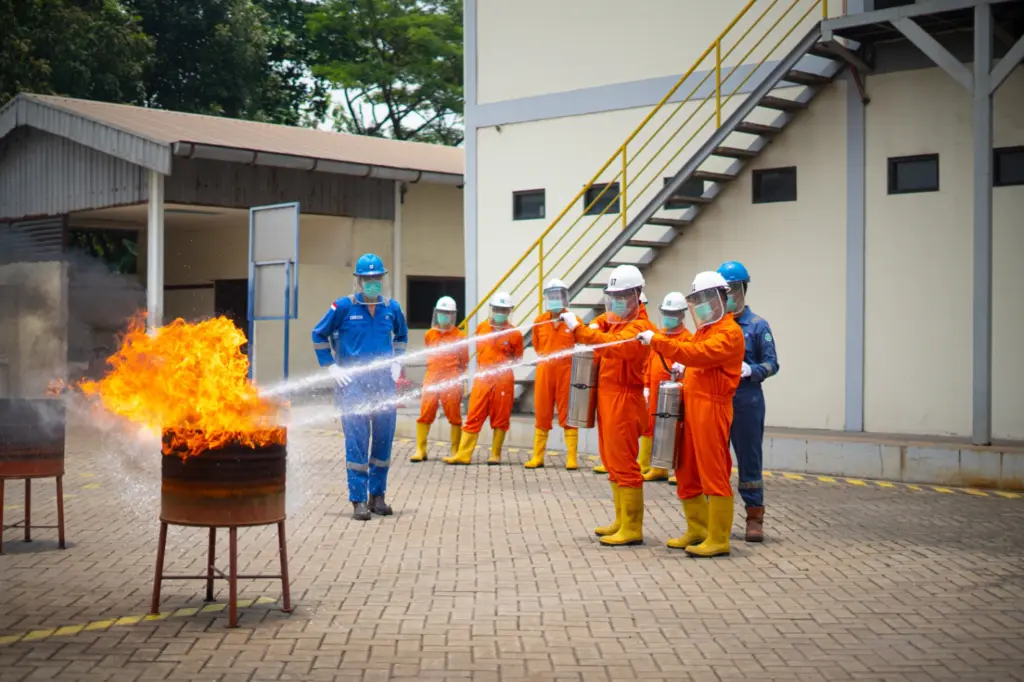
Practical firefighting exercises include the correct response to onboard fire incidents, raising the alarm, selecting and operating the appropriate portable fire extinguisher for the fire class involved (water, dry powder, foam, and CO2), and using a fire hose reel.
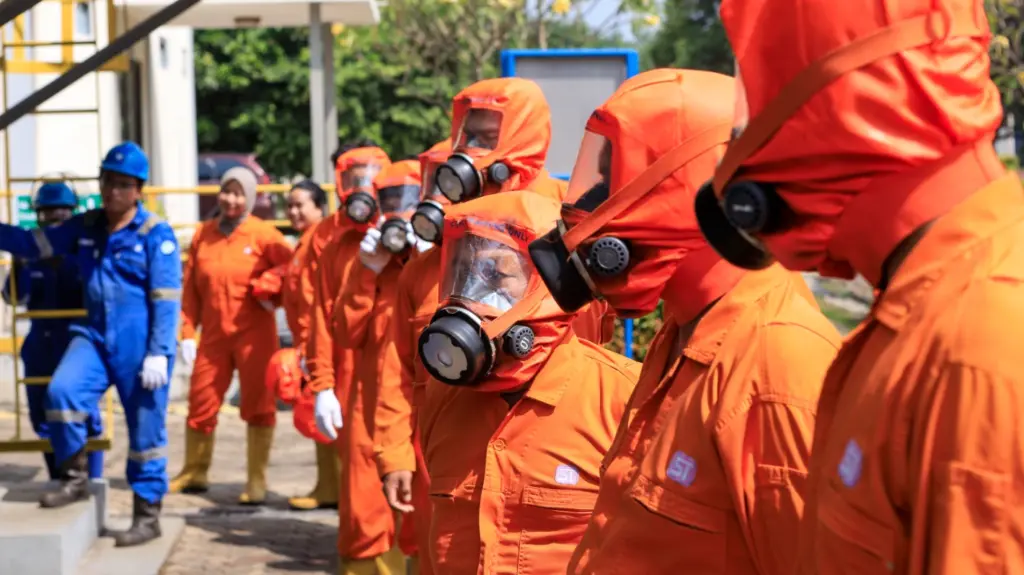
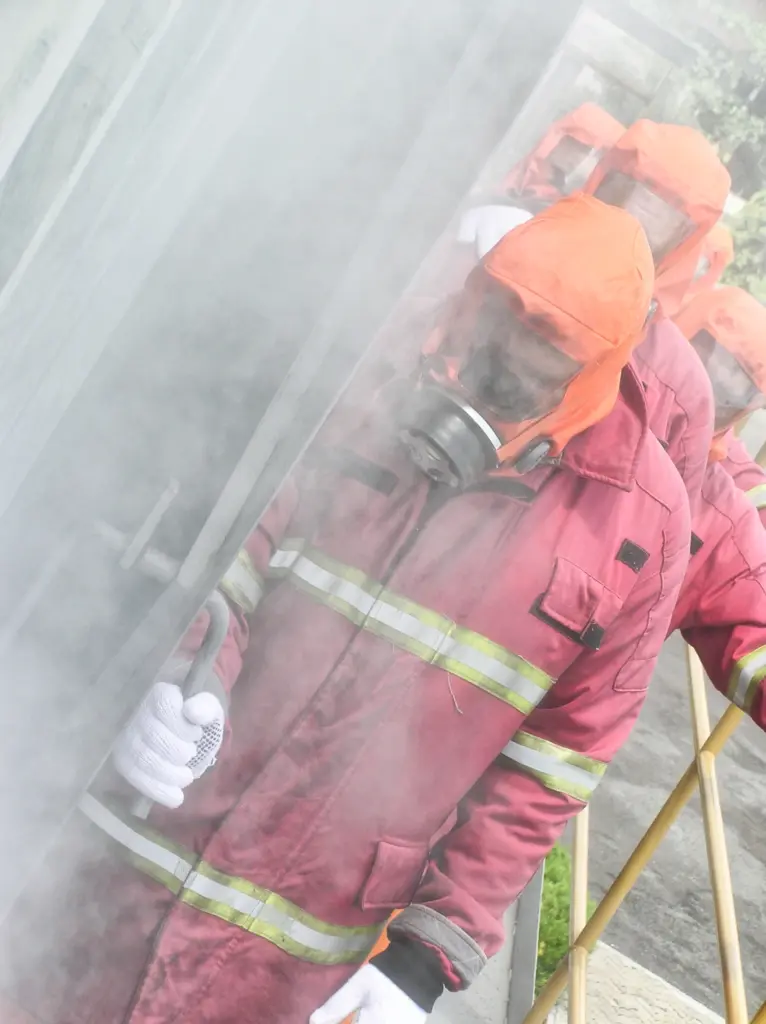
Self-rescue training focuses on the skills and techniques required to escape from smoke-filled areas and areas of reduced or zero visibility, including the correct use of smoke hoods or emergency escape breathing devices where provided. Learners practise escape route navigation, door-checking procedures, and the importance of maintaining low proximity to the floor in smoke-filled environments.
Prerequisites
- Participants must hold a valid offshore medical certificate or equivalent medical fitness certification, in accordance with OPITO medical entry requirements.
- Participants must satisfy OPITO medical entry requirements prior to undertaking practical exercises. Due to the additional physiological demands associated with Compressed Air Emergency Breathing System (CA-EBS) training, additional medical requirements may apply to learners undertaking CA-EBS practical exercises. Learners should consult the current OPITO product specification and training provider joining instructions for full details.
Training photos


-
 BOSIET WITH EBS DIGITAL DELIVERY
BOSIET with EBS Digital Delivery
OPITO -
 BOSIET WITH CA-EBS
Basic Offshore Safety Induction & Emergency Training (BOSIET) with Compressed Air Emergency Breathing System (CA-EBS)
OPITO -
 BOSIET WITH EBS
Basic Offshore Safety Induction & Emergency Training with EBS
OPITO -
 T-BOSIET DIGITAL DELIVERY
T-BOSIET Digital Delivery (T-BOSIET-DD)
OPITO -
T-BOSIET WITH CA-EBS
Tropical Basic Offshore Safety Induction & Emergency Training with Compressed Air Emergency Breathing System (T-BOSIET with CA-EBS)
OPITO -
T-BOSIET WITH EBS
Tropical Basic Offshore Safety Induction & Emergency Training with Emergency Breathing System (T-BOSIET with EBS)
OPITO -
 T-BOSIET
Tropical Basic Offshore Safety Induction & Emergency Training (T-BOSIET)
OPITO