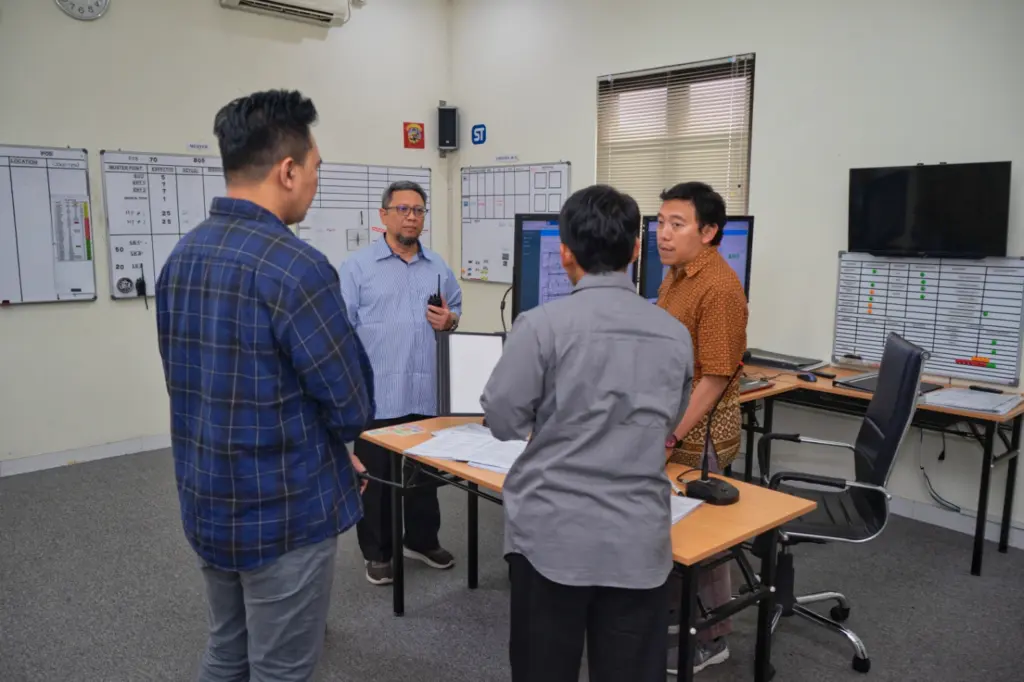
OIM Controlling Emergencies
OPITO competence assessment for Offshore Installation Managers and their deputies, evaluating the ability to command and control major offshore emergencies through realistic simulated emergency scenarios.


Introduction
The OPITO OIM Controlling Emergencies (OIM-CE) assessment is the definitive competence certification for Offshore Installation Managers and their deputies in the management of major emergencies. Unlike a training course, the OIM-CE is a formal, structured competence assessment conducted under rigorously controlled simulated conditions. It establishes, to an internationally accepted standard, that the OIM has the knowledge, skills, and decision-making capability required to manage a major emergency on their installation.
The oil and gas industry places extraordinary demands on the OIM in an emergency. This is a role that requires not just technical knowledge, but the ability to maintain situational awareness across multiple simultaneous threats, communicate clearly under pressure to multiple stakeholders, direct and manage a team that may itself be under stress, and make consequential decisions with incomplete information and against time. The OIM-CE assessment is designed to verify that these capabilities are present and to a standard that industry and regulators can rely on.
Assessment is conducted using asset-specific information drawn from the Safety Case and Emergency Response Plan for the relevant installation type, making each assessment directly relevant to the delegate’s asset type and operational environment. The delegate is assessed across a minimum of three simulated emergency scenarios, with a maximum of four attempts permitted to successfully achieve the required outcomes.
Assessment is conducted using a 1+1:1 assessor and discipline expert to learner ratio, ensuring that the assessment panel combines formal assessment rigour with detailed operational knowledge of the installation type. No certificate is awarded unless all outcomes are successfully met. Employers are notified of the assessment outcome within one working day, with a full written assessment report provided within 14 days.
The OIM-CE certificate has no formal expiry date. However, OPITO recommends reassessment at a minimum every three years to maintain currency, and Duty Holders are expected to incorporate the assessment outcome into their broader OIM appointment and competence management processes.
Who Needs the OIM-CE Assessment?
The OIM Controlling Emergencies assessment is intended for personnel who have been deemed ready by their employer to be formally assessed in the role of Offshore Installation Manager (OIM), Deputy OIM, or Emergency Deputy OIM.
Entry to the assessment is by employer Duty Holder Declaration only. The delegate’s employer must formally declare that the delegate has demonstrated the required state-of-readiness competence in the workplace and has been deemed ready for formal assessment. This means the OIM-CE is not an entry-level or standalone qualification; instead, it is the formal certification point within a broader OIM training and competence programme that includes company-specific emergency response training, offshore drills and exercises, and typically the completion of the Major Emergency Management Initial Response (MEM-IR) training.
Scope
The OIM Controlling Emergencies competence assessment (OPITO Product Code 7025, Unit OIS-196) covers the formal assessment of the delegate in the role of an Offshore Installation Manager during an emergency situation under simulated conditions. The assessment uses a minimum of three and a maximum of four emergency scenarios, selected and prepared using relevant asset-specific information from the Safety Case and Emergency Response Plan for the appropriate installation type. A maximum of four attempts to successfully complete three scenarios is permitted.
Outcome 1 (Maintaining a State of Readiness) is evidenced by a formal Duty Holder Declaration from the delegate’s employer prior to the assessment. Outcomes 2 through 6 are formally assessed through direct observation during simulated emergency scenarios. The assessment panel consists of an OPITO-qualified Assessor and a Discipline Expert drawn from or authorised by the candidate’s company.
General Course Objectives
The OIM-CE assessment verifies that the delegate can effectively perform all required competence outcomes in their role as an OIM during a major emergency, including:
- Maintaining a state of emergency readiness — confirmed by Duty Holder Declaration.
- Assessing the situation rapidly and taking effective action throughout the emergency.
- Maintaining communications with all internal and external stakeholders.
- Managing individual and team performance throughout the emergency.
- Delegating authority to act appropriately and effectively.
- Recognising and managing the effects of stress in self and in others.
Assessment Content
Outcome 1 – Maintaining a State of Readiness
This outcome is evidenced by a formal Duty Holder Declaration completed by the delegate’s employer prior to assessment commencement. The declaration confirms that the delegate has demonstrated the following in the workplace:
- Providing valid and reliable oral and written information to relevant personnel
- Ensuring drills and exercises are consistent with priorities, objectives, procedures, and statutory requirements
- Coaching of the Deputy OIM, the Emergency Management Team and Emergency Response Team, and assessing their potential to respond in emergencies during drills and exercises
- Encouraging personnel to seek clarification of their allocated roles and to maintain awareness of ongoing activities
- Pre-planned actions to deal with potential emergencies
- Confirming the serviceability and sufficiency of equipment in accordance with procedures
- Core Essential Knowledge requirements as specified in the supporting documents
- Asset-type knowledge specific to the installation type to be used in the assessment scenarios
Outcome 2 – Assessing the Situation and Taking Effective Action
Assessed through direct observation during simulated emergency scenarios. Performance criteria include:
- Obtaining, evaluating, and confirming information from all appropriate sources as quickly as possible
- Utilising appropriate resources throughout the emergency
- Making valid interpretations of emergency procedures and pre-determined strategies, and taking valid decisions throughout the emergency
- Reviewing the potential outcomes of the emergency and the possible response actions against consequences and probabilities
- Developing and continually reviewing a plan of action, including contingency provisions
- Taking the appropriate action as quickly as possible
- Coordinating and directing emergency response teams effectively
- Maintaining working practices that are safe and conform to current health and safety legislation and company procedures
Outcome 3 – Maintaining Communications
Assessed through direct observation. Performance criteria include:
- Informing the onshore team, coastguard, ERRV, emergency response team leaders, nearby installations/shipping, and helicopters of the emergency and its progression as appropriate
- Keeping appropriate external agencies informed in accordance with local arrangements, guidance documents, and legislation
- Communicating the plan effectively using PA, telephone systems, and 2-way radio
- Establishing and maintaining a common understanding of the situation throughout the Emergency Management Team
- Providing status reports to installation staff at suitable intervals
- Ensuring an accurate record of key events and communications is maintained
- Establishing alternative communication methods when necessary
Outcome 4 – Delegate Authority to Act
Assessed through direct observation. Performance criteria include:
- Making valid decisions about which activities must be delegated in the light of circumstances
- Assigning delegated activities to the most suited personnel in accordance with established procedures
- Checking that delegates understand their tasks and have reported back accordingly
Outcome 5 – Managing Individual and Team Performance
Assessed through direct observation. Performance criteria include:
- Requesting assistance and action from others in a manner that promotes a positive response
- Taking action and instilling confidence in the team through positive leadership
- Recognising strengths and weaknesses within the team and taking appropriate action
- Maintaining an appropriate degree of detachment
Outcome 6 – Deal with Stress in Self and Others
Assessed through direct observation. Performance criteria include:
- Quickly recognising any deterioration in personal performance or the performance of team members due to stress
- Removing stressed personnel from critical tasks (especially those involving communication links) and reallocating those tasks
- Delegating personal tasks when workload becomes excessive
- Taking action to reduce stress in oneself and the team
Emergency Scenario Framework
Scenarios are prepared using asset-specific Safety Case and Emergency Response Plan information for the relevant installation type (production fixed/floating, drilling fixed/floating, mobile/floating, or NUI). Each scenario must present clear decision-making requirements, including both mandatory response points and judgement-based alternatives. Scenarios must collectively cover:
- Type A – a major emergency that is readily controllable if managed appropriately
- Type B – a major emergency that could escalate if not controlled
- Type C – a major emergency leading to full evacuation of the facility
Scenarios must include incidents drawn from the following range: well control incident, explosion and fire, unignited hydrocarbon or toxic gas release, accommodation fire, helicopter incident, pipeline incident, collision or wave damage causing structural collapse, and (for floating or mobile assets) loss of stability or loss of positioning. Across all scenarios, the assessment must cover a mandatory combination of events including evacuation or abandonment, injured personnel or loss of life, man overboard, loss of communication, loss of containment, multiple casualties, loss of evacuation routes or muster points, stressed personnel, extreme weather, environmental impacts, loss of essential facilities, loss of key personnel, and rapidly developing situations.
Prerequisites
Entry to the OIM Controlling Emergencies assessment requires a formal Duty Holder Declaration from the delegate’s employer. This declaration must confirm that:
- The delegate has achieved the performance criteria for Outcome 1 (Maintaining a State of Readiness) in the workplace
- The delegate has satisfied the Core Essential Knowledge criteria (1.7) and the asset-type knowledge requirements (1.8)
- The delegate has been deemed ready for formal assessment against Outcomes 2 through 6
- The declaration must be provided using the OPITO OIM Duty Holder Declaration or an equivalent document containing the required evidence.
- Candidates should hold the position of Offshore Installation Manager, Deputy OIM, Relief OIM, or be designated for appointment to these positions. It is strongly recommended — though not formally required — that delegates have previously completed the Major Emergency Management Initial Response (MEM-IR) training or equivalent emergency management training. Sufficient additional company personnel must also attend to support the exercise role-player requirements.
- Medical screening is required prior to participating in practical assessment exercises.
Note on Duration
There is no fixed duration defined by OPITO. The assessment must allow sufficient time for the learner to complete the required emergency scenarios.
Note on Certificate Validity
No formal expiry date. However, OPITO recommends reassessment at a minimum every three years.
Accommodation Options
The Royal Krakatau Hotel
Emerald by Royal Krakatau
Forbis Hotel Cilegon
Swiss Belexpress Cilegon
Amaris Hotel Cilegon