
HUET with CA-EBS
OPITO-approved T-BOSIET training delivered through a blended digital format, combining online theoretical learning with practical safety exercises including helicopter escape, sea survival, firefighting, and first aid for offshore operations in tropical environments.

Introduction
The OPITO Helicopter Underwater Escape Training with Compressed Air Emergency Breathing System (HUET with CA-EBS) is the internationally recognised helicopter escape certification for personnel who will be supplied with a Compressed Air Emergency Breathing System (CA-EBS) during offshore helicopter travel and require a standalone helicopter escape qualification.
Where a rebreather EBS provides a relatively straightforward extension to standard helicopter escape training, the CA-EBS is a compressed air breathing system that requires structured familiarisation and practical training to ensure safe use during helicopter underwater escape. The HUET with CA-EBS programme combines the full standard HUET escape exercise sequence with CA-EBS theory, shallow water pool exercises, and, where national regulations and risk assessments permit, advanced CA-EBS exercises conducted within the HUET itself. This graduated approach ensures learners are genuinely confident and competent with their equipment before they ever board an offshore helicopter.
HUET with CA-EBS is a helicopter-escape-only course and does not include sea survival training. Personnel who also require sea survival certification should consider the BOSIET+CA-EBS programme, which delivers the full offshore safety curriculum. Please note that additional medical fitness requirements apply for the CA-EBS practical exercises.
Delivered in accordance with OPITO Product Code 5295, HUET with CA-EBS certification is valid for four years.
Who Needs HUET with CA-EBS Training?
HUET with CA-EBS training is intended for personnel travelling to offshore installations by helicopter where a Compressed Air Emergency Breathing System (CA-EBS) is issued as part of the aviation survival equipment and where helicopter escape training is required without the full offshore safety induction programme.
This course may be required for personnel transferring between offshore installations, those who already hold a recognised offshore safety induction certificate, or personnel working in roles where the operator specifies HUET-level helicopter escape training rather than the full BOSIET programme.
Where personnel are travelling offshore for the first time, operators may instead require the full BOSIET programme.
Scope
The HUET with CA-EBS programme prepares learners who intend to travel to and from offshore installations by helicopter by providing training in pre-flight and in-flight requirements and equipping them with the knowledge and practical skills required in the event of a helicopter emergency, with a specific focus on escaping from a helicopter following ditching using CA-EBS equipment.
The programme does not include sea survival training. For learners requiring combined helicopter escape and sea survival certification with CA-EBS, the OPITO BOSIET with CA-EBS programme is recommended.
General Course Objectives
The objectives of this training are that learners will be able to:
- Demonstrate, in a simulated environment, that they can use safety equipment and follow procedures in preparing for and during helicopter emergencies, with particular focus on escaping from a helicopter following ditching using Compressed Air Emergency Breathing System (CA-EBS) equipment.
Course Content
Helicopter Safety and Escape with Compressed Air Emergency Breathing System (CA-EBS)
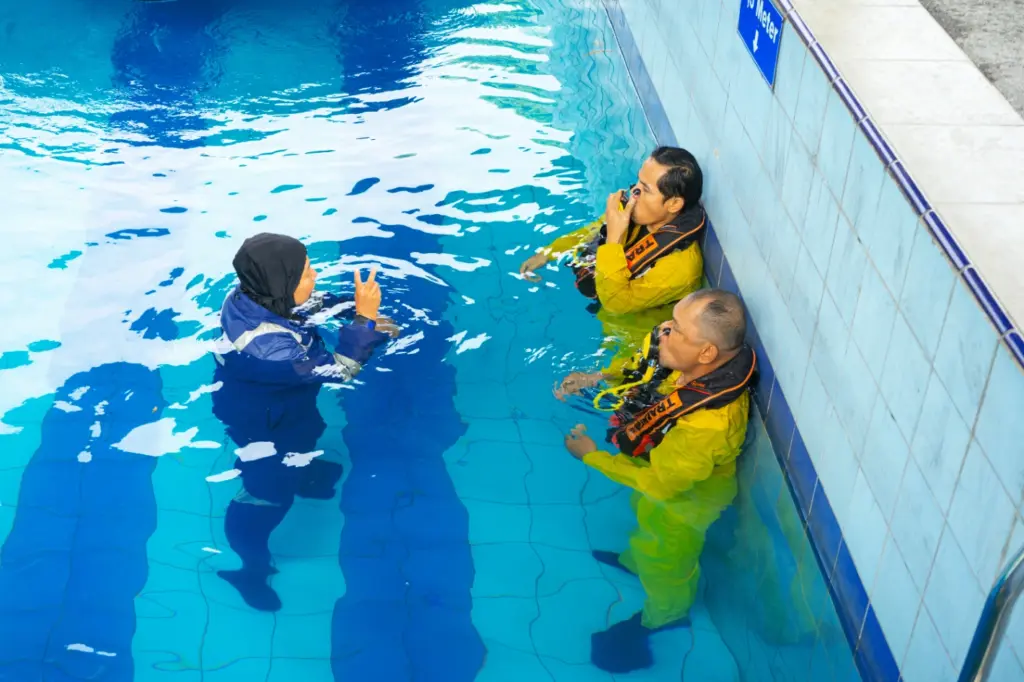
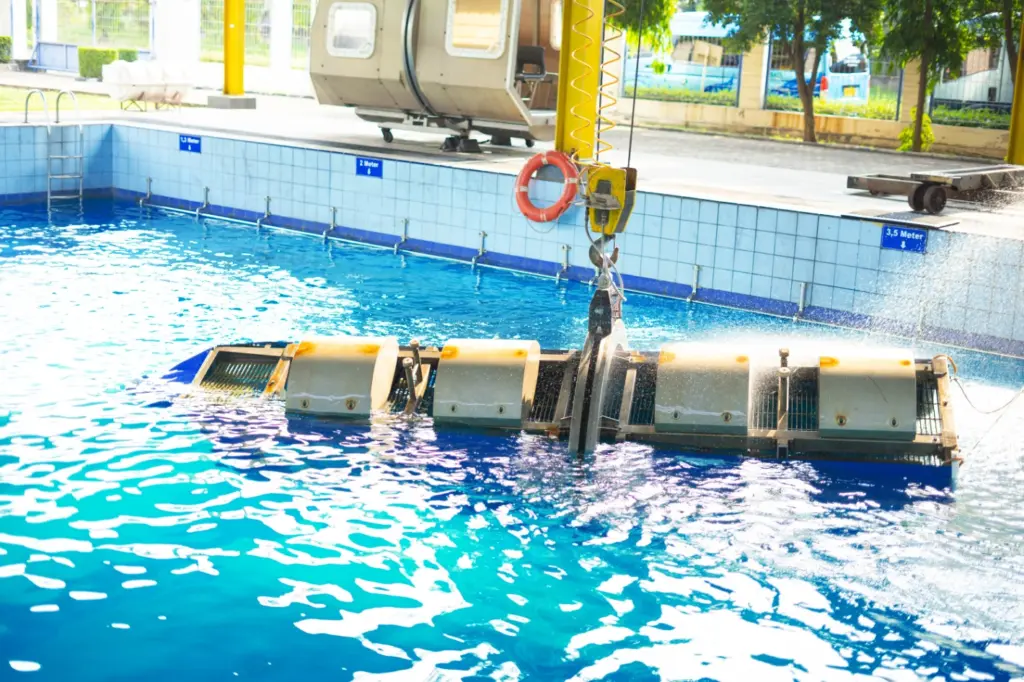
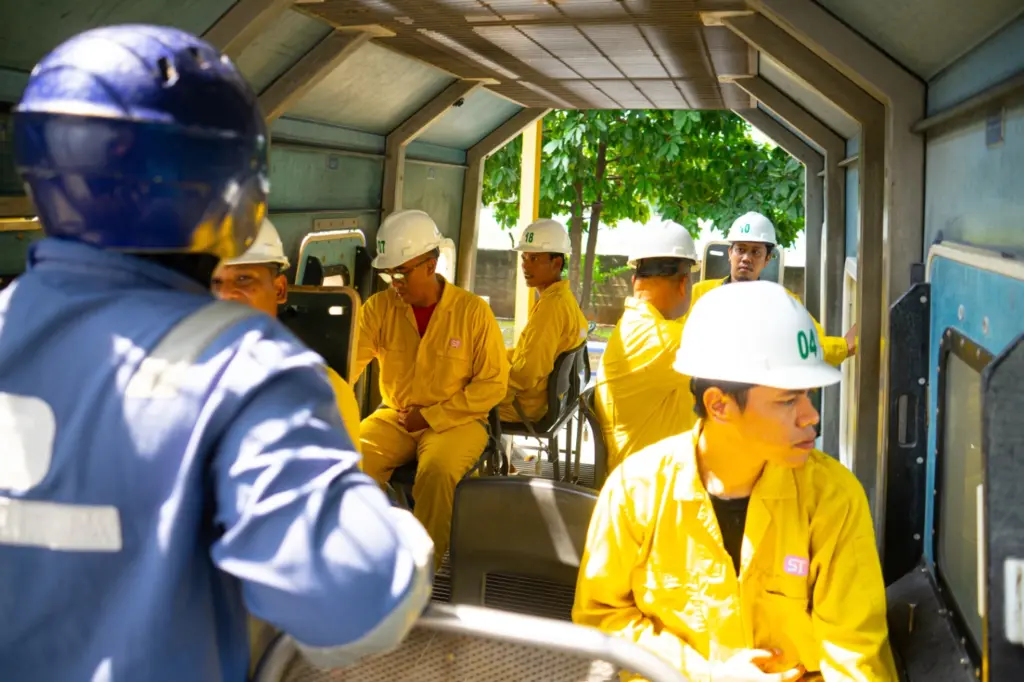
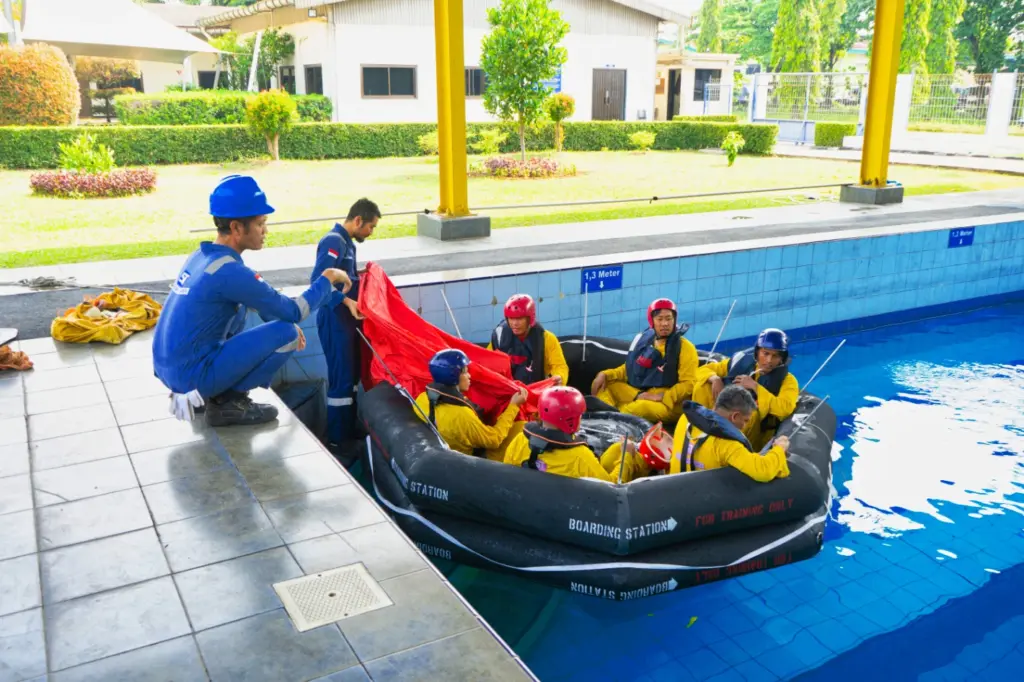
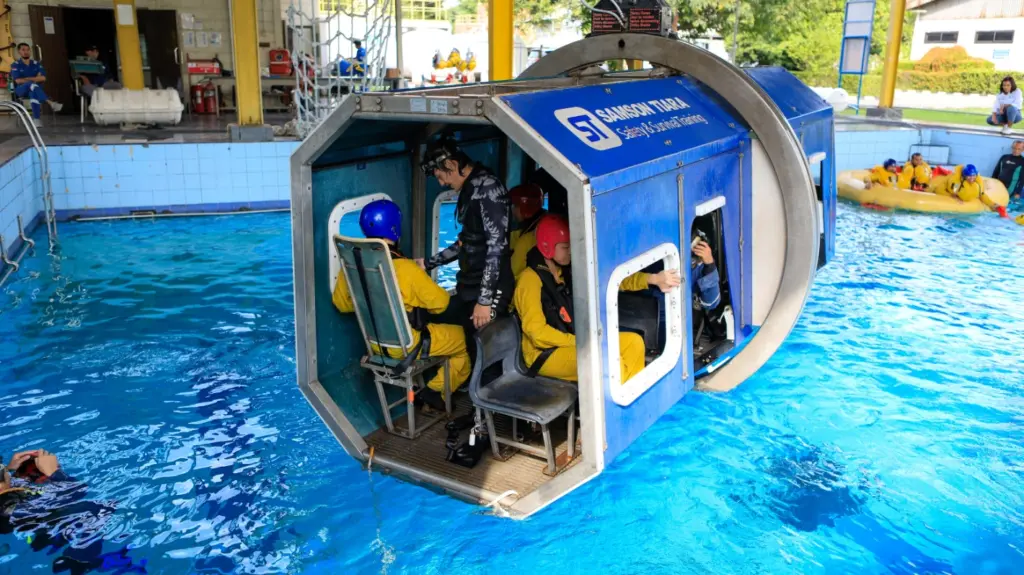
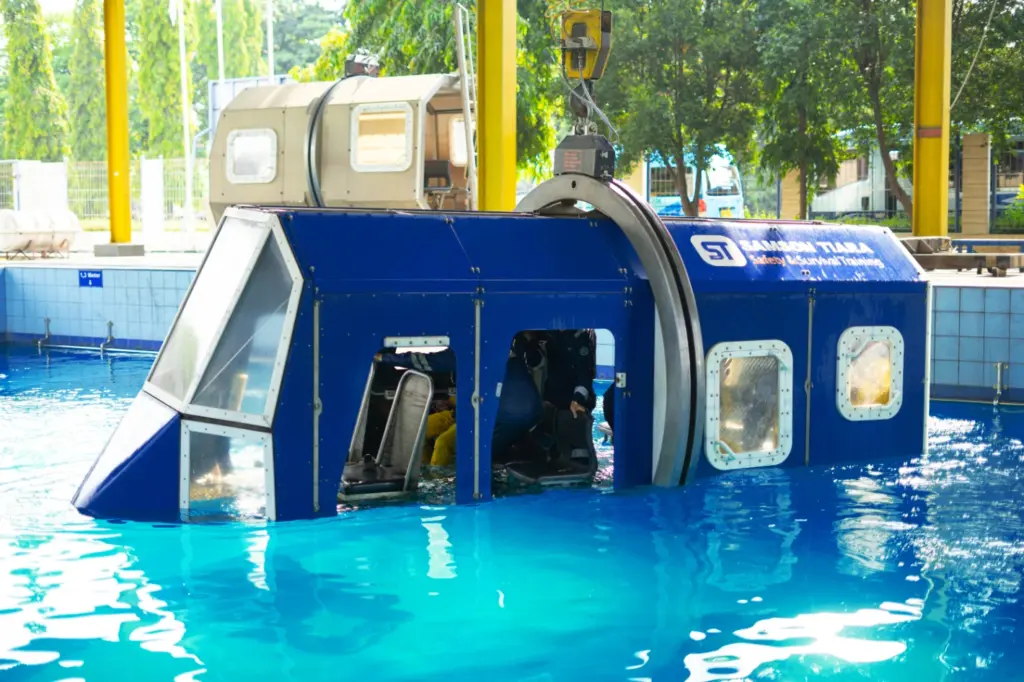
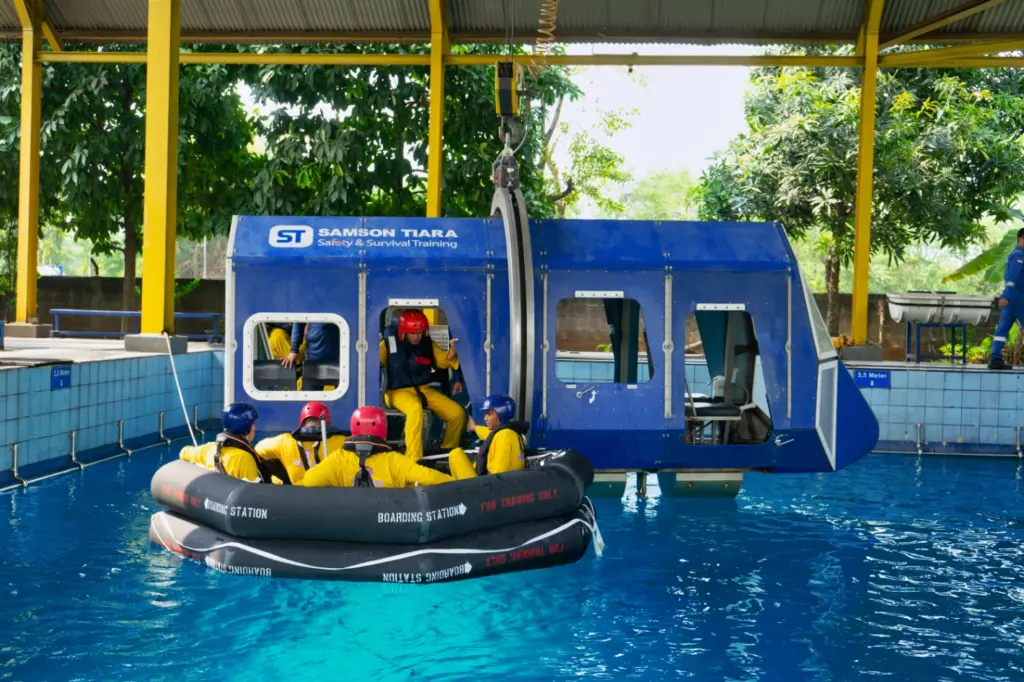
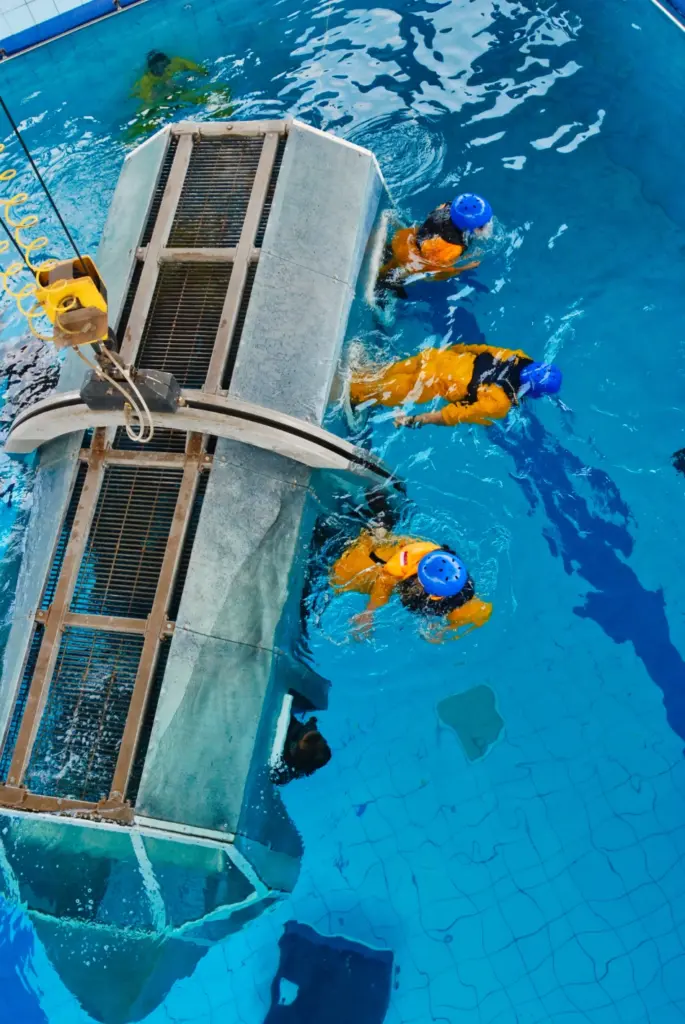
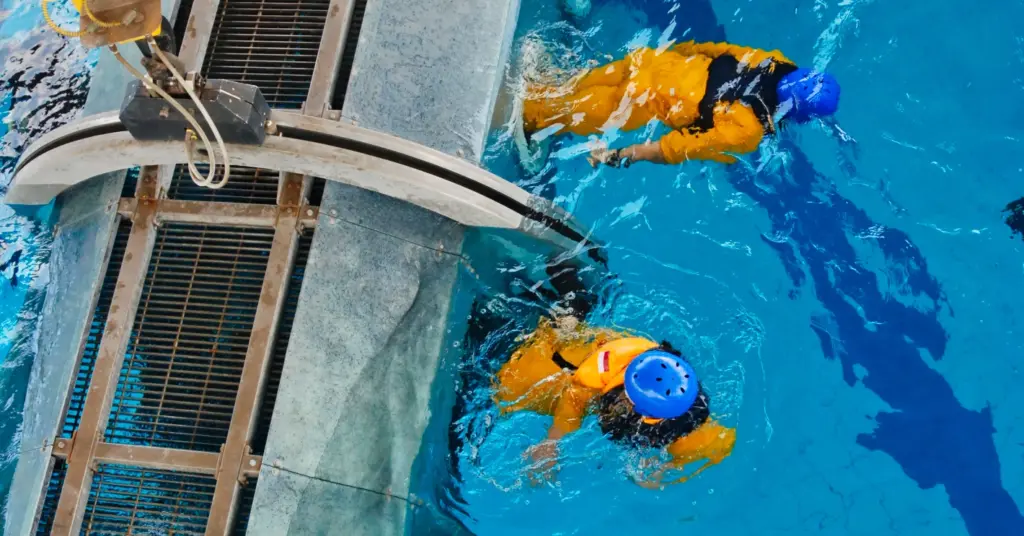
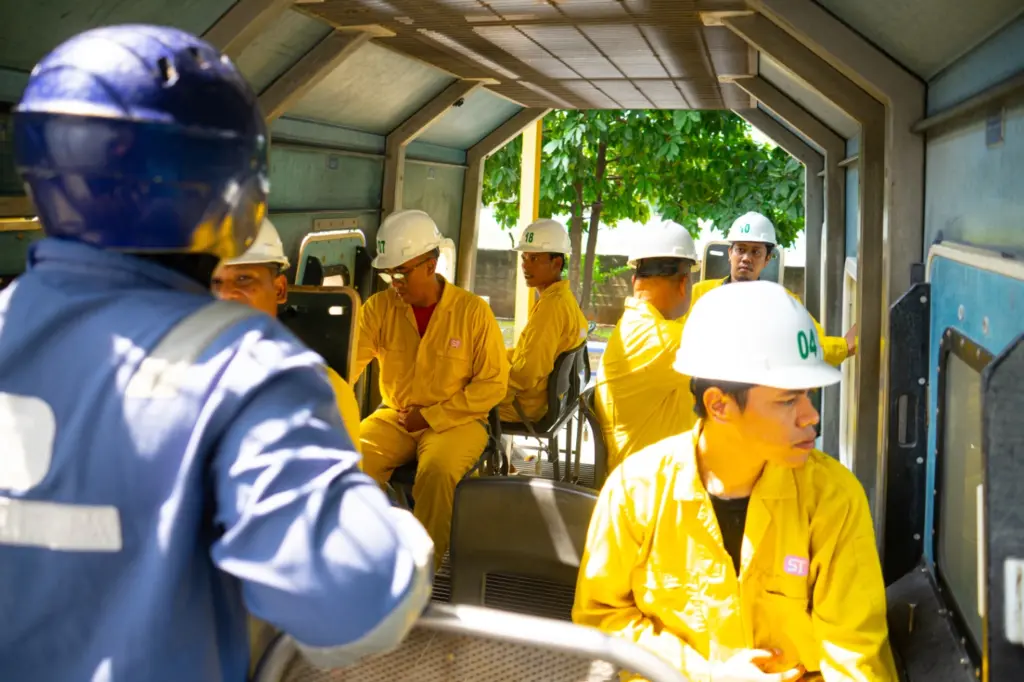
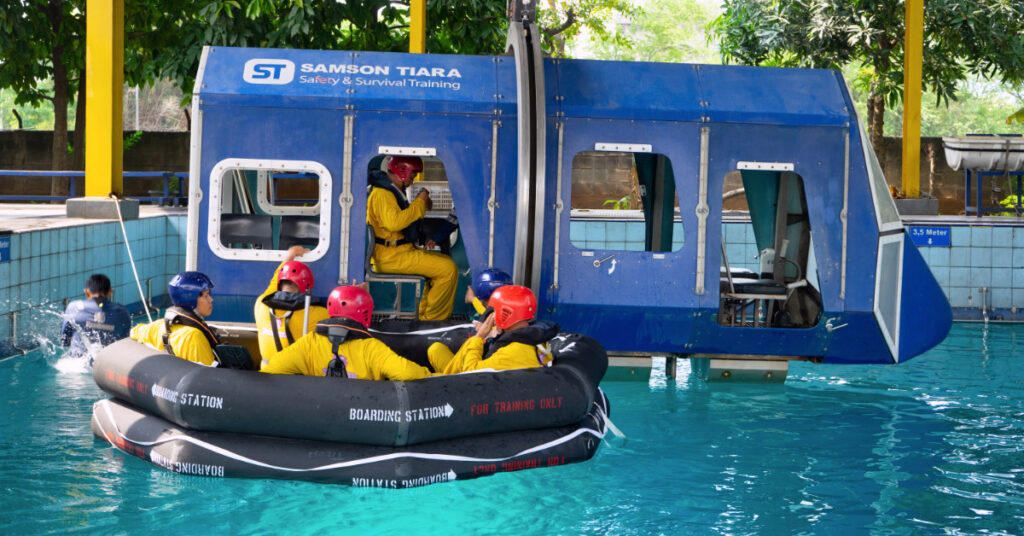
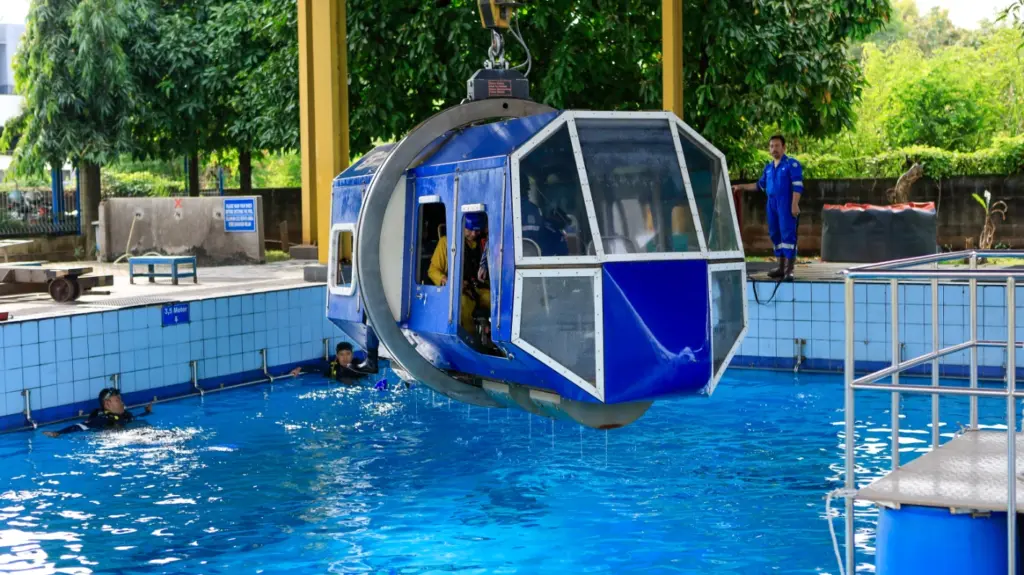
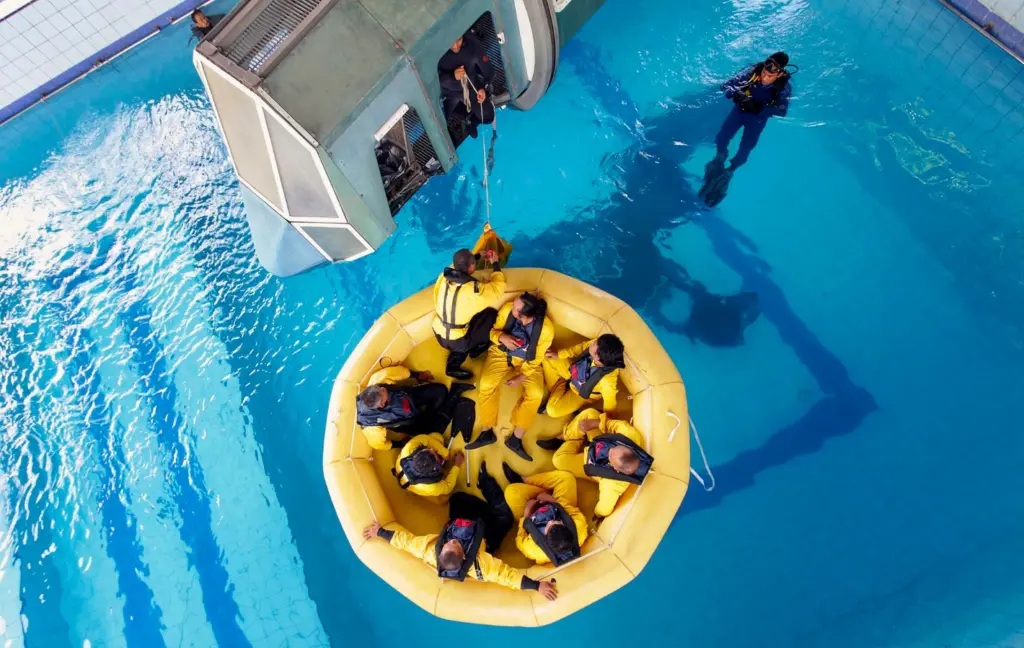
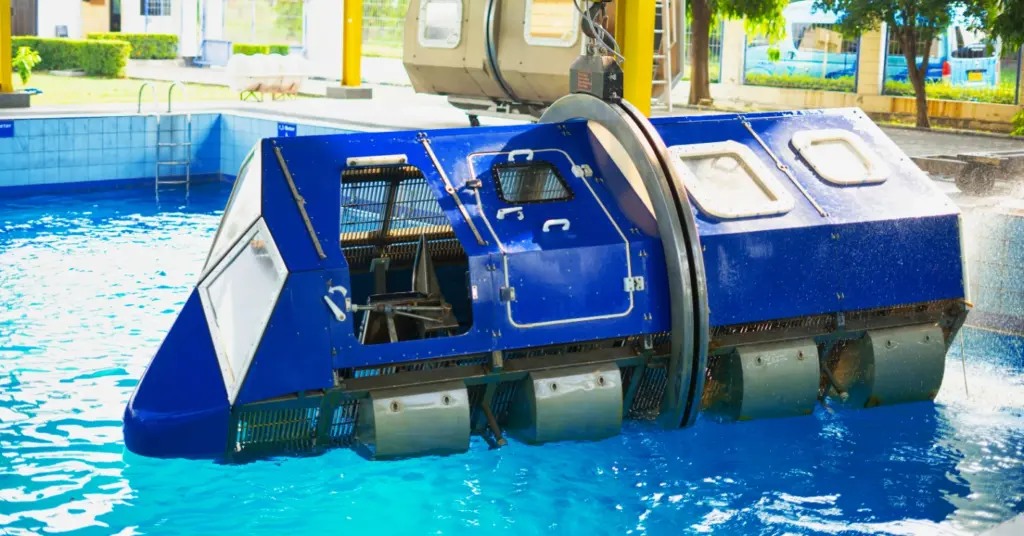
This unit prepares learners for offshore helicopter travel where a Compressed Air Emergency Breathing System (CA-EBS) is issued. It covers the full theoretical helicopter travel and emergency programme, a standard HUET escape exercise sequence, and a comprehensive CA-EBS exercise series progressing from dry familiarisation through shallow water training to and, where permitted by local regulations and risk assessments, CA-EBS exercises conducted during HUET partial-submersion and capsize escape scenarios. Practical exercises are conducted in our purpose-built pool using a Survival Systems METS™ (Modular Egress Training Simulator) Model 40, supervised by OPITO-qualified HUET safety divers.
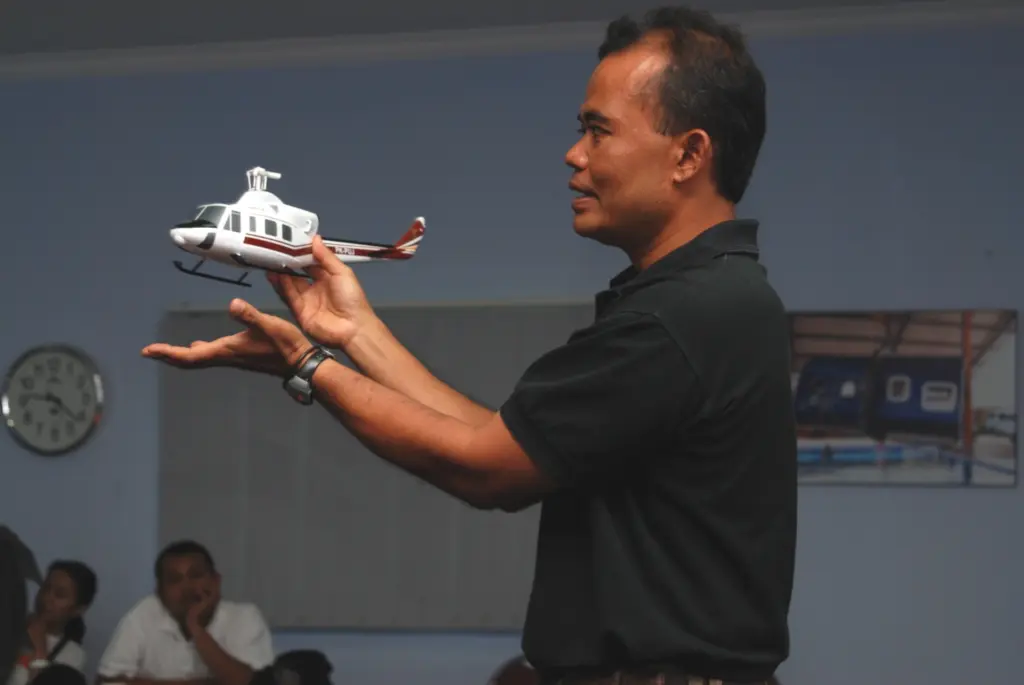
Theoretical learning covers pre-flight briefing requirements, pre-boarding procedures, in-flight safety requirements and emergency actions, aircraft flotation characteristics, emergency escape routes, brace positions for all seating and harness types, HUET evacuation procedures, and liferaft operations. CA-EBS theory covers the principles of compressed air breathing systems and their differences from rebreather EBS, all equipment components (hose, mouthpiece, cylinder, demand valve, pressure indicator, purge button, nose clip, and charging port), CA-EBS operation with survival equipment, and the hazards associated with CA-EBS use including lung over-expansion risk, gasp reflex, coughing, mouthpiece loss, and running out of air.
The standard HUET escape exercise sequence (practised prior to CA-EBS training) is:
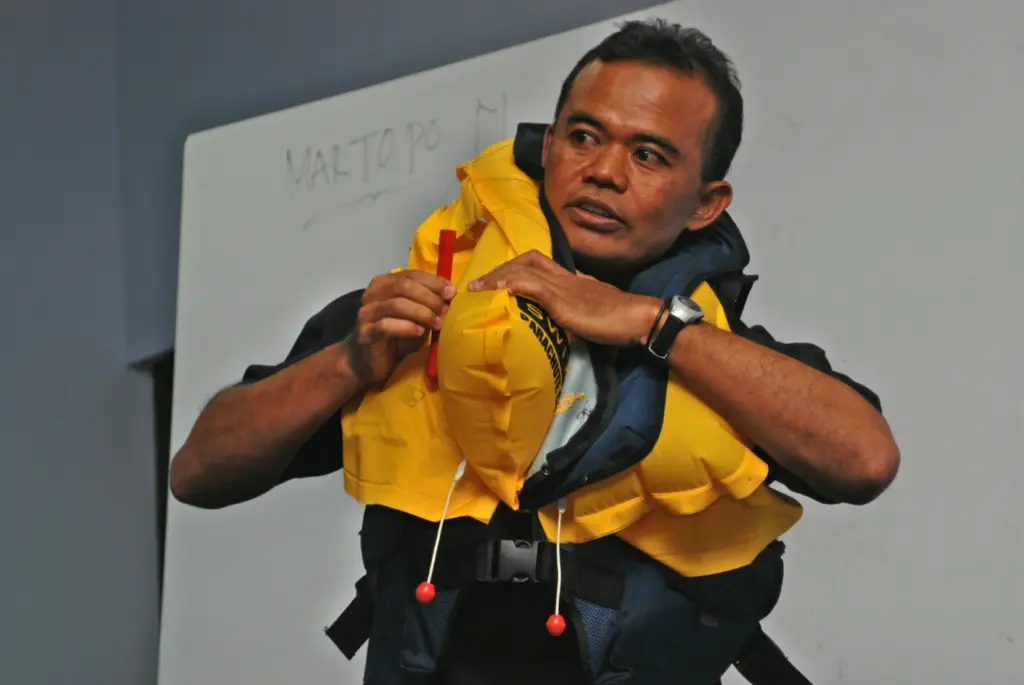
- Donning an aviation lifejacket and conducting pre-donning and integrity checks for CA-EBS equipment
- Actions in preparing for a helicopter ditching or emergency landing
- Evacuating from a helicopter trainer following a controlled emergency descent to a dry landing
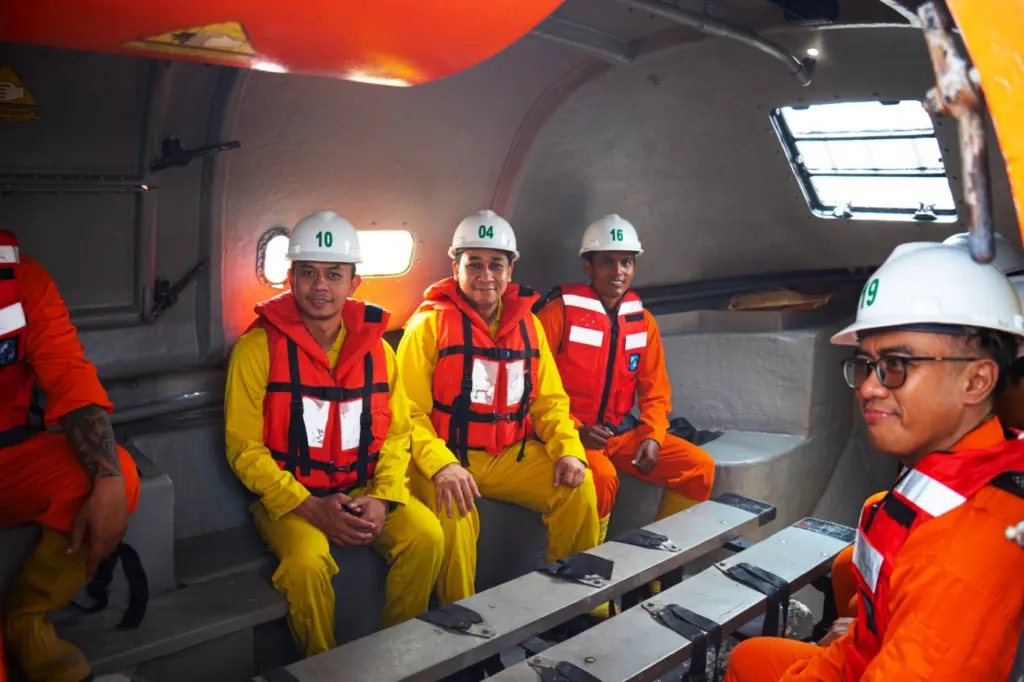
- Dry evacuation into an aviation liferaft from a helicopter ditched on water, including push-out window operation, with initial liferaft actions
- Escaping from a partially submerged helicopter through an underwater window exit, without push-out window
- Escaping from a partially submerged helicopter through an underwater window exit, with push-out window
- Escaping from a capsized helicopter without push-out window
- Escaping from a capsized helicopter with push-out window
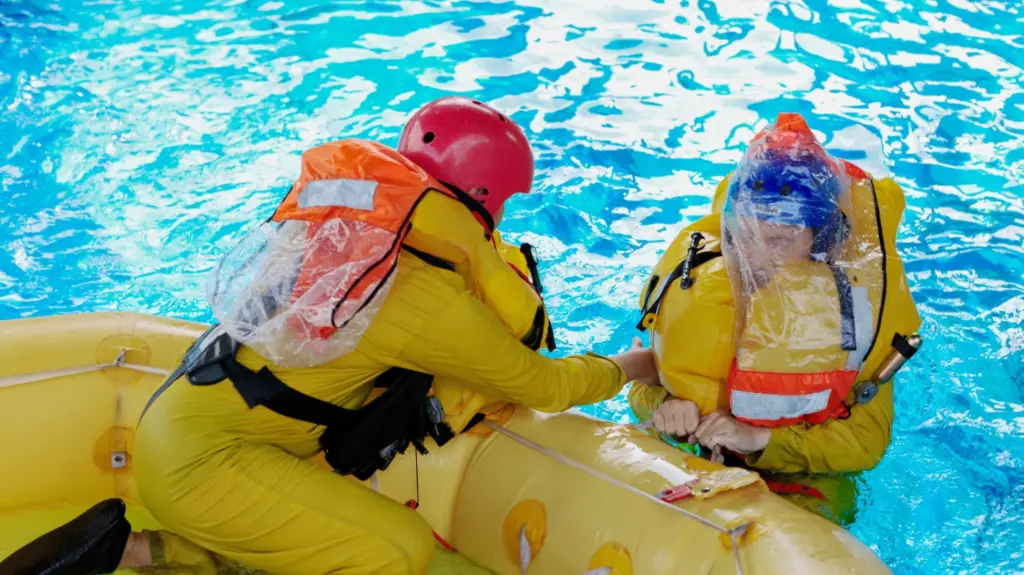
- Inflating an aviation lifejacket, deploying a spray visor, and boarding an aviation liferaft from the water
The CA-EBS exercise sequence that follows includes shallow water pool exercises and, where national regulations and risk assessments permit, advanced exercises conducted within the HUET itself:
- Deploying CA-EBS with both hands and breathing from it at atmospheric pressure in dry conditions
- Locating CA-EBS and preparing for in-water ditching at the helicopter simulator poolside
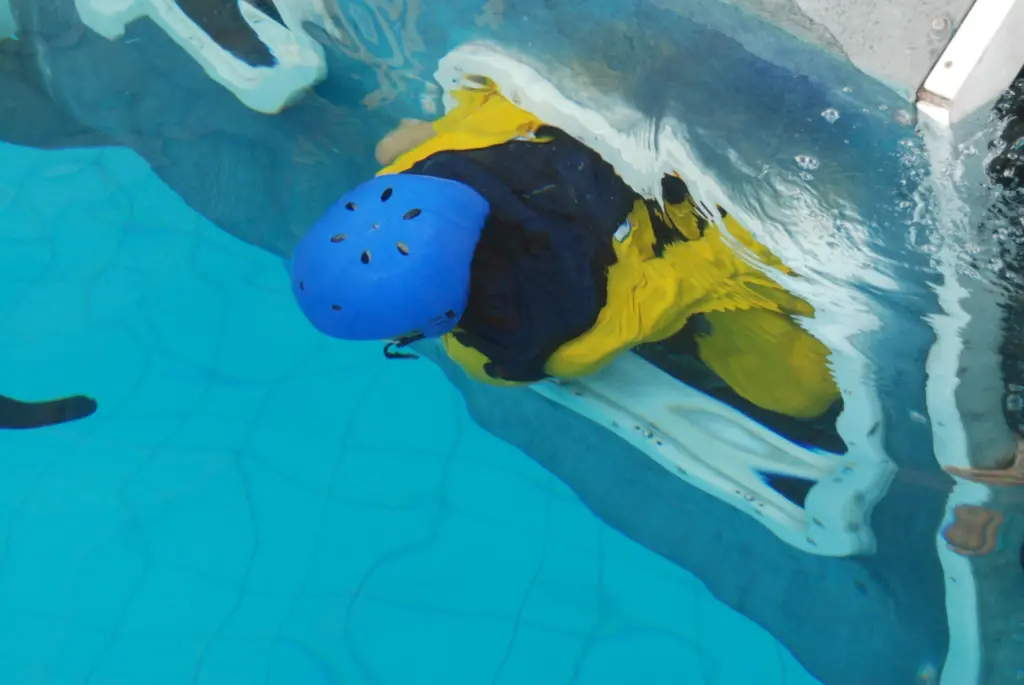
- Deploying CA-EBS above water surface and breathing from it face down in shallow water (max 0.7m depth)
- Deploying CA-EBS below water surface face down in shallow water and clearing the mouthpiece by exhaling
- Deploying CA-EBS below water surface face down and clearing with purge button under water
- Deploying CA-EBS above water surface and breathing from it in a vertical position underwater
- Deploying CA-EBS underwater, breathing from it in a vertical position, and moving along a horizontal rail for a minimum of 30 seconds including a change in direction
- Where local regulations permit: CA-EBS exercises conducted within the HUET, including use of CA-EBS during partial submersion and capsize escape scenarios
Prerequisites
- Participants must hold a valid offshore medical certificate or equivalent medical fitness certification, in accordance with OPITO medical entry requirements.
- Additional medical fitness requirements apply for the CA-EBS in-water practical exercises. Participants must meet the relevant fitness requirements for shallow water compressed air breathing system training in addition to standard offshore medical requirements. Please contact us for details.
Training photos



-
 HUET WITH EBS
Helicopter Underwater Escape Training with Emergency Breathing System
OPITO -
 T-HUET WITH CA-EBS
Tropical Helicopter Underwater Escape Training with Compressed Air Emergency Breathing System (T-HUET with CA-EBS)
OPITO -
 T-HUET WITH EBS
Tropical HUET with EBS
OPITO -
 T-HUET
Tropical HUET (T-HUET)
OPITO -
 BOSIET WITH EBS DIGITAL DELIVERY
BOSIET with EBS Digital Delivery
OPITO -
 BOSIET WITH CA-EBS
Basic Offshore Safety Induction & Emergency Training (BOSIET) with Compressed Air Emergency Breathing System (CA-EBS)
OPITO -
 BOSIET WITH EBS
Basic Offshore Safety Induction & Emergency Training with EBS
OPITO -
 T-BOSIET DIGITAL DELIVERY
T-BOSIET Digital Delivery (T-BOSIET-DD)
OPITO -
T-BOSIET WITH CA-EBS
Tropical Basic Offshore Safety Induction & Emergency Training with Compressed Air Emergency Breathing System (T-BOSIET with CA-EBS)
OPITO -
T-BOSIET WITH EBS
Tropical Basic Offshore Safety Induction & Emergency Training with Emergency Breathing System (T-BOSIET with EBS)
OPITO -
 T-BOSIET
Tropical Basic Offshore Safety Induction & Emergency Training (T-BOSIET)
OPITO