
Helicopter Underwater Escape Training with Emergency Breathing System
OPITO-approved training preparing personnel travelling offshore by helicopter to respond to a helicopter ditching, including underwater escape procedures, emergency breathing techniques, and survival actions following water impact.

Introduction
The OPITO Helicopter Underwater Escape Training with Emergency Breathing System (HUET+EBS) is the internationally recognised helicopter escape and survival training programme for offshore personnel who will be supplied with a rebreather Emergency Breathing System (EBS) during helicopter travel to and from offshore oil and gas installations.
Helicopter travel to and from offshore installations presents unique safety challenges. In the event of a helicopter ditching, the ability to escape quickly, correctly deploy life-saving equipment, and survive in open water can mean the difference between life and death. The HUET with EBS programme prepares personnel for exactly these scenarios, delivering realistic, immersive training that builds the knowledge, muscle memory, and confidence to respond effectively under extreme pressure.
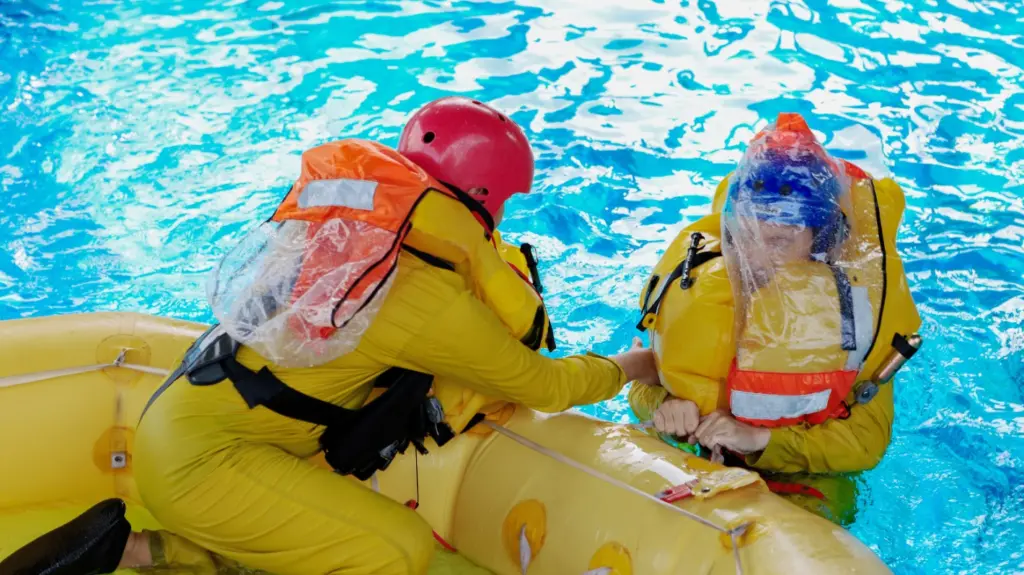
Learners gain hands-on experience operating an Emergency Breathing System in water, escaping from partially submerged and fully capsized helicopter underwater escape trainers (HUETs), deploying aviation life rafts, and using helicopter rescue devices. The training sequence is deliberately progressive, building from dry familiarisation and atmospheric EBS deployment through to underwater capsize exercises with push-out windows and full EBS operation.
Delivered in accordance with OPITO Product Code 5095, this course satisfies the helicopter underwater escape training requirement for personnel new to or returning to the offshore energy industry who will travel by helicopter with a rebreather EBS. Certification is valid for four years, after which learners are required to complete further offshore emergency training to maintain competence.
Who Needs HUET with EBS Training?
HUET with EBS training is intended for personnel travelling to offshore installations by helicopter in tropical regions where a rebreather-type Emergency Breathing System (EBS) is issued and where the operating company requires helicopter escape training without the full offshore safety induction programme.
This course may be required for personnel transferring between offshore installations, those who already hold a recognised offshore safety induction certificate, or personnel working in roles where the operator specifies HUET-level helicopter escape training rather than the full BOSIET programme.
Where personnel are travelling offshore for the first time, operators may instead require the full BOSIET programme.
Scope
The HUET with EBS programme prepares learners who intend to travel to and from offshore installations by helicopter by providing specific training in pre-flight and in-flight requirements, and by equipping them with the emergency response knowledge and practical skills required in the event of a helicopter emergency, with a specific focus on escaping from a helicopter following ditching using Emergency Breathing System (EBS) equipment.
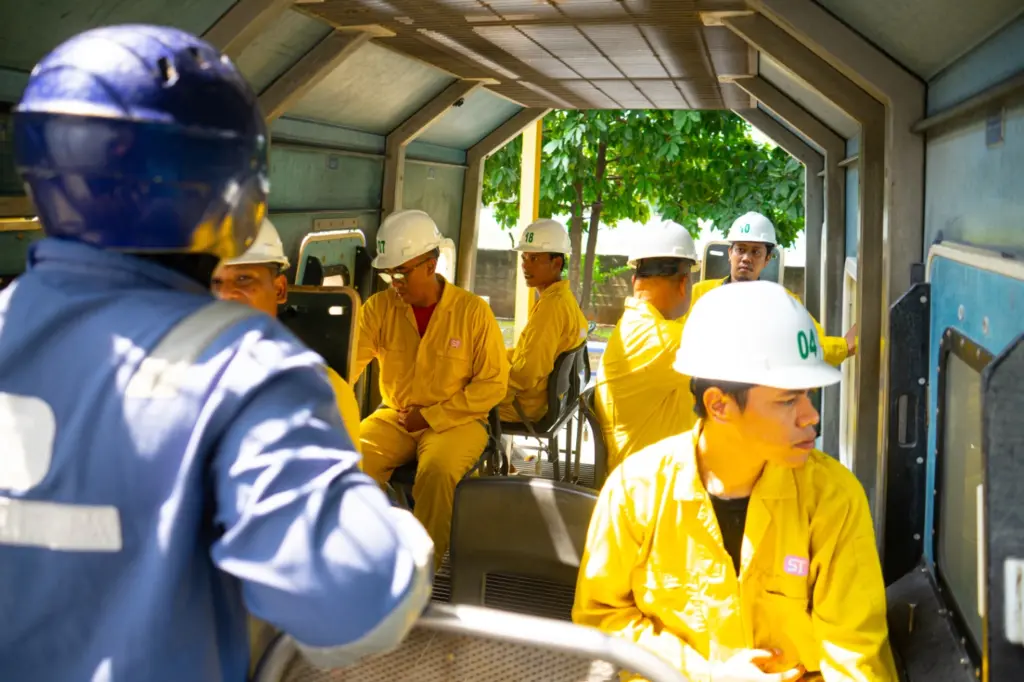
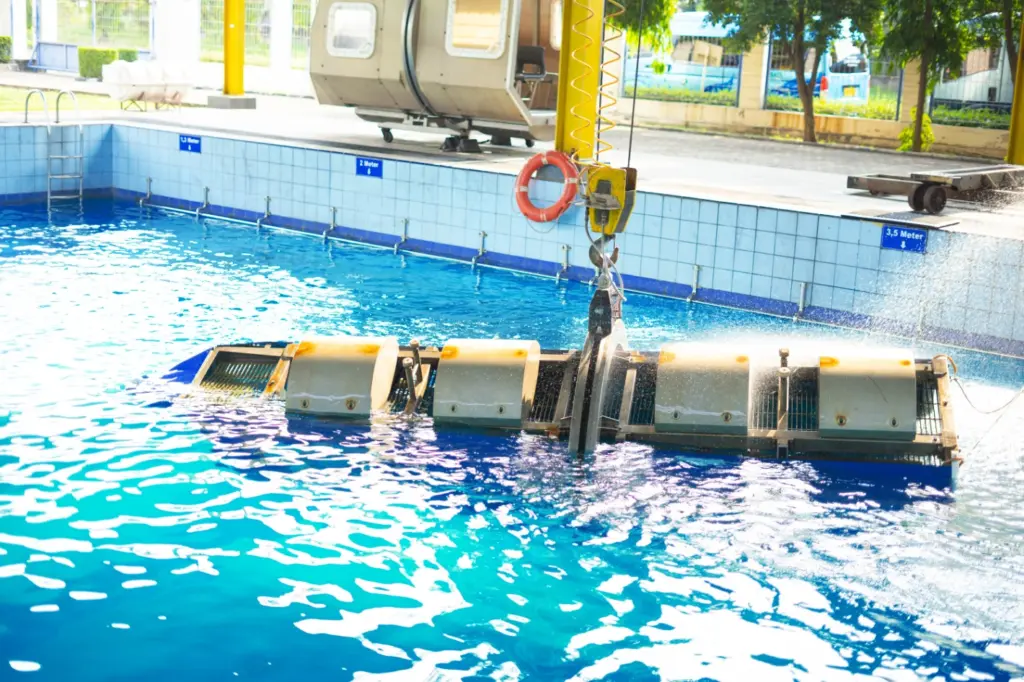
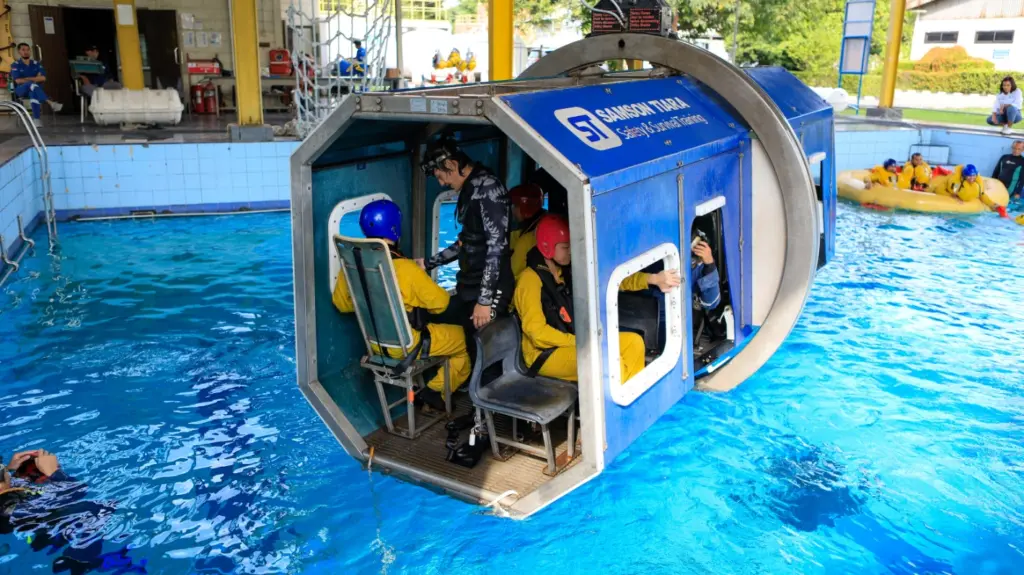
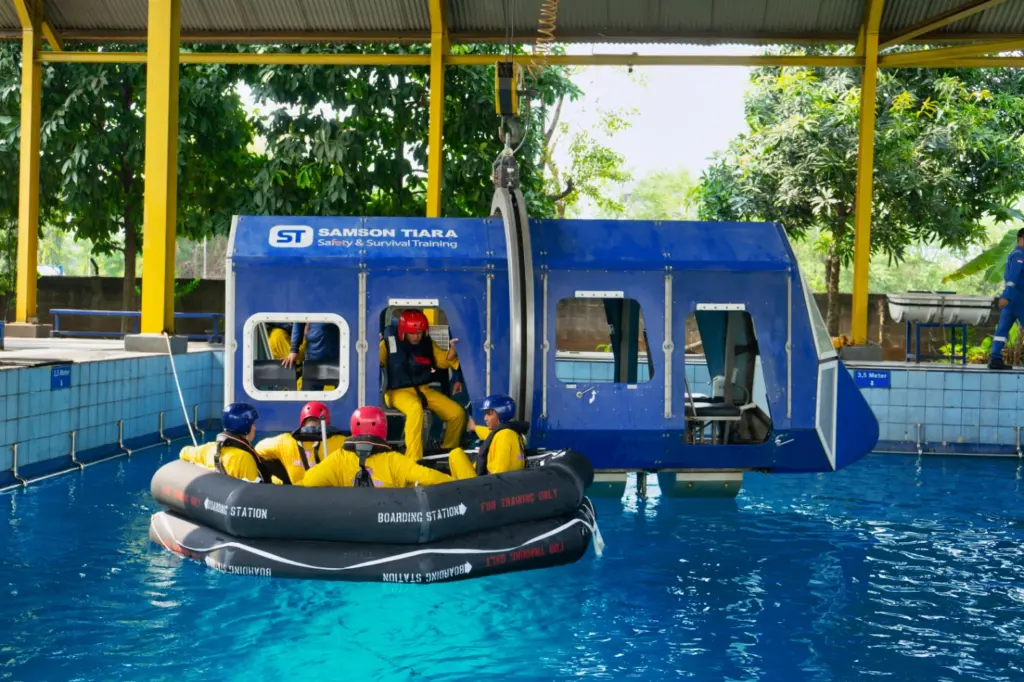
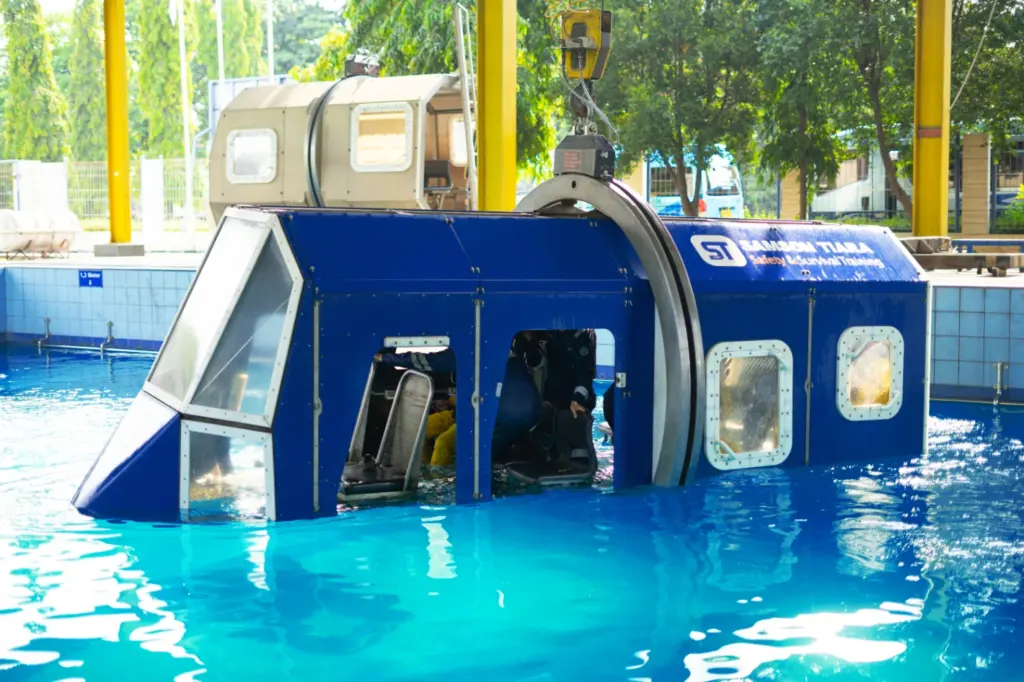
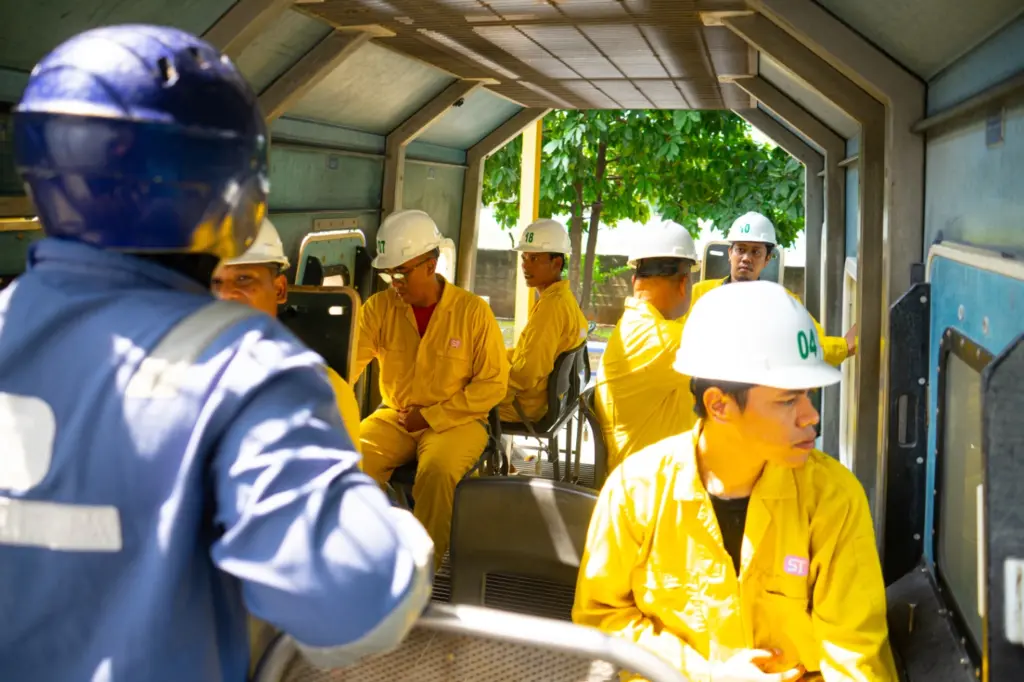
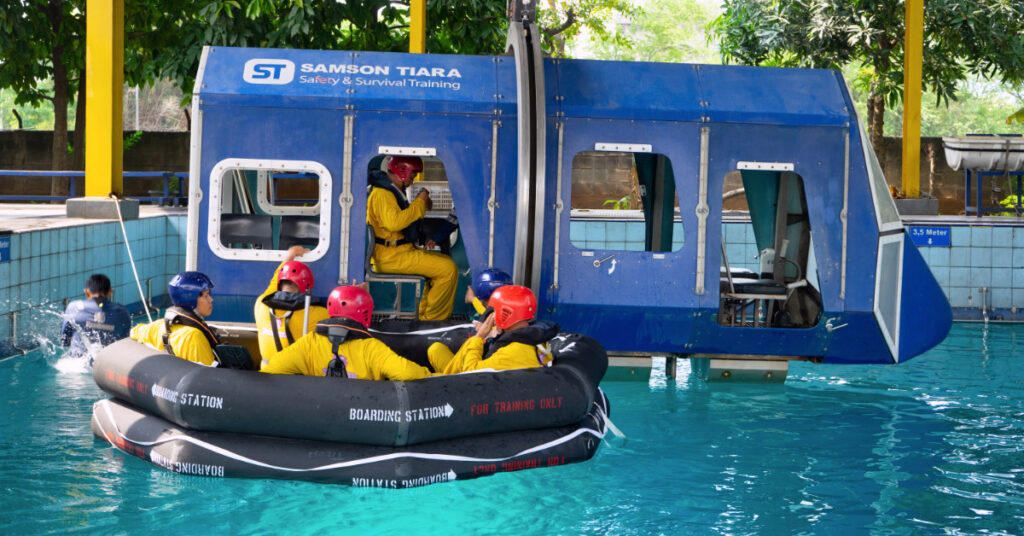
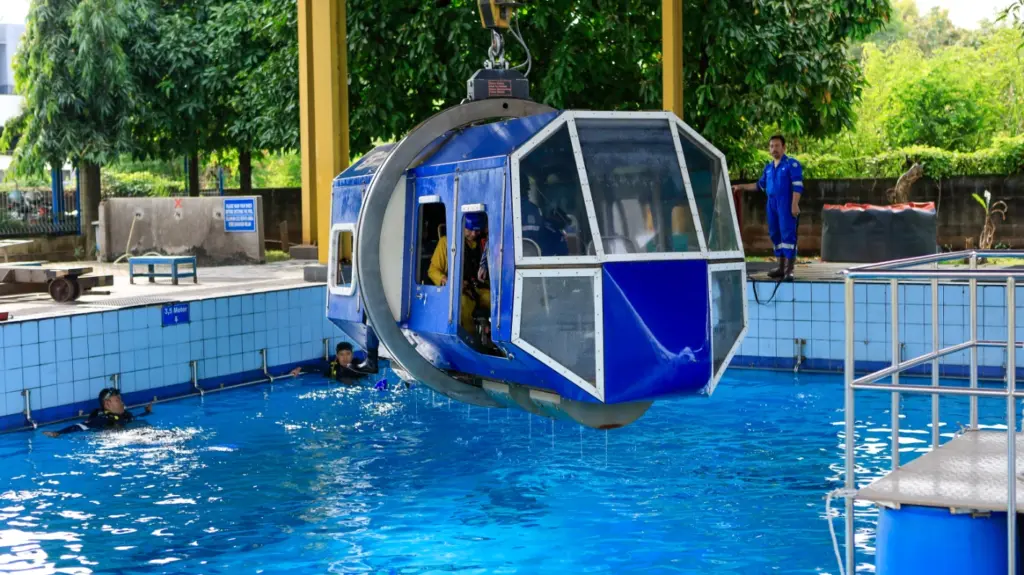
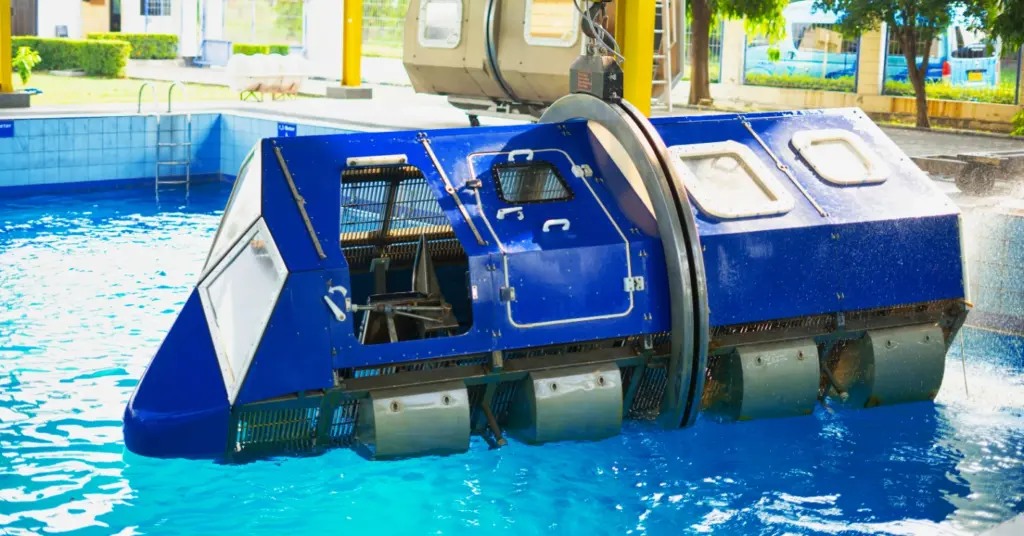
Training covers pre-flight briefing procedures, in-flight emergency recognition and response, helicopter flotation characteristics, emergency escape routes, EBS principles and operation, brace positions, and survival techniques following ditching or emergency landing. Practical training is conducted in our purpose-built pool facility using a Survival Systems METS™ (Modular Egress Training Simulator) Model 40, with OPITO-qualified HUET safety divers in attendance throughout all in-water exercises.
The programme does not include sea survival training. For learners requiring combined helicopter escape and sea survival certification, the BOSIET with EBS or BOSIET with CA-EBS programmes are recommended.
General Course Objectives
The objectives of this training are that learners will be able to:
- Demonstrate, in a simulated environment, that they can use the safety equipment and follow procedures in preparing for, and during, helicopter emergencies — with particular focus on escaping from a helicopter following ditching, including the correct deployment and use of Emergency Breathing System (EBS) equipment throughout underwater escape exercises.
Course Content
Helicopter Travel
Learners study the knowledge and awareness requirements for all stages of offshore helicopter travel. Topics include pre-flight briefing procedures, pre-boarding requirements (arrival times, correct dress, documentation, prohibited articles, and check-in procedures), safe boarding and disembarkation, and pre-flight video requirements. Learners are also made aware of the range of aviation transit suits in use across different regions and the importance of familiarising themselves with the specific suit they will be issued before boarding.
Helicopter Emergencies
This unit develops learners’ understanding of helicopter emergency scenarios and the correct response procedures. Learners study how to inform the crew of suspected or observed emergencies (including fire, smoke, fuel leaks, and other abnormal conditions), in-flight emergency procedures (including seat belt checks and crew instruction compliance), aircraft flotation characteristics, emergency escape routes for ditching and emergency landing scenarios, and the principle of independent action.
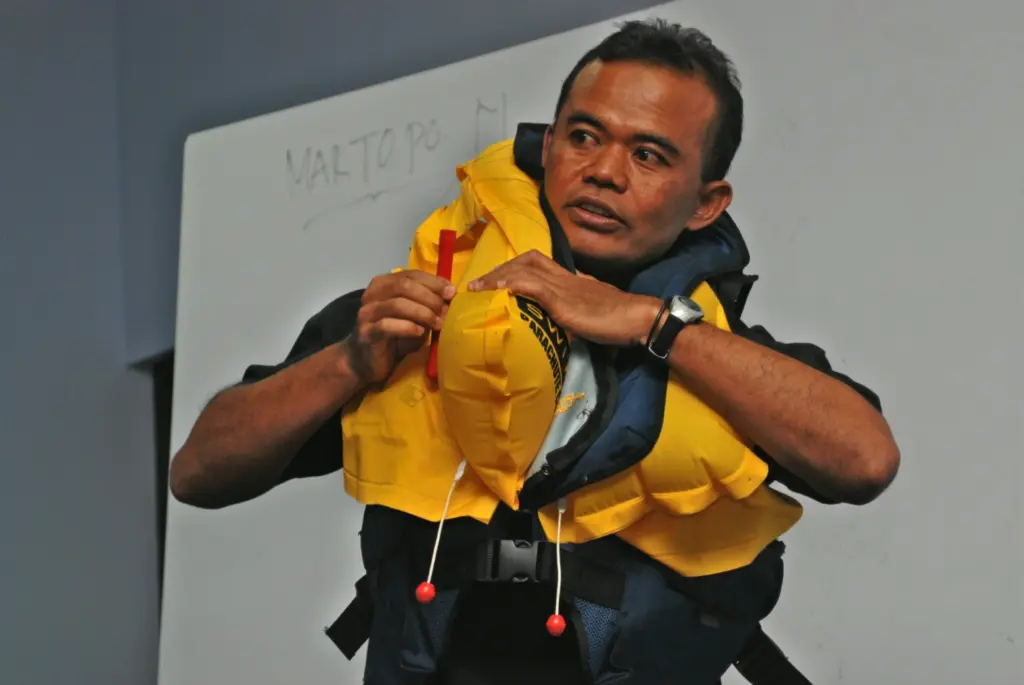
Survival techniques following helicopter ditching and emergency landing, on both water and land, are covered in depth, alongside the principles and duration of Emergency Breathing System (EBS) equipment, flotation dynamics associated with EBS use, and the use of Personal Locator Beacons (PLBs) where applicable. Learners practise donning aviation transit suits, EBS equipment, and aviation lifejackets, and study brace positions for the range of seating locations and harness types found on offshore helicopters. Aviation liferaft deployment, operation, and initial and secondary actions on boarding are also covered.
Practical Helicopter Escape Techniques
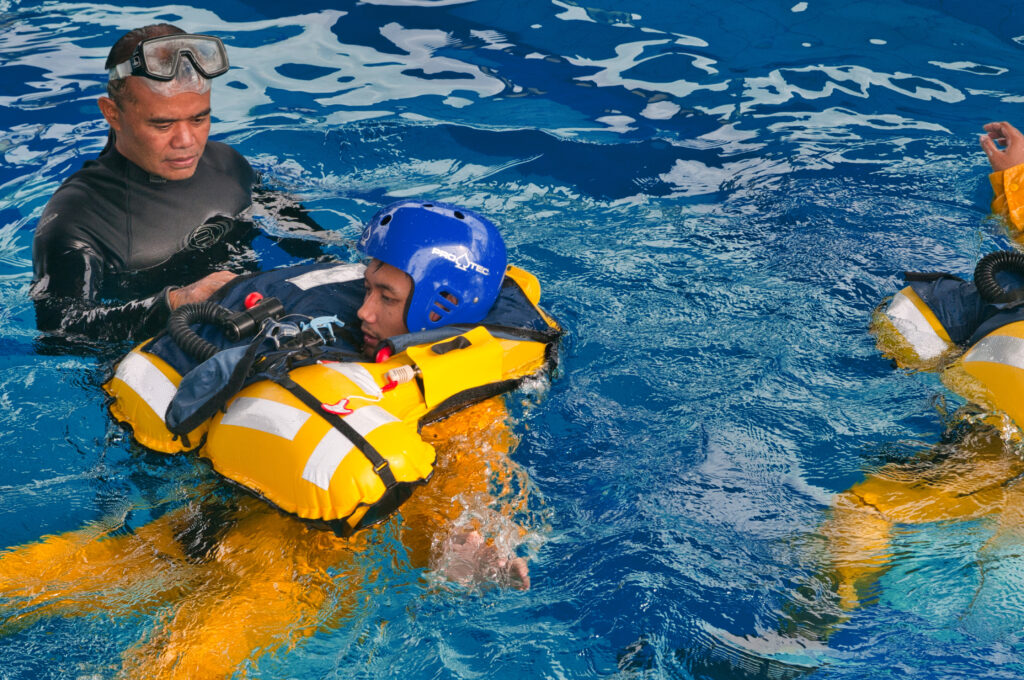
The practical unit is the centrepiece of the HUET+EBS programme. Learners complete a graduated sequence of exercises in and around the HUET pool facility, building progressively from dry EBS familiarisation through to fully capsized underwater escape exercises. The full exercise sequence includes:
- Donning an aviation transit suit, aviation lifejacket, and EBS equipment, and conducting EBS integrity checks
- Deploying, operating, and breathing from EBS equipment at atmospheric pressure in dry conditions
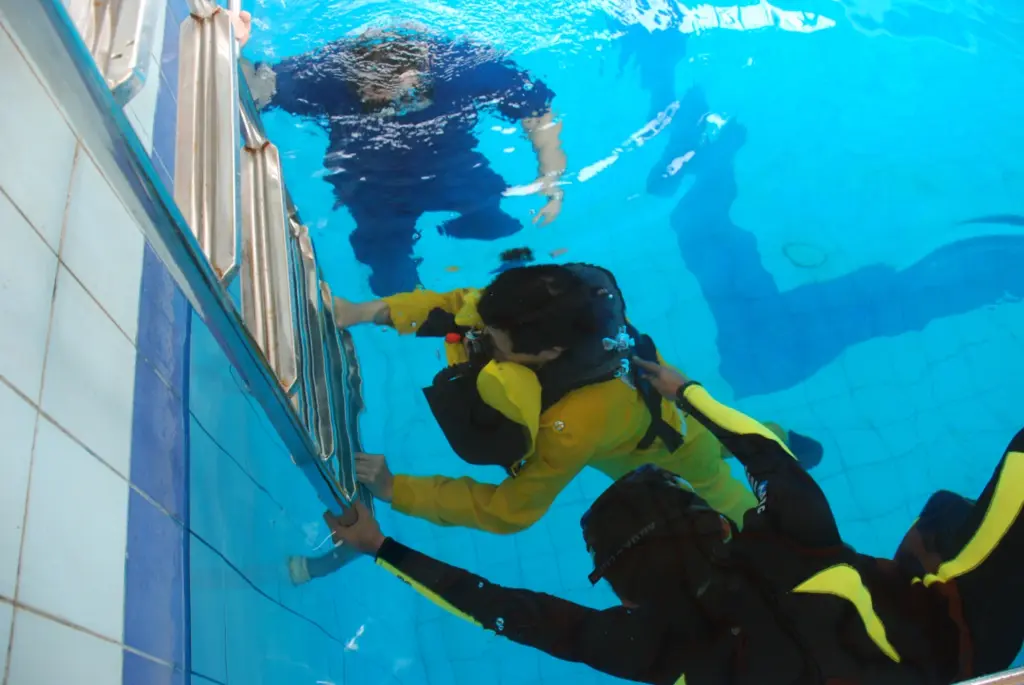
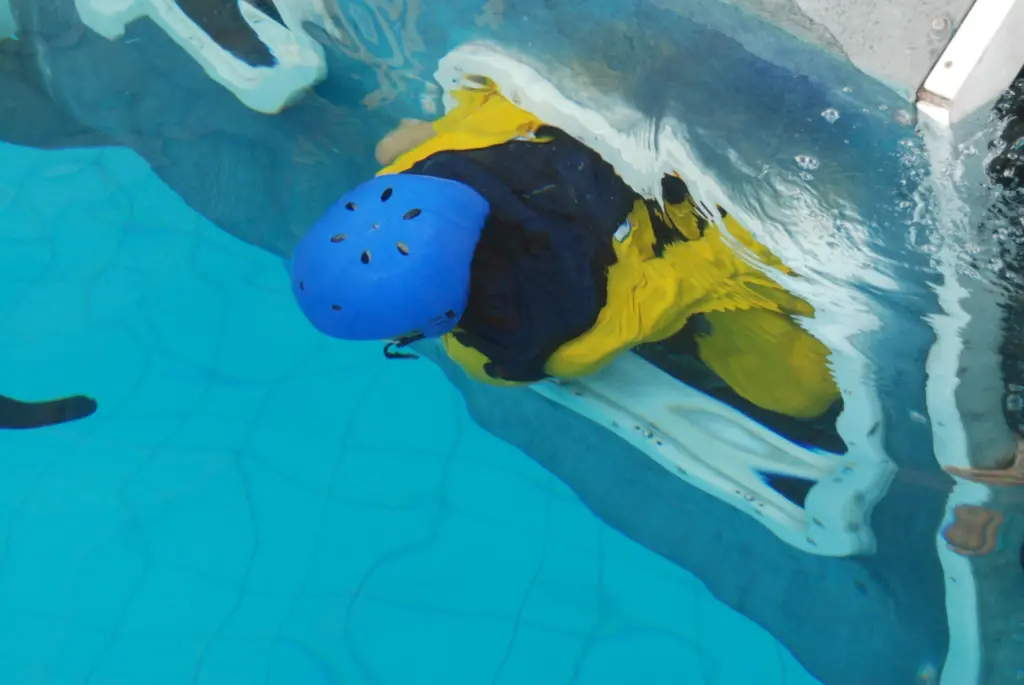
- Deploying, operating, and breathing from EBS in a pool, experiencing both positive and negative pressure from body orientation in the water
- Practising actions to take in preparing for a helicopter ditching or emergency landing
- Evacuating from a helicopter trainer following a controlled emergency descent to a dry landing
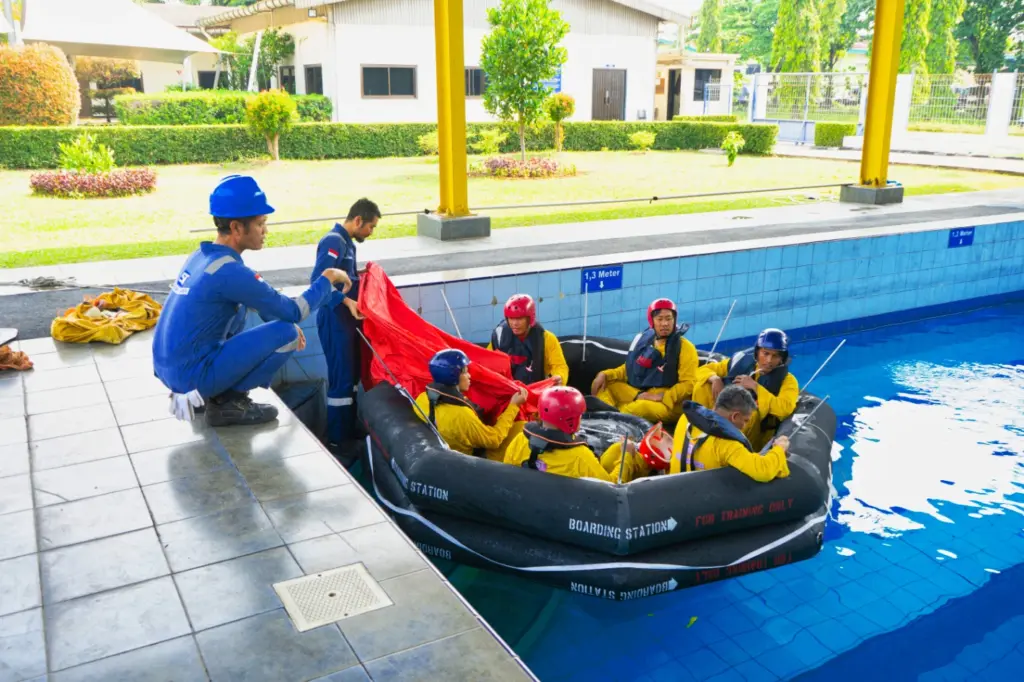
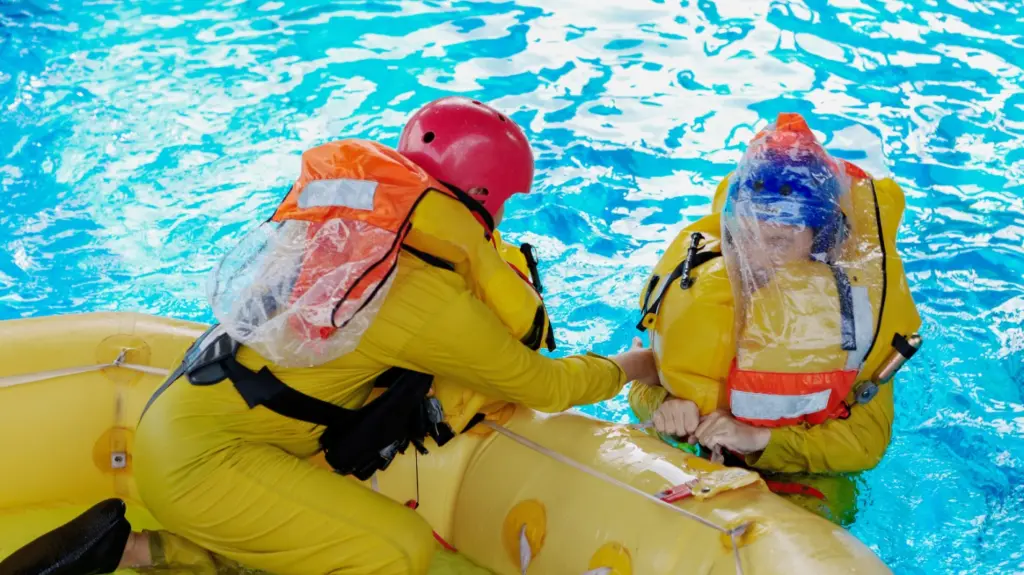
- Dry evacuation into an aviation liferaft from a helicopter ditched on water, including EBS deployment and push-out window operation, with initial liferaft actions (mooring lines, sea anchor, canopy)
- Escaping from a partially submerged helicopter through an underwater window exit without EBS or push-out window
- Escaping from a partially submerged helicopter with EBS deployed and operating, without push-out window
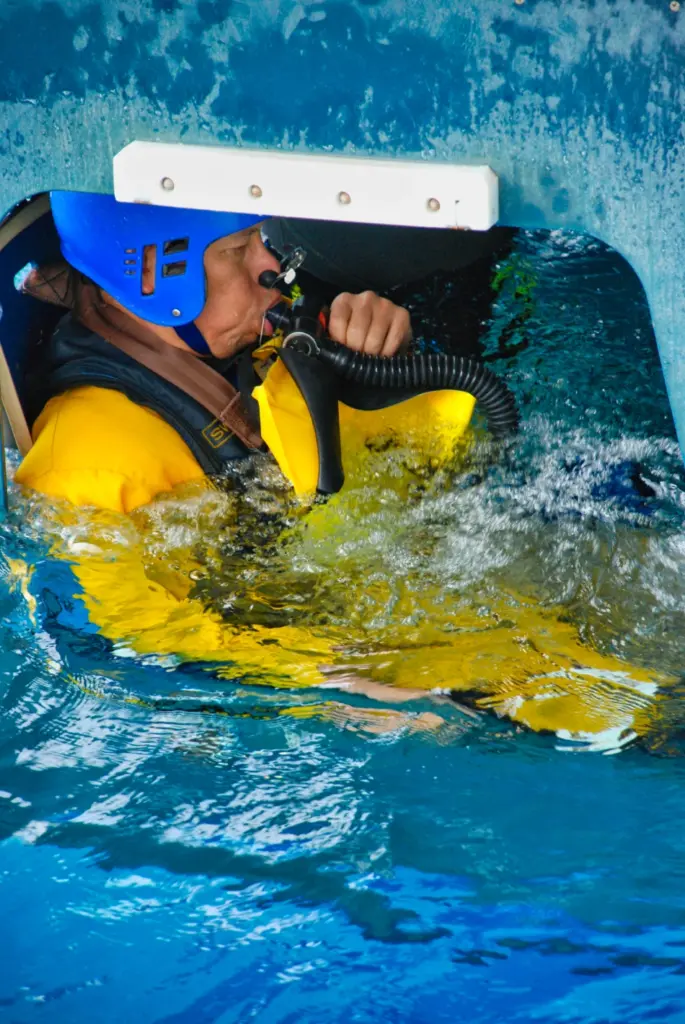
- Escaping from a partially submerged helicopter with EBS deployed and operating, including push-out window operation
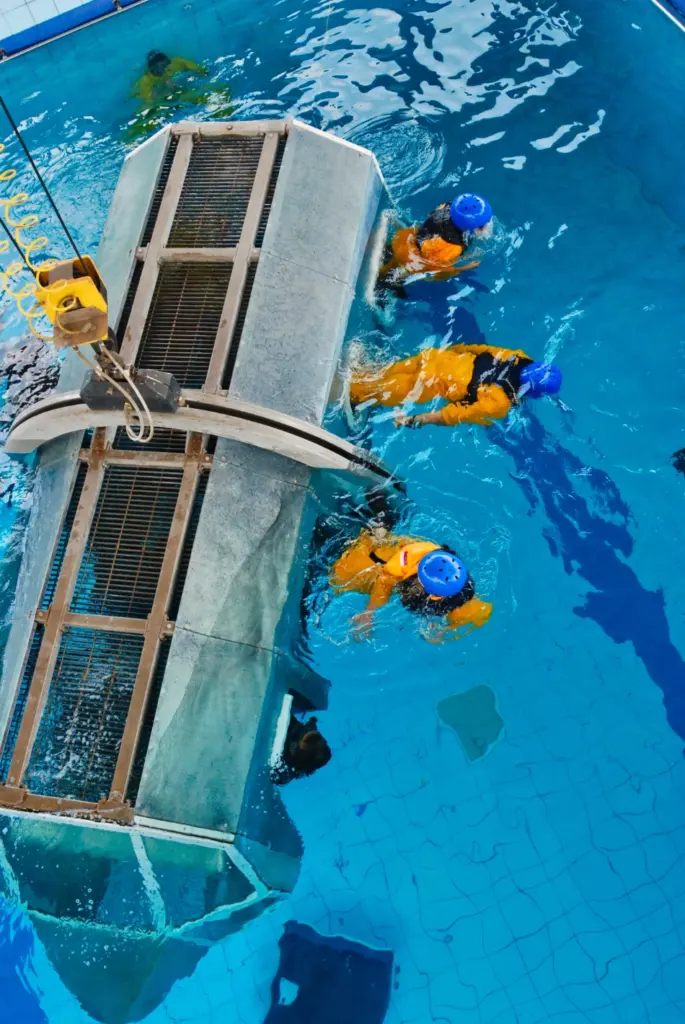
- Escaping from a capsized helicopter without EBS or push-out window
- Escaping from a capsized helicopter with EBS deployed prior to capsize, without push-out window
- Escaping from a capsized helicopter with EBS deployed prior to capsize, including push-out window operation
- Inflating an aviation lifejacket, deploying a spray visor, and boarding an aviation liferaft from the water
Prerequisites
- Participants must hold a valid offshore medical certificate or equivalent medical fitness certification, in accordance with OPITO medical entry requirements.
Training photos


-
 T-HUET WITH CA-EBS
Tropical Helicopter Underwater Escape Training with Compressed Air Emergency Breathing System (T-HUET with CA-EBS)
OPITO -
 T-HUET WITH EBS
Tropical HUET with EBS
OPITO -
 T-HUET
Tropical HUET (T-HUET)
OPITO -
HUET WITH CA-EBS
HUET with CA-EBS
OPITO -
 BOSIET WITH EBS DIGITAL DELIVERY
BOSIET with EBS Digital Delivery
OPITO -
 BOSIET WITH CA-EBS
Basic Offshore Safety Induction & Emergency Training (BOSIET) with Compressed Air Emergency Breathing System (CA-EBS)
OPITO -
 BOSIET WITH EBS
Basic Offshore Safety Induction & Emergency Training with EBS
OPITO -
 T-BOSIET DIGITAL DELIVERY
T-BOSIET Digital Delivery (T-BOSIET-DD)
OPITO -
T-BOSIET WITH CA-EBS
Tropical Basic Offshore Safety Induction & Emergency Training with Compressed Air Emergency Breathing System (T-BOSIET with CA-EBS)
OPITO -
T-BOSIET WITH EBS
Tropical Basic Offshore Safety Induction & Emergency Training with Emergency Breathing System (T-BOSIET with EBS)
OPITO -
 T-BOSIET
Tropical Basic Offshore Safety Induction & Emergency Training (T-BOSIET)
OPITO