Plant Manager / Incident Commander Initial Response Training
OPITO-approved training preparing senior personnel to lead and support Incident Management Teams during major emergencies at onshore industrial facilities, using realistic command centre simulations to develop decision-making, communication, and incident management skills.


Introduction
The OPITO Plant Manager / Incident Commander Initial Response Training (PMIC-IR) is the internationally recognised standard for personnel in the onshore energy, petrochemical, and process industries who are designated to lead, support, or contribute to an Incident Management Team (IMT) during a major emergency. It provides the formal command, control, communications, and stress management training essential for anyone taking on an incident management role at a petrochemical plant, refinery, gas processing facility, or industrial installation.
Cilegon is one of Indonesia’s most concentrated industrial areas, home to a significant cluster of petrochemical, steel, and power generation facilities. In an area such as this, the ability to manage a major emergency effectively is not just a regulatory requirement; it is a core operational competency. PMIC-IR is specifically designed for the onshore plant environment: its scenario framework reflects the realities of plant emergencies, including loss of containment, fires, explosions, toxic releases, and the coordination challenges that arise when an incident has the potential to affect adjoining plant, public areas, or emergency services.
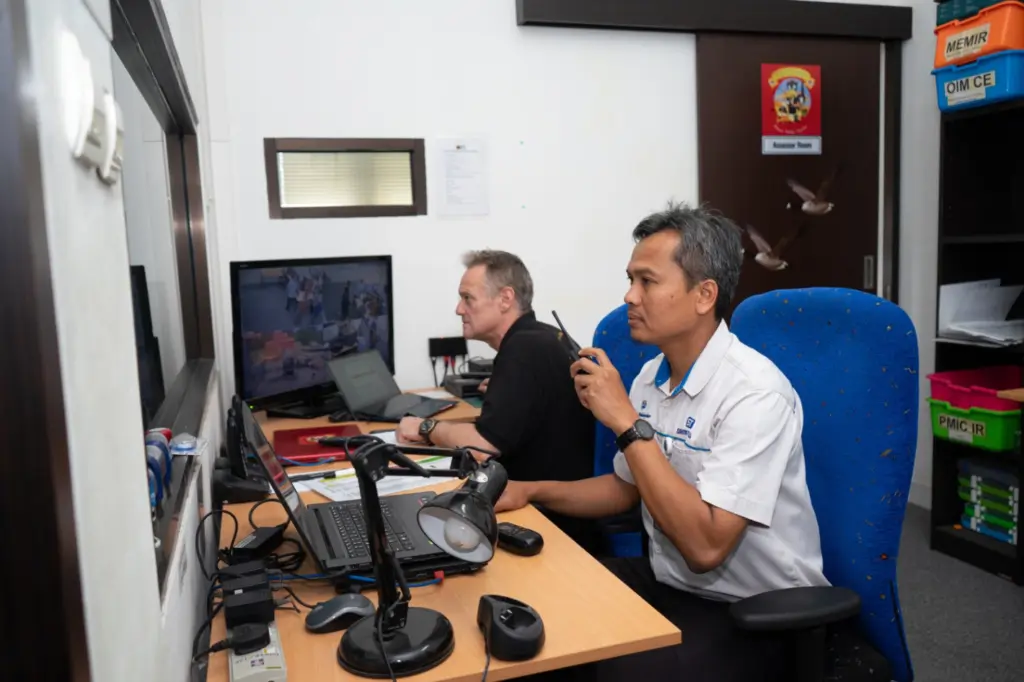
The programme delivers 26 Guided Learning Hours over approximately 3.5 consecutive days, combining targeted classroom instruction in emergency management theory with intensive command centre simulator exercises. Each delegate takes on the role of Plant Manager / Incident Commander (PM/IC) in a minimum of two simulated major emergency scenarios, receiving structured performance appraisal and feedback following each exercise. Upon successful completion, delegates receive an OPITO-approved PMIC-IR certificate and a written performance appraisal identifying any gaps in their emergency management knowledge and capabilities. The certificate has no formal expiry date.
Delivered in accordance with OPITO Product Code 9030, PMIC-IR is the onshore counterpart to the offshore-focused Major Emergency Management Initial Response (MEM-IR) training.
Who Needs PMIC-IR Training?
PMIC-IR is designed for personnel who are, or who are being developed to become, Plant Managers, Incident Commanders, and their alternates or deputies; members, coordinators, or support functions of an Incident Management Team at an onshore plant; emergency coordinators and duty managers at petrochemical, refinery, or processing facilities; and senior process, operations, or maintenance personnel newly appointed to emergency management responsibilities. There are no formal prerequisites: the programme is open to all eligible personnel who can demonstrate suitable exposure within their operational sphere.
Scope
The Plant Manager / Incident Commander Initial Response Training (OPITO Product Code 9030) equips personnel with the formal training required to lead and support an Incident Management Team in responding to a major emergency at an onshore plant or industrial facility. The programme addresses the complete emergency management response cycle: from preparation and maintaining a state of readiness, through initial response and information management, to team command, incident briefing, and stress management.
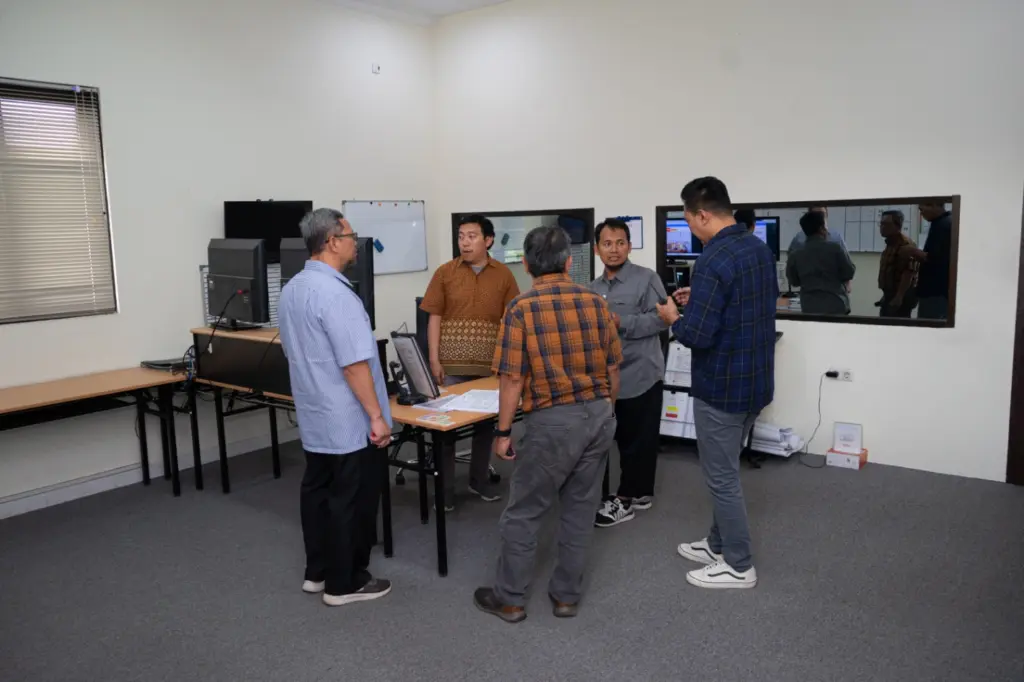
Twenty-six Guided Learning Hours are delivered over consecutive days. Approximately 35% of the programme is classroom-based, covering emergency management theory, pre-scenario briefings, and structured discussions, and approximately 65% of the programme is spent in the command centre simulator running and debriefing simulated emergency scenarios. Following each practical exercise, delegates receive structured appraisal and feedback from the OPITO-approved appraiser, identifying strengths and any areas requiring further development through company-directed training or exercises.
A maximum of six delegates attend each programme.
General Course Objectives
Upon completion of PMIC-IR, delegates will have demonstrated the ability to:
- Review, manage, and assess the information available in an emergency situation in a timely manner.
- Establish priorities and take effective action.
- Implement predetermined emergency plans and procedures in the context of the current emergency.
- Efficiently communicate information and instructions to internal and external stakeholders.
- Keep appropriate agencies informed throughout the emergency.
- Monitor and control resources.
- Evaluate progress and communicate changes in plans and priorities.
- Effectively delegate authority and manage individuals and teams.
- Recognise and manage the effects of stress in themselves and others.
- Conduct structured Incident Briefings and Time-Outs effectively as the Plant Manager / Incident Commander.
Course Content
Module 1 – Theory of Major Emergency Management (OIS-192)
The theory module provides the knowledge framework for effective emergency management in the plant environment. Delivered through classroom instruction, group discussion, and structured facilitation, the module covers the following outcomes:
Outcome 1: Major Emergency Types and the Manager’s Responsibilities
- Classification of major emergency types and relevant safety regulations
- Key emergency factors: people, environment, asset, resources, and support
- Manager’s responsibility for non-essential and responding personnel both onsite and within specific distances of the incident
- Evaluating the potential for escalation and the distinction between slow and rapid escalation
- Evaluating available resources required to deal with emergencies
Outcome 2: The Plant Manager / Incident Commander Role
- The critical differences between normal management and emergency management
- Factors to consider during an emergency: uncertainty, ambiguity and conflicting information; shifting and competing goals; time pressure, stress, and potential serious consequences; multiple players and team dynamics; and personal factors
- Concerns and apprehensions of the Plant Manager / Incident Commander
- Roles and responsibilities of the Incident Management Team (IMT)
- Principles of delegation and time management under pressure
Outcome 3: The Emergency Command Centre (ECC) – Facilities and Information Management
- ECC ergonomics and equipment
- Information Management System (IMS) characteristics, including personnel tracking, hazardous material information, weather data, firefighting resource status, resource availability and ETA, and event logging
- Benefits of using an IMS and contingency paper-based systems
Outcome 4: Pre-Planning and Maintaining a State of Readiness
- The requirement for the IMT and emergency personnel to maintain a permanent state of readiness
- The Emergency Response Plan (ERP), company procedures, and operations manuals
- Value and purpose of emergency pre-planning and risk assessment
- Purpose of drills and exercises for the IMT, for the PM/IC personally, and for confirming the serviceability and sufficiency of emergency equipment
- Maintaining familiarity with emergency resources both on the asset and externally
Outcome 5: Dealing with Stress
- Sources of stress during emergencies and stress factors: irritability, aggression, poor communication, inability to retain information, disengagement, task fixation, and task switching
- The effect of time pressure and information overload on decision-making capability
- Reduction in short- and long-term memory during an incident
- Effective strategies for delegating, maintaining activities, reducing stress in self and others, replacing stressed personnel, and regrouping and reassessing
Outcome 6: Incident Briefing and Time-Out Performance
- The Incident Management Organisation Chart and identifying which team members are required
- The importance of maintaining full situational awareness and understanding the decision-making process
- Identifying incident potential and escalation
- Setting up an Incident Plan with appropriate priorities
- Evaluating and selecting available resources required to deal with the emergency
Module 2 – Practical Elements of Major Emergency Management (OIS-193)
The practical module places each delegate in the role of Plant Manager / Incident Commander in a minimum of two different live emergency scenarios within the command centre simulator. Scenarios are selected from three levels of complexity:
- Type A – a major emergency that is readily controllable if managed appropriately
- Type B – a major emergency that could escalate if not controlled
- Type C – a major emergency that the Incident Commander is unable to control, leading to full evacuation of the site
The range of emergency scenarios is specifically designed for the onshore plant environment and must incorporate appropriate combinations of the following elements:
- Injured personnel and multiple casualties
- Missing personnel
- Loss of containment
- Loss of communication
- Loss of evacuation routes, muster points, or temporary refuge
- Stressed personnel
- Extreme weather conditions
- Loss of essential facilities
- Loss of key personnel
- Rapidly developing situation leading to information overload
- Evacuation of the site
- Environmental concerns and effects
- Road traffic incident
- Sabotage incident
- Situation on adjoining plant
The ten practical outcomes assessed are:
- Review, manage, and assess available information in a timely manner
- Establish priorities and take effective action
- Implement predetermined emergency plans and procedures in the context of the current emergency
- Communicate information and instructions clearly and effectively
- Communicate effectively with all appropriate external agencies
- Monitor and control resources
- Evaluate progress and communicate changes in plans and priorities
- Effectively delegate authority and manage individuals and teams
- Effectively manage themselves and the team, including managing the effects of stress in themselves and others
- Incident Briefing and Time-Out Performance — demonstrating structured incident briefing including: current situation, current response, incident potential or escalation, incident plan, and stakeholder management
Prior to the first scenario, table-top discussions prepare delegates for what is expected of them. In some exercises the scenario may be introduced without prior warning to replicate real-world conditions. A post-exercise debrief is conducted after each scenario, with the appraiser providing structured feedback on individual and team performance. Identified performance gaps are addressed through company-directed further training and drills.
Prerequisites
- There are no formal OPITO prerequisites for the PMIC-IR training programme. The course is open to all personnel who are designated as, or are developing towards, a role within an Incident Management Team at a plant or onshore facility.
- Delegates will be required to complete a medical self-declaration confirming their fitness to participate in the practical simulation elements of the programme. As the training involves intensive command-centre exercises and exposure to potentially stressful emergency scenarios, participants should ensure they are fit to undertake the programme. We will retain a record of each delegate’s declaration of fitness. Delegates with any medical condition that could affect their ability to participate should seek advice from a suitably qualified medical professional before attending the training.
Note on Certificate Validity
While the certification has no expiry period, it is recommended that participants undergo additional exercises every 3 years.
Accommodation Options
The Royal Krakatau Hotel
Emerald by Royal Krakatau
Forbis Hotel Cilegon
Swiss Belexpress Cilegon
Amaris Hotel Cilegon