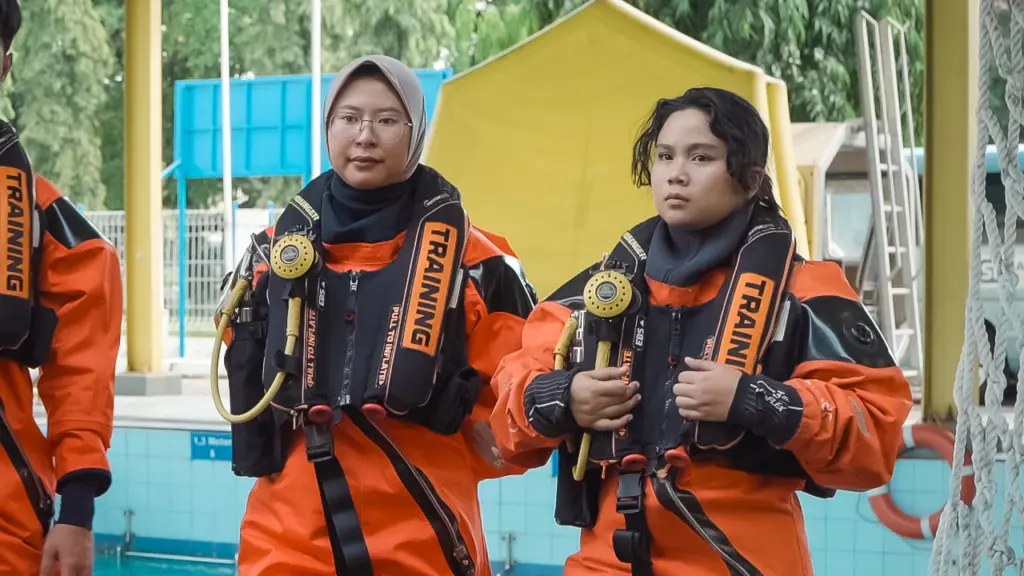
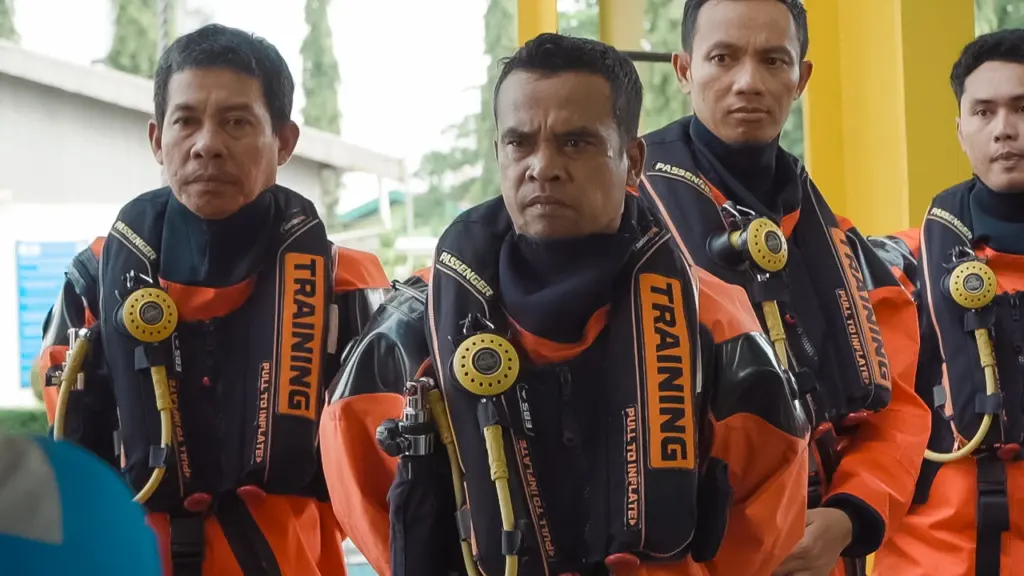
Shallow Water Compressed Air Emergency Breathing System (CA-EBS) Initial Deployment Training
OPITO-aligned training covering the safe use and initial deployment of Compressed Air Emergency Breathing Systems (CA-EBS) in shallow water helicopter escape scenarios, preparing personnel to respond effectively during a ditching or underwater escape.

Introduction
The OPITO Shallow Water Compressed Air Emergency Breathing System Initial Deployment Training (Shallow Water CA-EBS ID) is the pool-based CA-EBS qualification for offshore personnel who have completed helicopter escape training with a rebreather EBS and are transitioning to, or being additionally issued with, a Compressed Air Emergency Breathing System (CA-EBS) for helicopter travel.
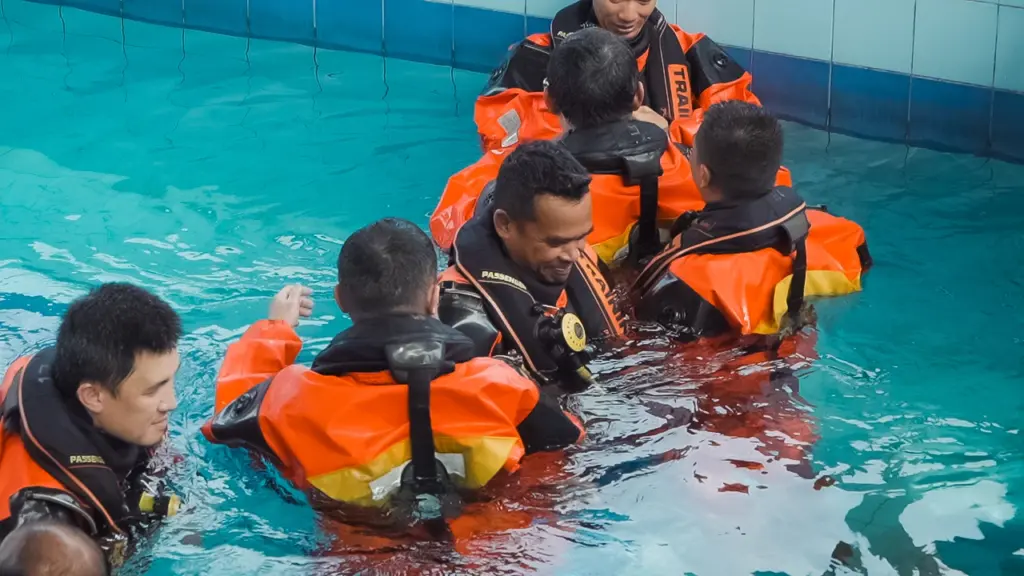
Where the Dry CA-EBS Initial Deployment programme covers equipment familiarisation and dry deployment, the Shallow Water CA-EBS programme goes further — adding a progressive series of in-pool exercises that build genuine confidence and competence with the CA-EBS in conditions that more closely simulate those of an actual helicopter ditching. Beginning with dry familiarisation and simulator-based exercises at the helicopter simulator poolside, the programme progresses through six staged shallow water exercises: deploying and breathing from the CA-EBS face-down, clearing the mouthpiece by exhaling and by purge, breathing in both surface-deployed and underwater-deployed vertical positions, and finally navigating along a horizontal rail underwater for a minimum of 30 seconds — replicating the sustained breathing demand of a real escape scenario.
Please note that additional medical fitness requirements apply for the in-water (Outcome 4) exercises. Learners who do not meet the additional medical requirements for the in-water exercises may still complete the theory and dry practical components of the programme. Delivered in accordance with OPITO Product Code 5903, Shallow Water CA-EBS ID certification is valid for four years. Revalidation can also be achieved by completing the appropriate OPITO T-BOSIET, T-FOET, or T-HUET with CA-EBS programme.
Who Needs Shallow Water CA-EBS ID Training?
Shallow Water CA-EBS Initial Deployment Training is designed for personnel who already hold a valid helicopter escape certificate (T-BOSIET, T-FOET, T-HUET, or BOSIET/FOET/HUET with EBS) and who are now being issued with a CA-EBS for helicopter travel. It provides the additional CA-EBS theory and pool-based practical training that is not included in the standard EBS helicopter escape programmes, ensuring personnel can deploy and operate their CA-EBS confidently in both dry and in-water conditions. It is particularly relevant for operators who have transitioned from rebreather EBS to CA-EBS equipment, and for personnel whose assignment requires CA-EBS but whose current certificate is an EBS-only qualification.
Scope
The Shallow Water CA-EBS Initial Deployment Training programme provides the theoretical knowledge and progressive pool-based practical training required for personnel issued with a CA-EBS to deploy and operate the device correctly during a helicopter emergency. It complements existing helicopter escape certification (T-BOSIET, T-FOET, T-HUET with EBS, or BOSIET, FOET, HUET with EBS) by adding the specific CA-EBS knowledge and shallow water practical skills that these programmes do not include.
The programme covers CA-EBS principles and components, hazards associated with compressed air breathing systems, donning and pre-donning checks, dry simulator exercises, and six progressive shallow water pool exercises. Additional medical fitness requirements apply for the in-water exercises; learners unable to meet these requirements may still achieve certification for the theory and dry practical components.
General Course Objectives
The objectives of this training are that learners will be able to:
- Understand the principles and components of a Compressed Air Emergency Breathing System (CA-EBS) and its correct operation in conjunction with an aviation lifejacket.
- Demonstrate the correct donning, pre-donning checks, and dry deployment of CA-EBS equipment.
- Demonstrate the use of a CA-EBS in progressive shallow water exercises, building confidence and competence in deploying and breathing from the device in conditions that simulate a helicopter ditching emergency.
Course Content
CA-EBS: Theory and Equipment Familiarisation
Theoretical learning covers:
- The principles of compressed air emergency breathing systems and their key differences from rebreather EBS systems in terms of technology, deployment, and operation
- All CA-EBS components: hose (if fitted), mouthpiece, cylinder, demand valve, pressure indicator, on/off ratchet or knob (if fitted), on/off status indicator (if fitted), purge button, nose clip (if fitted), and charging port
- CA-EBS operation in conjunction with survival equipment: aviation lifejacket and Personal Locator Beacon (PLB)
- Hazards associated with CA-EBS use: lung over-expansion injury risk, cold water gasp reflex, coughing, accidental or intentional mouthpiece dislodgement, accidental or deliberate air loss (including hazards of incorrect purging), and running out of air
Dry Practical and Helicopter Simulator Exercises
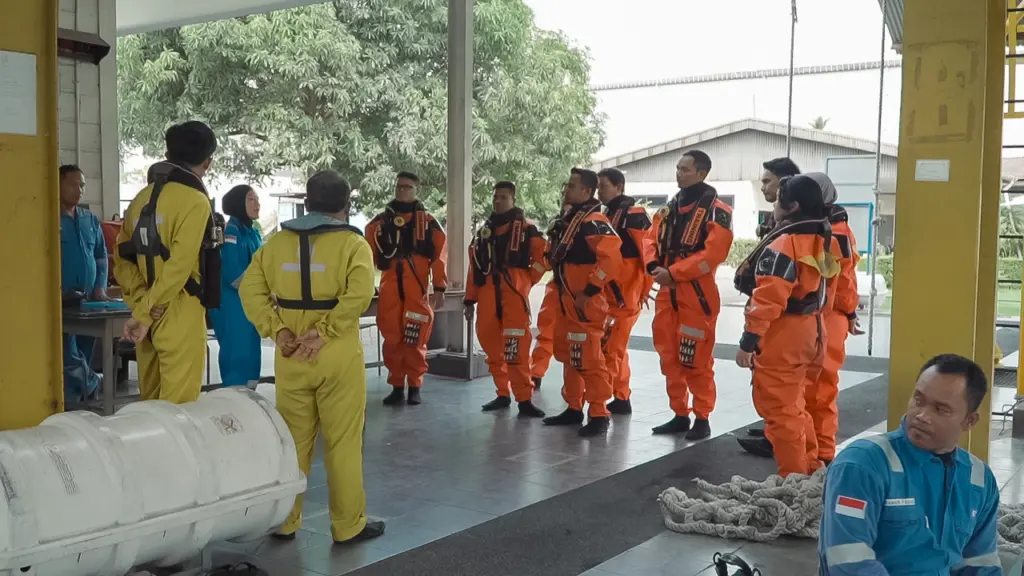
Following theoretical learning, learners complete the following dry and simulator-based exercises supervised by instructors:
- Donning an aviation lifejacket with CA-EBS and conducting pre-donning and integrity checks, including buddy check
- Deploying CA-EBS with both hands and breathing from it at atmospheric pressure in dry conditions
- At the poolside helicopter simulator: locating the CA-EBS equipment and evacuating from the helicopter via a nominated exit following a controlled emergency descent to a dry landing
- At the poolside helicopter simulator: preparing for an in-water ditching, including locating the exit and deploying and breathing from the CA-EBS in dry conditions
Shallow Water CA-EBS Pool Exercises
Learners then complete a progressive series of six shallow water exercises in our HUET facility (maximum depth approximately 0.7 m (chest depth)), supervised by OPITO-qualified HUET safety divers. Note: additional medical fitness requirements apply for participation in these exercises. Please contact us prior to booking for full details.
- Deploying CA-EBS above the water surface and breathing from it face down in shallow water
- Deploying CA-EBS below the water surface face down in shallow water and clearing the mouthpiece by exhaling under the water surface
- Deploying CA-EBS below the water surface face down (opposite hand to previous exercise) and clearing the mouthpiece with the purge button under the water surface
- Deploying CA-EBS above the water surface and breathing from it in a vertical position underwater
- Deploying CA-EBS underwater and breathing from it in a vertical position underwater
- Deploying CA-EBS underwater, breathing from it, and moving along a horizontal rail for a minimum of 30 seconds, including a change in direction
Prerequisites
- Participants must hold a valid in-date OPITO-approved T-BOSIET, T-FOET, or T-HUET certificate, or a BOSIET, FOET, or HUET with EBS (or industry-agreed equivalent) certificate.
- Participants must hold a valid offshore medical certificate or equivalent medical fitness certification, in accordance with OPITO medical entry requirements.
- Additional medical fitness requirements apply for the CA-EBS in-water practical exercises. Participants must meet the relevant fitness requirements for shallow water compressed air breathing system training in addition to standard offshore medical requirements. Please contact us for details.