Tropical Further Offshore Emergency Training
OPITO-approved refresher training for personnel working offshore in tropical environments, maintaining essential emergency response skills including helicopter escape, sea survival, firefighting, and first aid.

Introduction
The OPITO Tropical Further Offshore Emergency Training (T-FOET) is the refresher programme for offshore personnel working in tropical environments whose offshore emergency response training certificate is approaching its expiry date and who are required to revalidate their emergency response competence.
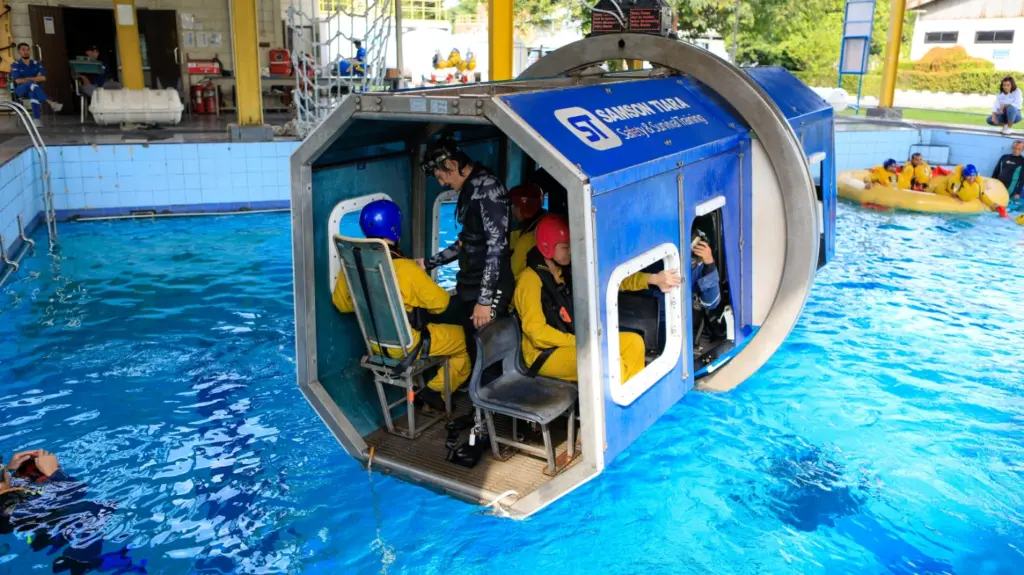
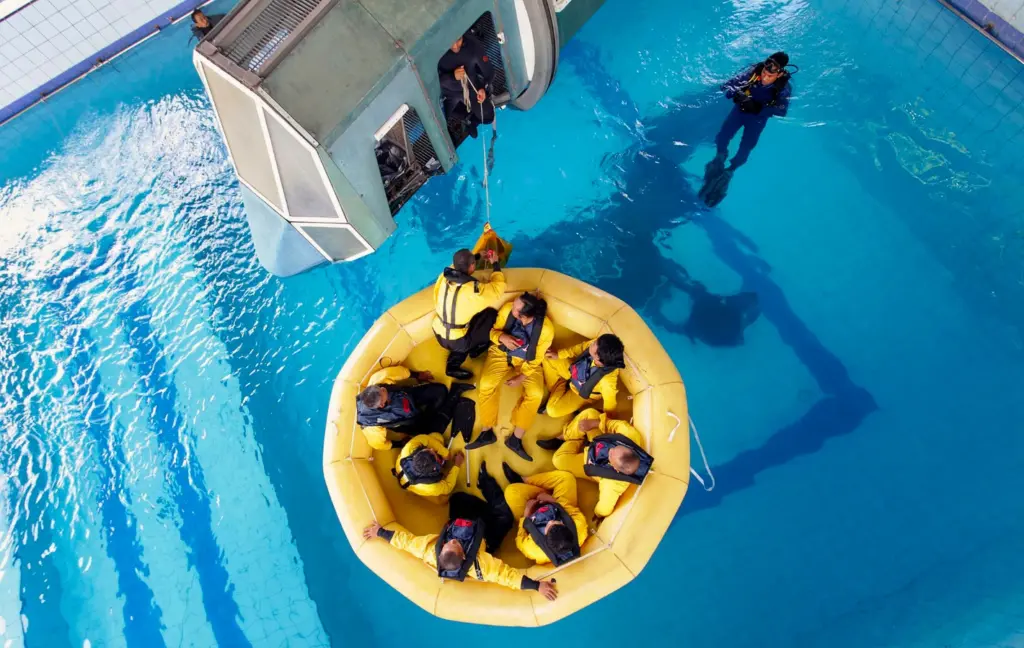
T-FOET refreshes and revalidates the emergency response skills that cannot be adequately maintained through offshore drills and exercises alone. The programme revisits the three core competency areas of offshore emergency response: helicopter escape and sea survival in a tropical environment, firefighting and self-rescue, and emergency first aid. Using our purpose-built HUET facility with a Survival Systems METS™ (Modular Egress Training Simulator) Model 40 and OPITO-qualified safety divers, learners complete a progressive series of helicopter escape and in-water survival exercises that test and consolidate their emergency response capabilities.
Delivered in accordance with OPITO Product Code 5614, T-FOET certification is valid for four years. Certificates must be renewed before expiry to maintain uninterrupted eligibility for offshore work in tropical environments.
Who Needs T-FOET Training?
T-FOET is required for offshore personnel who travel to offshore installations by helicopter in tropical regions and whose OPITO offshore safety certification is approaching expiry.
The course is typically undertaken by personnel working on offshore platforms, FPSOs, drilling rigs, and other offshore installations who previously completed BOSIET or FOET training and must renew their certification to continue travelling offshore.
Scope
The T-FOET programme refreshes and revalidates the offshore emergency response competence of personnel who have previously completed T-BOSIET or other OPITO-approved offshore safety training, and who are operating in tropical offshore environments. It covers tropical helicopter safety and escape, firefighting and self-rescue, and emergency first aid in a refresher format designed to consolidate and update the skills acquired during initial training.
The programme does not duplicate the full Safety Induction module delivered during initial T-BOSIET training, focusing instead on the practical skills that require periodic revalidation in a simulated environment. The helicopter escape unit includes in-water sea survival exercises within the HUET pool sequence, covering individual and group survival techniques and rescue procedures appropriate to tropical conditions.
General Course Objectives
The objectives of this training are that learners will be able to:
- Demonstrate, in a simulated environment, that they can use safety equipment and follow procedures in preparing for and during helicopter emergencies — with particular focus on escaping from a helicopter following ditching in a tropical environment.
- Demonstrate that they can use basic firefighting equipment effectively, and use self-rescue techniques in low-visibility and completely obscured visibility situations.
- Demonstrate that they can perform basic first aid.
Course Content
Further Helicopter Safety and Escape — Tropical
This unit refreshes learners’ helicopter travel and emergency response competence for offshore operations in tropical environments. Theoretical learning reviews key helicopter travel procedures, including pre-flight briefings, pre-boarding procedures, in-flight safety requirements and emergency actions, aircraft flotation characteristics, emergency escape routes for ditching and emergency landing, brace positions for all seating and harness types, HUET evacuation procedures (locate, release, evacuate), and aviation liferaft deployment and actions on boarding. The TEMPSC mustering sequence is also revisited, covering boarding, strapping-in, and passenger procedures.
Practical helicopter escape exercises are conducted in progressive sequence using a Survival Systems METS™ (Modular Egress Training Simulator) Model 40 in our HUET facility, supervised by OPITO-qualified HUET safety divers:
- Donning an aviation lifejacket
- Actions in preparing for a helicopter ditching or emergency landing
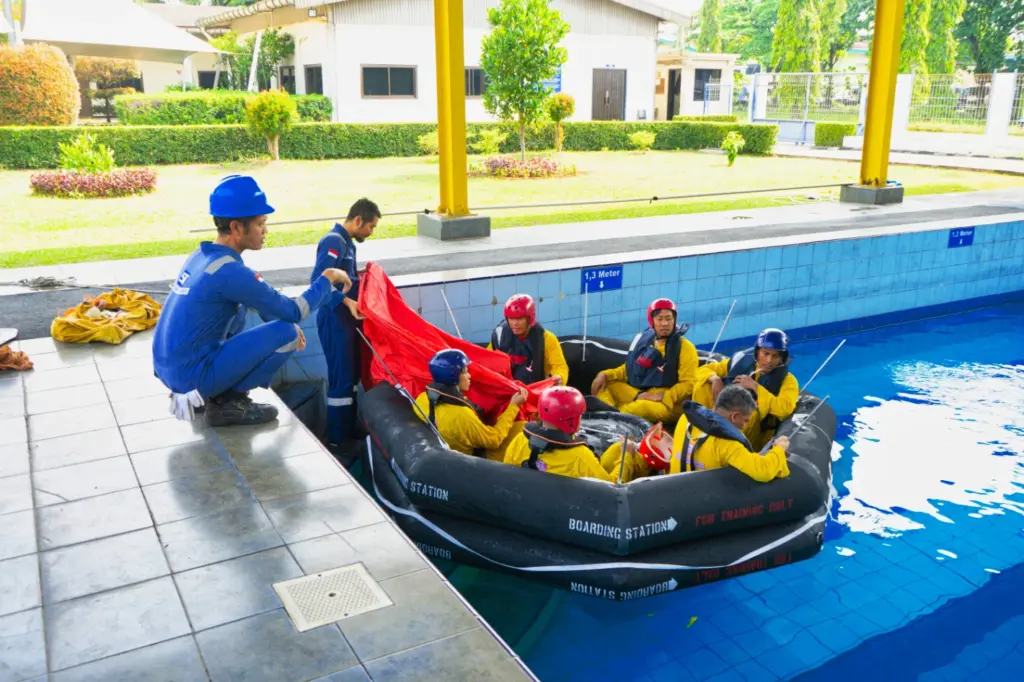
- Dry evacuation via a nominated emergency exit into an aviation liferaft from a helicopter ditched on water, including push-out window operation, with initial liferaft actions (mooring lines, sea anchor, canopy)
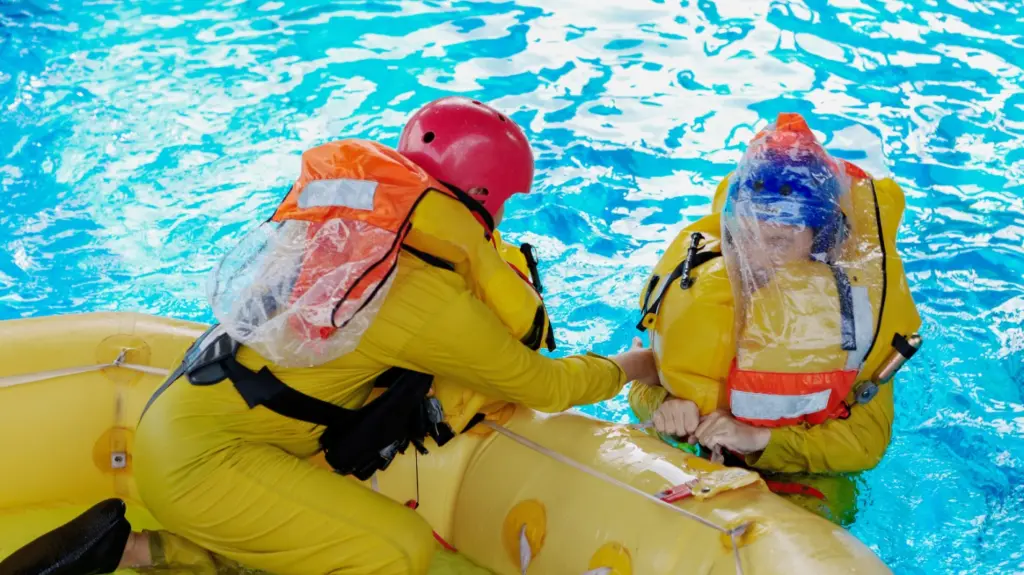
- Assisting others where possible on boarding the aviation liferaft, and carrying out secondary actions (lookouts, radio beacons, first aid equipment)
- Escaping from a partially submerged helicopter through an underwater window exit, without push-out window
- Escaping from a partially submerged helicopter through an underwater window exit, with push-out window operation
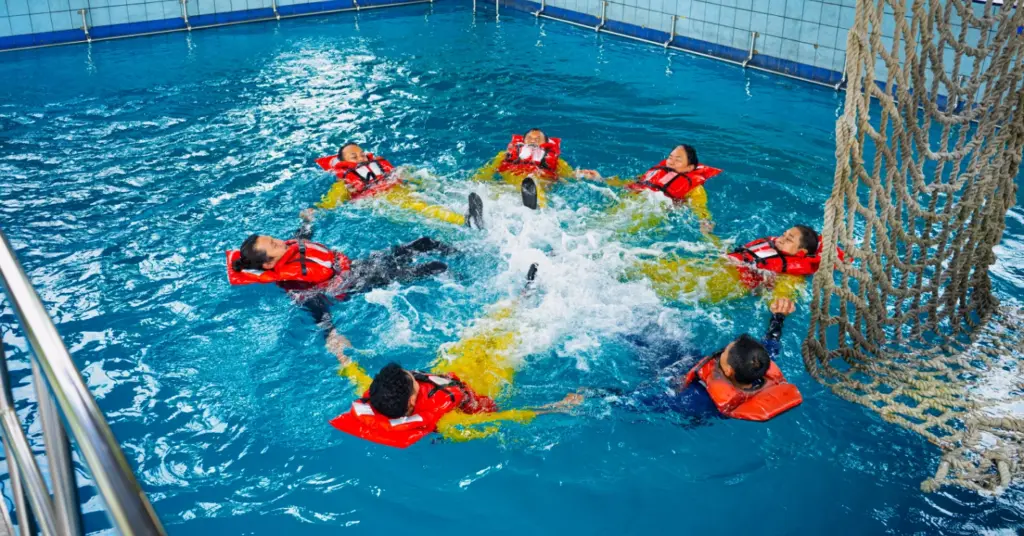
- Escaping from a capsized helicopter with push-out window, inflating a lifejacket, deploying a spray visor, and carrying out in-water procedures — swimming, HELP position, towing, chain, huddle, and circle formation
- Boarding an aviation liferaft from the water
- Being rescued by one of the recognised methods available offshore
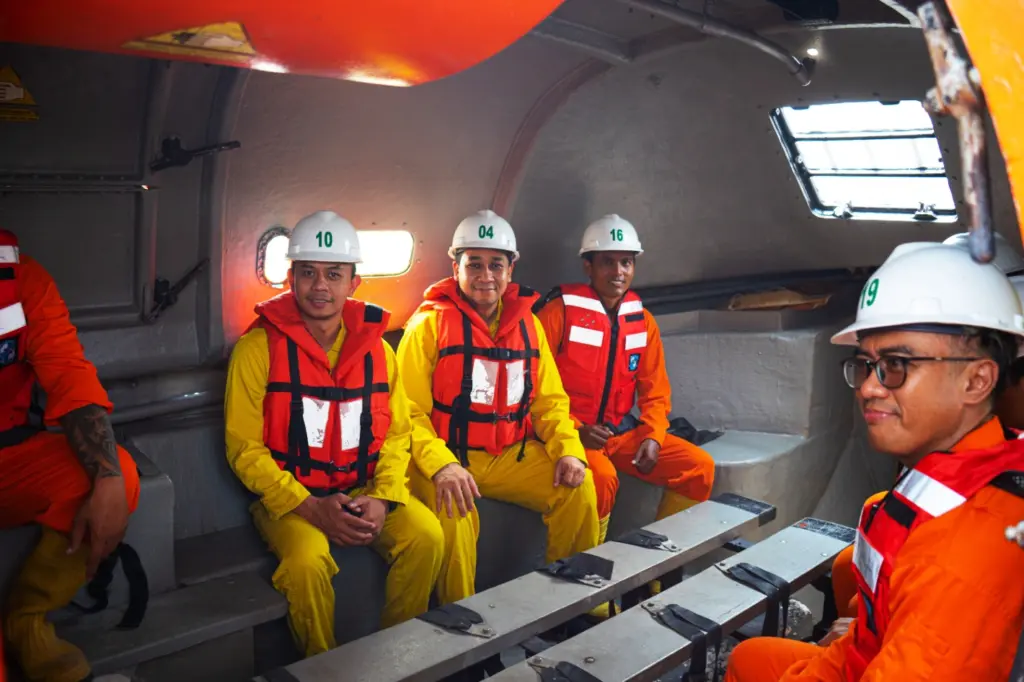
- Mustering, donning a lifejacket, and boarding and strapping in as a TEMPSC passenger
Further Firefighting and Self-Rescue
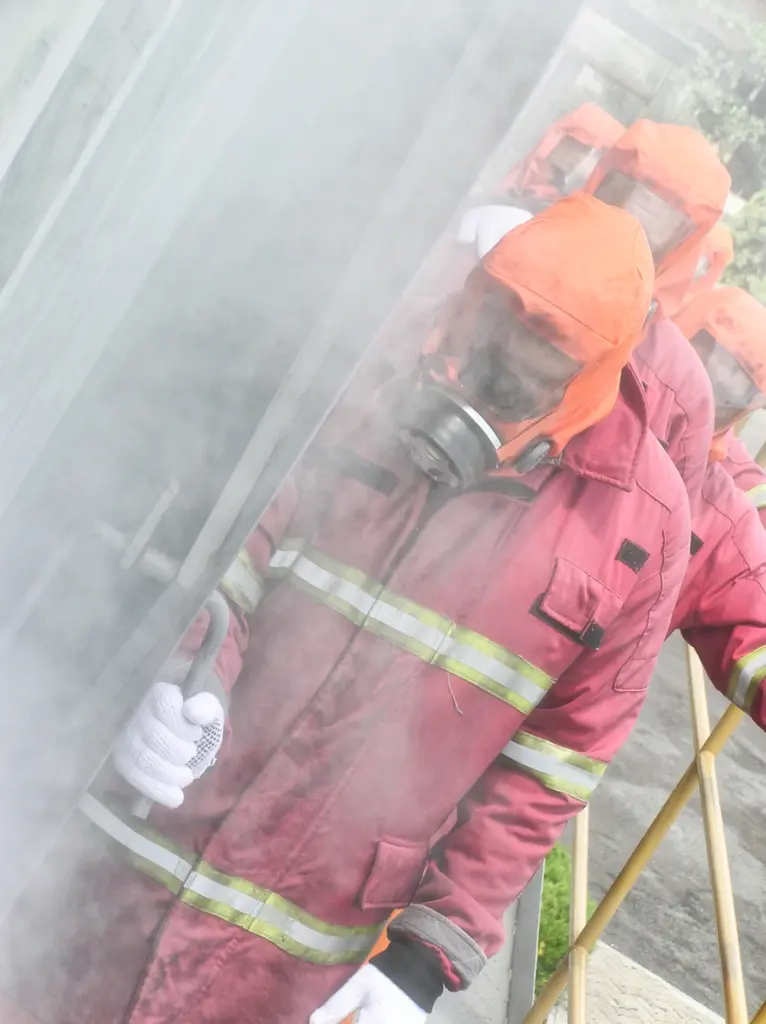
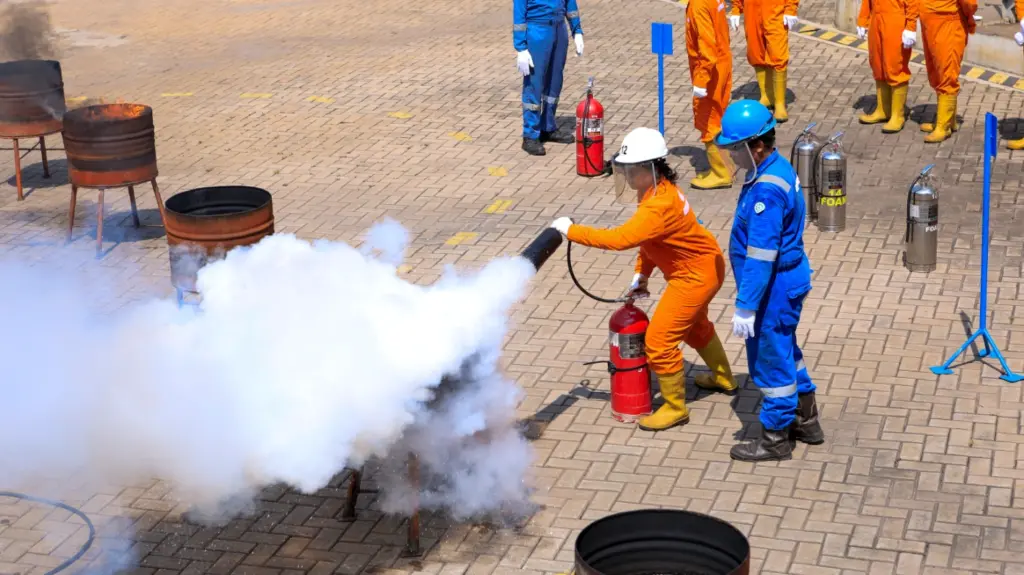
This unit refreshes learners’ firefighting competence and self-rescue skills for offshore operations, covering theoretical knowledge, practical extinguisher use on live fires, and self-rescue techniques under smoke-obscured conditions.
Theoretical learning reviews the principles of fire behaviour, raising the alarm, correct selection and operation of portable fire extinguishers for Class A and Class B fires, and self-rescue procedures in areas of reduced and completely obscured visibility. Practical exercises include:
- Raising the alarm on the discovery of a fire
- Correct operation of handheld portable fire extinguishers — water or foam, CO₂, and dry chemical — on Class A and Class B fires
- Self-rescue with a smoke hood or partial blindfold from an area of reduced visibility
- Self-rescue with a smoke hood or partial blindfold from an area of completely obscured visibility
- Small group escape with smoke hoods or partial blindfolds from an area of completely obscured visibility, concluding with a muster exercise
Further Emergency First Aid
This unit refreshes learners’ emergency first aid knowledge and practical skills relevant to offshore operations. The delivery focuses on consolidating and enhancing learning from the learner’s previous BOSIET, FOET, T-BOSIET, or T-FOET training.
Theoretical learning reviews first aid arrangements offshore, types of injuries (including bleeding, burns, and chemical contact), prioritising actions in a casualty situation, immediate first aid actions prior to the arrival of medical assistance (including assessing the situation, making the area safe, attending to unconscious casualties, and summoning help), raising the alarm, checking airways and breathing, and placing a casualty in the recovery position.
Practical first aid exercises include:
- Raising the alarm and assessing the situation
- Checking the area is safe
- Industry-recognised first aid practice including CPR, airway management, and recovery position
Prerequisites
- Participants must hold a valid OPITO-approved offshore safety certificate (BOSIET, FOET, T-BOSIET, or T-FOET).
- Participants must hold a valid offshore medical certificate or equivalent medical fitness certification, in accordance with OPITO medical entry requirements.