
Dry CA-EBS Initial Deployment
Training in the safe operation and initial deployment of Compressed Air Emergency Breathing Systems (CA-EBS), preparing personnel to use emergency breathing equipment during helicopter ditching and underwater escape scenarios.

Introduction
The OPITO Dry Compressed Air Emergency Breathing System Initial Deployment Training (Dry CA-EBS ID) is the essential qualification for offshore personnel who are issued with a Compressed Air Emergency Breathing System (CA-EBS) during helicopter travel and need to develop the knowledge and dry-land skills to deploy it correctly in an emergency, without the requirement for pool-based exercises.
While a rebreather EBS is relatively simple to deploy, a Compressed Air Emergency Breathing System (CA-EBS) is a compressed-air demand system with additional components, deployment steps, and associated hazards. Personnel issued with a CA-EBS who have not received specific CA-EBS training are at risk of deploying their device incorrectly, or not at all, in a helicopter emergency. Dry CA-EBS ID addresses this directly: it provides a thorough grounding in CA-EBS equipment and hazards, together with a structured dry practical session that takes each learner through the complete deployment sequence, including locating the device, achieving a correct face seal, purging, recovering a dislodged mouthpiece, and identifying when the cylinder is approaching empty.
A key practical advantage of this programme is its portability: the restricted range of facilities required, such as CA-EBS units, compatible lifejackets, and adequate floor space, means it can be delivered at our Cilegon training centre or on-location at a client facility or pre-mobilisation point. Delivered in accordance with OPITO Product Code 5904, Dry CA-EBS ID certification is valid for four years. Revalidation is typically achieved through completion of an OPITO T-BOSIET, T-FOET, or T-HUET programme that includes CA-EBS training.
Who Needs Dry CA-EBS ID Training?
Dry CA-EBS ID is required for any personnel who already hold a valid OPITO BOSIET, T-BOSIET, FOET, T-FOET, HUET, or equivalent helicopter escape certificate and who are now being issued with a CA-EBS for offshore helicopter travel, for example, personnel transitioning to an operator or installation where CA-EBS is the specified equipment, or those being issued CA-EBS for the first time following a change in duty holder requirements. It is also appropriate for personnel whose existing CA-EBS familiarisation has expired and who do not require or are not eligible for the full pool-based Shallow Water CA-EBS programme.
Scope
The Dry CA-EBS Initial Deployment Training programme equips learners with the knowledge and dry-land practical skills to deploy and operate a Compressed Air Emergency Breathing System (CA-EBS) correctly in the event of a helicopter emergency. It covers the principles and components of the CA-EBS, its advantages and limitations compared with rebreather EBS systems, the hazards associated with compressed air EBS use, lifejacket and CA-EBS pre-donning procedures, and a complete dry deployment exercise sequence.
The programme is entirely dry-land based and does not include pool or in-water exercises. For learners who require pool-based CA-EBS familiarisation, the OPITO Shallow Water CA-EBS Initial Deployment Training (Code 5903) programme should be considered.
General Course Objectives
The objectives of this training are that learners will be able to:
- Understand the rationale for and use of a Compressed Air Emergency Breathing System (CA-EBS) in helicopter emergency situations, including the fundamental differences between rebreather and compressed air systems.
- Understand the hazards associated with compressed air emergency breathing systems.
- Demonstrate the correct use of a CA-EBS in a dry environment, including pre-flight inspection, donning, and emergency deployment.
Course Content
CA-EBS: Principles, Components, and Hazards
Theoretical learning provides a thorough grounding in the CA-EBS system, covering:
- The rationale for using CA-EBS during offshore helicopter travel and the fundamental differences between rebreather EBS and compressed air CA-EBS systems in terms of technology, deployment, and use
- The advantages of a Category A CA-EBS: rapid single-handed deployment from either hand, deployable underwater, minimal breathing resistance, minimal dead space, and the ability to expel water from the mouthpiece
- The limitations of compressed air CA-EBS: finite air supply, and the critical requirement not to hold breath during ascent to avoid lung over-expansion injury
- All CA-EBS components: hose (if fitted), mouthpiece, cylinder, demand valve, pressure indicator, on/off ratchet or knob (if fitted), on/off status indicator (if fitted), purge button, nose clip (if fitted), and charging port
- CA-EBS operation in conjunction with survival equipment: aviation lifejacket (including importance of removing mouthpiece and nose clip before inflation), survival suit (including correct sizing), and Personal Locator Beacon (PLB)
- Full lifejacket operation: inflation methods, the importance of not inflating inside the aircraft, PLB and strobe light activation, oral inflation top-up and pressure release, and spray-hood deployment
- Pre-donning checks on the lifejacket and CA-EBS: pressure indicator reading, on/off status indicator, and ratchet knob position
- Correct lifejacket donning with CA-EBS: waist belt orientation, fastening, adjustment, crotch strap engagement, mouthpiece, and hose fitting
- CA-EBS deployment: one-handed deployment from either hand, achieving a face seal, purging water from the mouthpiece, recovering a dislodged mouthpiece, and use of the demand valve
- Hazards associated with CA-EBS use: lung over-expansion injury risk, cold water gasp reflex, coughing, accidental or intentional mouthpiece dislodgement, accidental air loss, and running out of air
Dry Practical Exercises
Following theoretical learning and instructor demonstration, each learner completes the following practical exercises in a dry environment:
- Pre-flight inspection of the lifejacket and CA-EBS
- Donning a lifejacket complete with CA-EBS correctly, including buddy check
- Emergency deployment of the CA-EBS: locate the device; rapid single-handed deployment; fit to face, seating the nose clip and mouthpiece and attaining a correct seal; breathe normally; purge the system; breathe normally again; locate and recover a dislodged mouthpiece; breathe down the unit and identify the point at which the cylinder is approaching empty
Prerequisites
- Participants must hold a valid in-date OPITO-approved BOSIET, T-BOSIET, FOET, T-FOET, HUET, T-HUET, or industry-agreed equivalent certificate.
- Participants must hold a valid offshore medical certificate or equivalent medical fitness certification, in accordance with OPITO medical entry requirements.
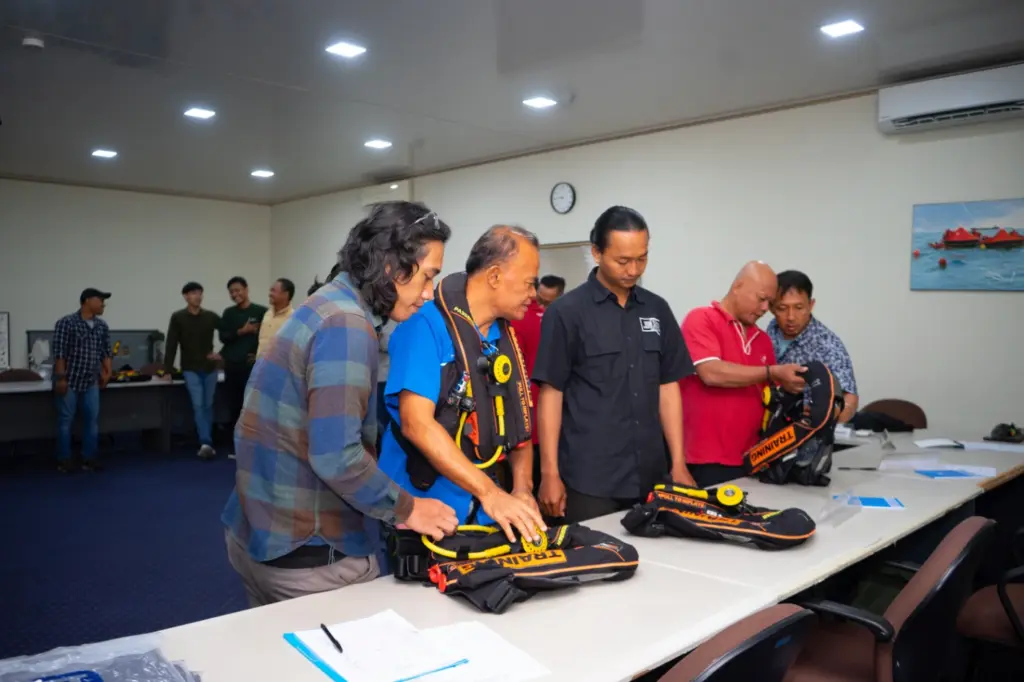
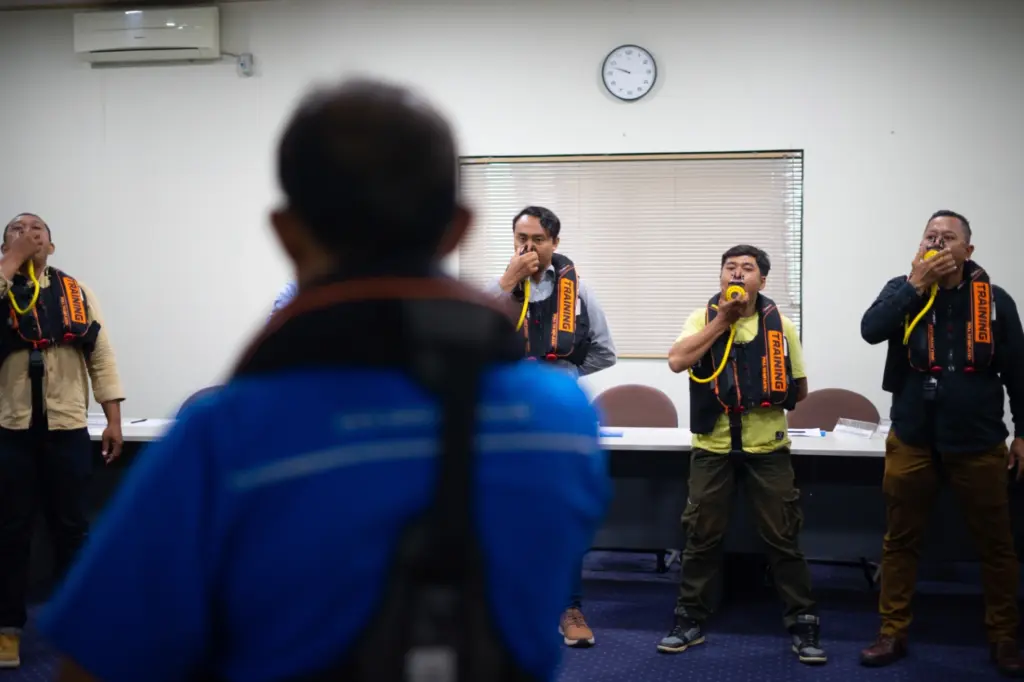
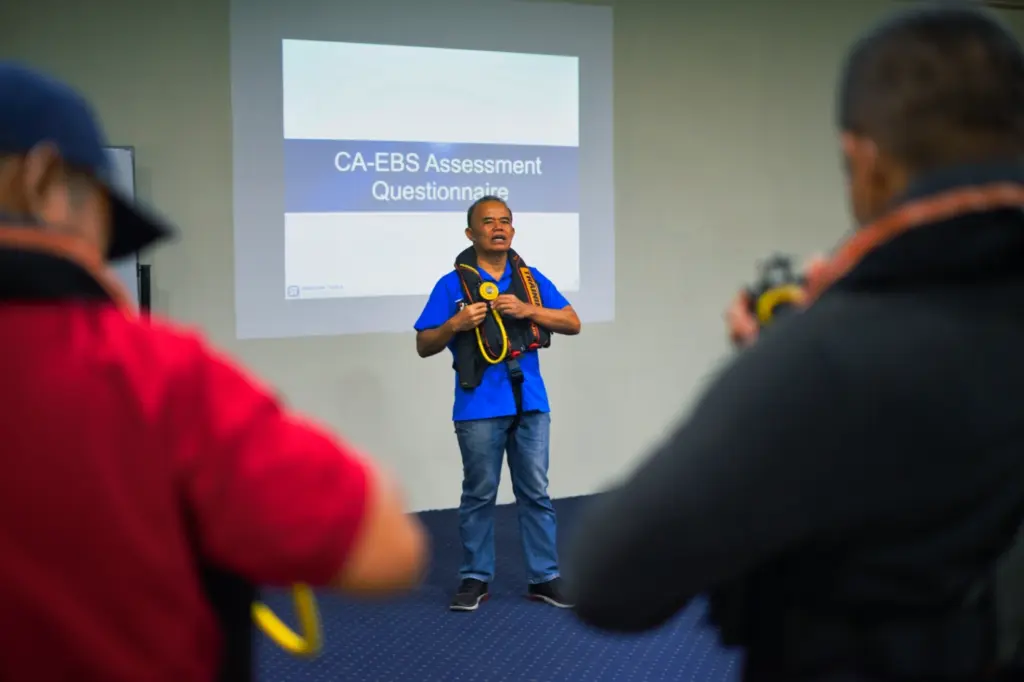
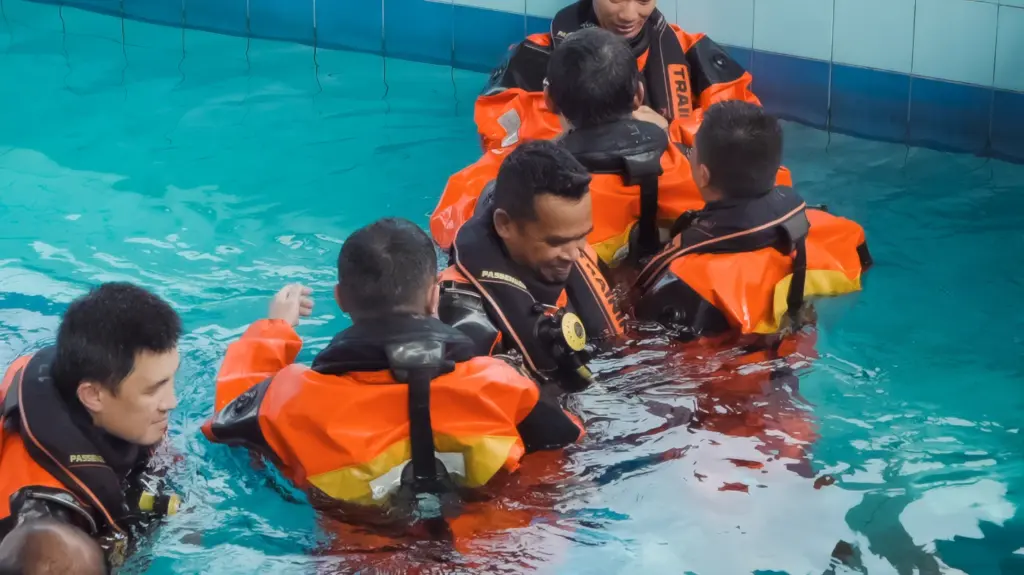
Training photos
-
 SHALLOW WATER CA-EBS-ID
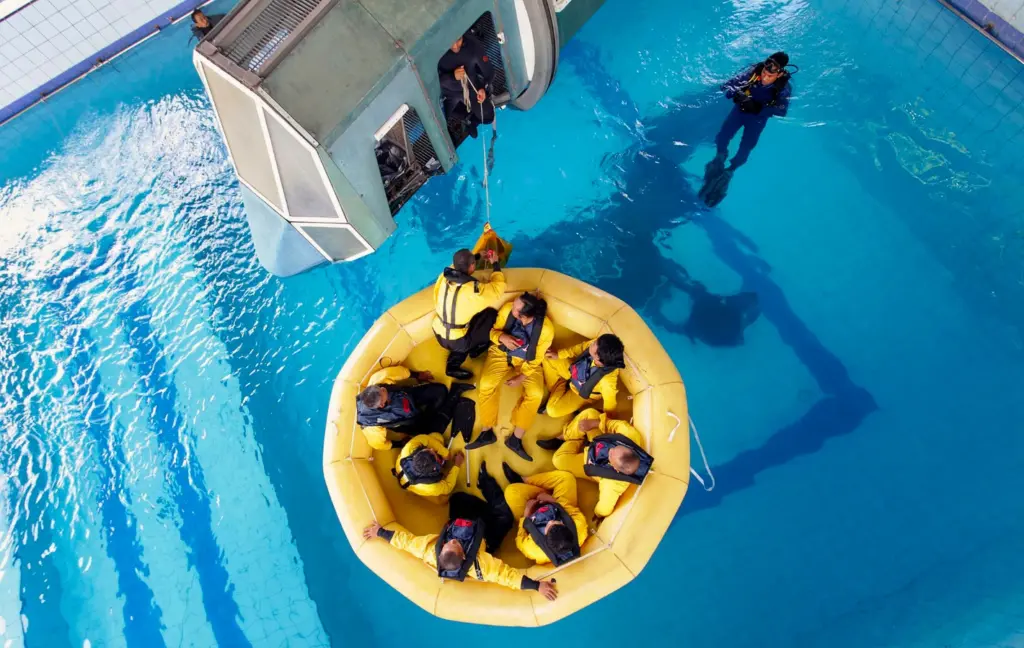
Shallow Water Compressed Air Emergency Breathing System (CA-EBS) Initial Deployment Training
OPITO -
 T-FOET WITH CA-EBS
Tropical Further Offshore Emergency Training with CA-EBS (T-FOET with CA-EBS)
OPITO -
FOET WITH CA-EBS
Further Offshore Emergency Training with Compressed Air Emergency Breathing System (FOET with CA-EBS)
OPITO -
 T-HUET WITH CA-EBS
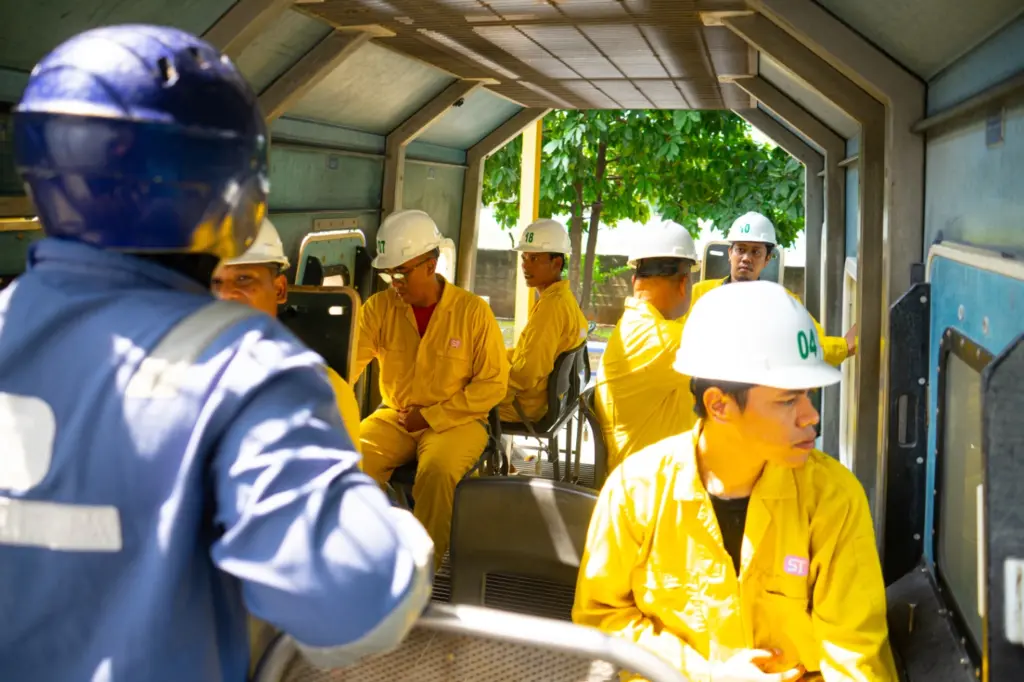
Tropical Helicopter Underwater Escape Training with Compressed Air Emergency Breathing System (T-HUET with CA-EBS)
OPITO -
 T-BOSIET WITH CA-EBS
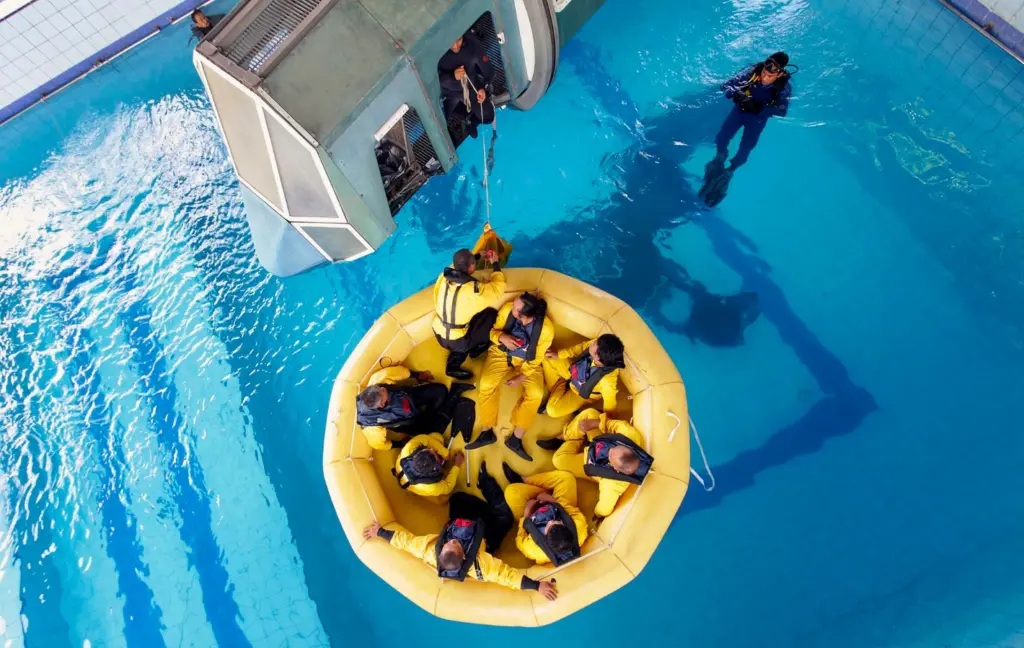
Tropical Basic Offshore Safety Induction & Emergency Training with Compressed Air Emergency Breathing System (T-BOSIET with CA-EBS)
OPITO -
BOSIET WITH CA-EBS
Basic Offshore Safety Induction & Emergency Training (BOSIET) with Compressed Air Emergency Breathing System (CA-EBS)
OPITO