Travel Safely by Boat (TSbB) Initial Training
Preparing personnel who travel offshore by boat with the knowledge and practical skills required for safe vessel transfers, emergency response, abandonment procedures, and sea survival during routine offshore transportation.

Introduction
Personnel travelling to offshore installations by boat are exposed to hazards associated with marine transportation, vessel movements, personnel transfers, adverse weather conditions, and potential emergency situations at sea. Safe transfer between vessels and offshore installations requires an understanding of transfer procedures, emergency arrangements, life-saving equipment, and survival techniques.
The OPITO Travel Safely by Boat (TSbB) Initial Training programme provides the knowledge and practical skills required for personnel who travel and transfer by boat to offshore installations. The training develops awareness of the risks associated with offshore boat travel and equips participants with the skills required to transfer safely, respond appropriately to emergencies, and maximise their chances of survival following an abandonment.
Who is this for?
This training is designed for personnel who travel to or from offshore installations by boat and require initial training in safe boat travel, personnel transfer procedures, emergency response, and sea survival.
- Suitable personnel may include:
- offshore production personnel
- drilling personnel
- maintenance personnel
- marine support personnel
- contractors travelling offshore
- construction and project personnel
- logistics personnel
- new entrants to offshore operations
Scope
This programme provides participants with the knowledge and practical skills required to travel and transfer safely between vessels and offshore installations by boat.
The training covers safe boat travel principles, personnel transfer methods, swing rope transfers, transfer basket awareness, boat emergency procedures, abandonment procedures, marine lifejackets, life rafts, and sea survival techniques.
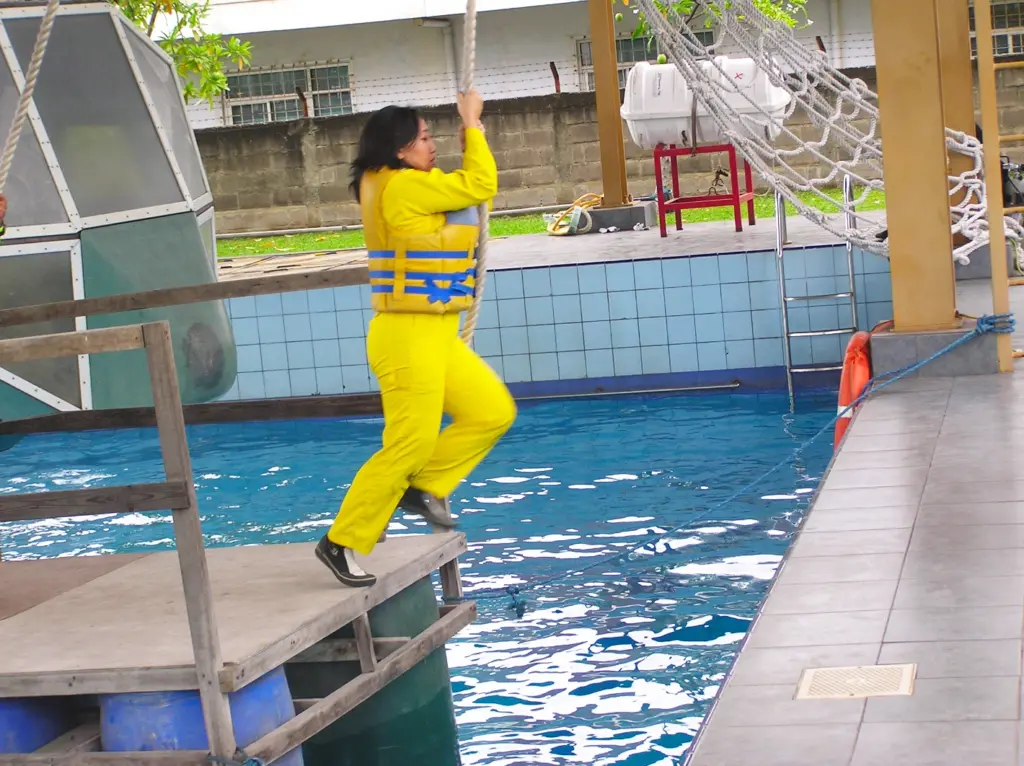
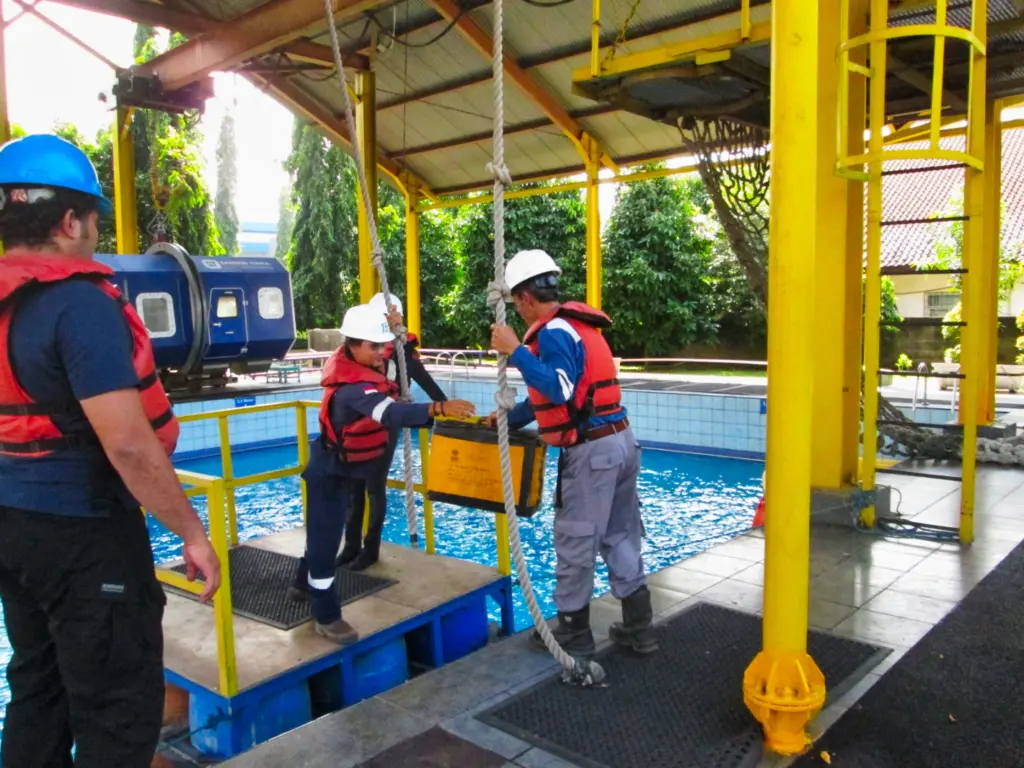
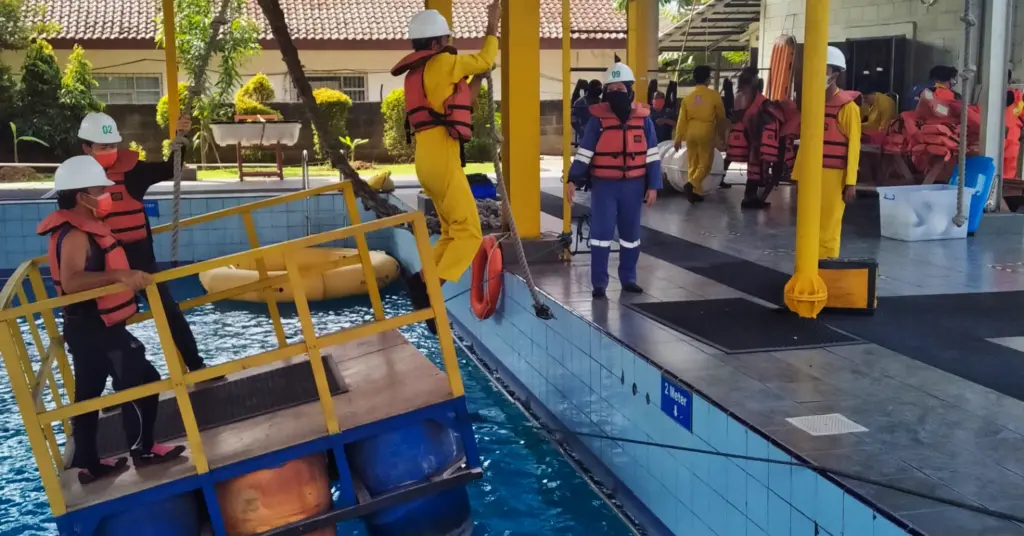
Practical exercises allow participants to demonstrate safe transfer techniques, water entry procedures, life raft boarding, and individual and group survival techniques in a controlled training environment.
General Course Objectives
Upon successful completion of the training, participants should be able to:
- explain safe boat travel procedures before, during, and after vessel transfers
- identify hazards associated with boat-to-platform and vessel-to-vessel transfers
- describe safe swing rope and transfer basket operations
- demonstrate correct use of flotation devices and marine lifejackets
- explain boat emergency and abandonment procedures
- demonstrate safe water entry techniques
- board a marine liferaft from the water
- carry out initial actions following abandonment
- demonstrate individual and group sea survival techniques
- respond appropriately during routine and emergency offshore boat transportation
Course Content
Travel Safely by Boat Initial Training
This unit equips learners with the knowledge and practical skills required to travel and transfer safely between vessels and offshore installations by boat. Program ini mencakup seluruh rangkaian metode transfer kapal yang digunakan dalam operasi lepas pantai, termasuk transfer tali ayun dan operasi keranjang transfer personel.
Theoretical learning covers pre-boarding procedures, safe boarding and disembarkation, in-transit safety requirements, personnel transfer procedures, the hazards associated with boat fenders and vessel-to-platform distances, different types of transfer baskets, and correct methods for safe basket transfers. Boat emergency procedures are also covered, including donning a marine lifejacket, abandonment procedures, and individual and group survival techniques.
Practical exercises include:
- Donning an appropriate flotation device as used during boat transfers
- Swing rope integrity checks and correct luggage transfer technique prior to transfer
- Swing rope transfer in both directions between a simulated boat deck and a fixed installation deck, using both hands
- Donning a marine lifejacket
- Water entry and correct precautions when entering the water
- Boarding a marine liferaft from the water and carrying out initial and secondary actions
- Individual in-water survival techniques (swimming, HELP, wave slap protection) and group survival techniques (towing, chain, huddle, circle)
Prerequisites
- No training prerequisites are required.
- Due to the physically demanding nature of practical exercises, participants must satisfy medical fitness requirements before participating in practical training activities.